Tag Archives: opinion

My Fading Love Affair with Processed Food

As an adult picky eater (and I do mean picky), the simple process of eating has been ridiculously hard most of my life. Thus, when I find the rare food item that I really enjoy (i.e., food that tastes great, has a good texture, and doesn’t make my tummy roar at me later), I tend to stick with it.

But over the last few months, I have observed with distress as my taste buds have slowly turned away from once-favorite foods. The common denominator between all these foods? All of them are processed within an inch of their lives.

The First Sign: Fast Food is No Longer My Friend

At first, I thought I was just reacting to a lower quality of food in my local fast food restaurants. First, the beef at Taco Bell started tasting “off,” as if it had been kept too long in the fridge. Then, the meat on McDonald’s burgers started tasting and feeling like crumbling shoe leather in my mouth. Other food quality issues arose afterwards, and soon I was even pickier than usual at all the local fast-food places.

I thought it was strange, but I tried to work around the “new” rules of my picky taste buds. No more McDonald’s meat, no more ground beef tacos, etc…

But Fast Food is Not the Only Issue

…Unfortunately, the pickiness did not stop there. I began eating less of the American sliced cheese I had loved since childhood, simply because it didn’t really taste like cheese anymore. There was an odd, plastic-y overtone to the taste, which I had never detected before–and it was utterly disgusting. Even switching cheese brands didn’t seem to help. I still liked cheese, most definitely, but the sliced cheese product didn’t suit anymore.

Not to mention that many of my favorite boxed meals from the grocery store started tasting funny. For instance, I used to live on Velveeta shells-n-cheese, yet I began getting sick at the taste–both the cheese and the pasta sometimes tasted like plastic to me. It didn’t seem like just being tired of eating a certain dish, since I try to switch up my food choices as much as possible. It just seemed that certain foods, which all happened to be processed, didn’t taste right anymore.

The Result: One Hungry Tummy

It seemed like all my favorite foods, all my go-to foods when going out to eat, were vanishing off my “favorite” list, one by one. And it was not the biggest list in the world to start out with, because of my lifelong issues with food texture (and a strong gag reflex that gets set off at the slightest thing). When 70% of “adult food” is off-limits because of pickiness, and 95% of what you DO like has suddenly become anathema, what DO you eat?

That was the burning question, and it still is. In desperation, I’ve gone back to peanut butter and jelly sandwiches, basic breads and pastas, or anything that doesn’t have the awful processed taste in such abundance. Yet I still walk around hungry most of the time, as if what I’m eating isn’t providing me with any nourishment.

Most people who look at me would think I eat all the time, to be the size that I am (flirting with 300 pounds at the moment). But instead, I eat significantly LESS than all my skinny, less picky friends, and I simply stay hungry–so much so that I have had low blood sugar attacks due to the reduced food intake. I WANT to eat, but almost nothing appeals to me anymore. And I have begun to suspect that the “plastic” taste and texture which has become so revolting to me is actually the result of processing food for longer shelf life.

Where to Go from Here?

Since my taste buds have apparently shifted allegiances for good, I honestly don’t know what to do with them anymore. Most of my favorite foods date back to childhood, and it’s frankly disconcerting to suddenly dislike foods that I remember loving and indulging in. Not to mention that these foods have sustained me while I avoided all sorts of other “normal” adult food.

Quite simply, I find myself at a loss every time I get hungry, because I have no idea what my taste buds will accept and what they won’t accept. And since I hate wasting money on food that I won’t end up eating, it makes it difficult to try new foods. It feels suspiciously like being caught between a rock and a hard place.

An Odd Side Note: Lettuce is a New Food Friend?

Yet, in the midst of all this loss, I have noticed something strange–I find myself thinking longingly of dishes like dark green Romaine lettuce with ranch dressing. For anyone who knows me, this is WAYYYYYY out of character; I historically have avoided most lettuce because it just tastes like crunchy paper soaked in water. Yet recently, the darker green lettuce types have become more appealing to me, as have spinach (when blended with cheese) and scallions. I also have no idea why this is happening, either, only that it began around the same time processed food began tasting strange to me.

Is This My Body’s Way of Saying “Eat Healthy?”

I honestly don’t know what to make of all this change in my appetite. Has anyone else experienced a sudden negative reaction to processed foods after eating them most of their lives? Or has anyone experienced a sudden positive reaction to lettuce and other “healthy” foods? I’d be glad to hear about it in the comments!

Favorite Magic Cards, part 3: Permanents

I enjoy playing permanents in my M:TG decks, certainly much more than playing one-turn-only spells–I like game effects that continue on past one turn, that help me build up strength, life points, etc. The following twelve cards help me toward that long-term-survival goal:

angelicchorus
Angelic Chorus: Finally, a reward for playing the creatures with huge toughnesses! Indomitable Ancients, anyone?
boonreflection
Boon Reflection: Because gaining single-digit totals of life is paltry. 😀
pristinetalisman
Pristine Talisman: Hmm, tap it to not only get a mana, but gain a life. Fun with Well of Lost Dreams. xD
quietdisrepair
Quiet Disrepair: This is one of those cards you can use to destroy your opponent’s enchantment or artifact, or use on your own stuff to gain a free 2 life every turn. It’s a win-win!
scourgeofthenobilis
Scourge of the Nobilis: Firebreathing and lifelink, together in one creature enchantment!
shieldoftheoversoul
Shield of the Oversoul: I admit it: I play this because of the indestructible ability. Makes Green stompy creatures that much funnier.
steelofthegodhead
Steel of the Godhead: The combo of lifelink and unblockability is AWESOME.
storycircle
Story Circle: Because the Circles of Protection, as cool as they are, are only situational. THIS one covers the board.
sundroplet
Sun Droplet: Because it’s hilarious to watch your opponents grimace as you get back all the life points they knocked from you, one turn at a time.
testofendurance
Test of Endurance: I love this win condition so much I have a deck built around it.
wheelofsunandmoon
Wheel of Sun and Moon: The #1 way to survive a mill deck’s onslaught. Also funny in a deck that draws a lot of cards–this way, you don’t accidentally deck yourself!
worship
Worship: Just never block with your last creature, and make sure you have a way to quickly put out another creature on the fly, and you won’t have to worry about dying from combat damage!

Favorite Magic Cards, part 2: Spells

Building off of last week’s post about favorite creatures, this week I’m focusing on favorite spells in Magic: the Gathering. This list is much, much shorter, because I don’t play a whole lot of spells–I usually play permanents more than anything. But these eight cards have made the list:

dawnglowinfusion
Dawnglow Infusion: Epic life-gain for Green/White.
dwellonthepast
Dwell on the Past: Not only do I love the art for this card, but the ability to bring back 4 cards from the graveyard for 1 mana is very attractive.
holyday
Holy Day: Also known as “how to completely frustrate your combat-heavy opponent for one turn.” 😀 (I also like Fog and Darkness for the same reason.)
kindle
Kindle: This card’s strength ramps up over time–eventually you’ll be able to do 5 damage for 2 mana. And if your opponent is using Kindle also…well, the damage can get pretty silly. 😀
lightningbolt
Lightning Bolt: Simple. Effective. Classic.
lightninghelix
Lightning Helix: Being able to do direct damage to a creature or player, PLUS life-gain? YES PLEASE!
rootgrapple
Rootgrapple: See how this says “destroy target noncreature permanent?” That means this card can destroy LANDS. Treefolk have Land Destruction. Awwwwwww YEAH.
safewrightquest
Safewright Quest: Being able to search for a Plains on first turn is POWERFUL. This one card helps the mana flow in about 90% of my decks.

Armchair Critics: A Pet Peeve Personified

Too many times, I’ve seen it happen: a person who can’t dance criticizes a dancer at a competition, saying “Even I could do better than her! She’s awful!” Or somebody snickers at a singer on The Voice or American Idol, calling the person “terrible” even though they themselves have never taken any formal voice lessons. These kind of people irritate me no end–I call them “armchair critics,” because they make negative judgments without knowing the least little bit of what they’re criticizing.

These days, however, I’m seeing another type of armchair critic–the fiction armchair critics, lobbing fireballs of negativity at both book and author, despite never having attempted writing any kind of fiction themselves. Much of the criticism surrounding books like the Twilight series and the 50 Shades series seems to fall into this category, at least for me.

As a budding novelist and holder of a Bachelor’s degree in English, I am accustomed to criticizing literature in an academic sense; I freely admit that neither of these mentioned book series are exactly the heights of literature. But let’s set aside opinions about books of this type for a second and think about the principle behind negative, biased, non-academic criticism. How much sense does it make to criticize someone else for doing something you’ve never attempted and therefore know nothing about?

To me, it makes no sense at all. It’s almost as if the armchair critics believe that their criticism will make a quality book magically appear–they toss their criticism far and wide on the Internet, decrying the books they dislike as “wastes of paper,” etc., yet I don’t see them writing any “quality” literature for us to read instead.

Thoughtful Criticism: More Than Just Opinions

I believe that if we are to offer the best and most thoughtful criticism of anything, we must first have an understanding of the effort and processes behind whatever we’re criticizing. Thus, for criticizing successful fiction, we must first have tried to write successful fiction–we must have grappled with creating a relatable, believable character, must have worked to choose exactly the right words to paint a scene, etc.

Doing so will not only make us more knowledgeable about the work of writing, but more understanding about the struggles of an author. Then, and only then, will we be able to offer an in-depth and HELPFUL critique of an author’s work. That’s part of what criticism is for, anyway–to help someone else better their work.

My Solution: Armchair Critics, Go and Write!

So, here is my solution for all the fiction armchair critics out there: if you think you can write a better book series than Twilight, 50 Shades of Grey, etc., then do so. Start crafting an original idea in your head; create your characters, give them life on the blank page. Mold that storyline so that it conveys the overarching meaning you’re trying to communicate to the audience. Shape those themes, sculpt that imagery–really dig your proverbial fingers in and do the work that you have criticized others for doing so poorly. Experience what it is like to be an author. It’s not as easy as it looks!

If all the people who criticize Twilight and 50 Shades of Grey try out this solution, for instance, then the modern literary world should soon be inundated with a wealth of successful, quality fiction, if the critics’ opinions of themselves are to be believed. (And even if they aren’t successful, at least they will know more about what they’re criticizing!)

Favorite Magic Cards, part 1: Creatures

Ever since I started playing Magic back in 2005, I’ve had a growing list of creatures that are just plain favorites to use in decks. Maybe it’s because I like using the creature type, or maybe it’s because they’re just plain GOOD for how much mana you invest in them. Whatever the reason, the following creatures are and probably always will be standouts for me:

akroma
Akroma, Angel of Wrath: An old favorite for her slew of abilities.
avatarofhope
Avatar of Hope: I love the big toughness and “able to block any number of creatures” ability.
beaconofdestiny
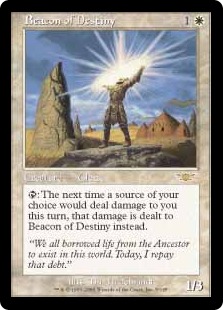
Beacon of Destiny: Redirect all damage to this creature, no matter its source? Why not?
belovedchaplain
Beloved Chaplain: Protection from creatures for two mana. Not bad!
courierhawk
Courier Hawk: The 2 toughness and vigilance is more help than it seems!
dawnelemental
Dawn Elemental: Flying 3/3 that can’t be killed by damage…WIN.
dawnstrider
Dawnstrider: A creature which can Fog when you Spellshape. What an unexpected bonus!
empyrialarchangel
Empyrial Archangel: A defensive instead of aggressive Angel. Me likey.
elvishpiper
Elvish Piper: Makes playing the huge-mana-cost creatures actually worthwhile!
essencewarden
Essence Warden: Because Green needed quick, creature-based life-gain, too. LOL
exaltedangel
Exalted Angel: One of the first Angels with lifelink, and even more fun with the Morph ability.
grizzledleotau
Grizzled Leotau: A Green/White creature with a huge toughness…which costs only two mana!
indomitableancients
Indomitable Ancients: Because a 10 toughness for 4 mana is just hilarious.
jenaraasuraofwar
Jenara, Asura of War: A multi-colored Angel for only 3 mana (gasp!), with the ability to get more P/T over time.
jhessianinfiltrator
Jhessian Infiltrator: I love the low-mana-cost Unblockable damage, especially in Green.
krosancloudscraper
Krosan Cloudscraper: Admit it, swinging for 13 with one creature is pretty hilarious.
prideoftheclouds
Pride of the Clouds: Love the artwork; plus, this is one cat that likes fighting alongside the birds!
skyhunterskirmisher
Skyhunter Skirmisher: White so rarely gets double strike, and this is flying double strike at that!
timberprotector
Timber Protector: I’ve built a Treefolk deck. ‘Nuff said. 🙂
wallofhope
Wall of Hope: This is hilarious to play on your first turn, because of the defense/life-gain combo.
yavimayadryad
Yavimaya Dryad: Absolutely need a Forest? She’s got you covered. Need to give the other player a Forest so that your creatures can Forestwalk? She’s got that, too.
yavimayaenchantress
Yavimaya Enchantress: Funny with Blanchwood Armor, Gaea’s Anthem, and the like. 😀

Image Credits

All card images came from Gatherer.

TL;DR and the Destruction of Attention Spans Everywhere

tldr “TL;DR,” meaning “Too long; didn’t read,” is a common acronym found around the Internet these days, usually in response to a longer story or essay. Sometimes, authors will even write a short, one- or two-sentence summary of their point as a preface to their article and have “TL;DR” out beside it for those readers who don’t want to read further.

But this is more than an acronym. This is a PROBLEM.

Two Reasons This Is a HUGE Problem

As an English major and former English teacher, I find this “too long, didn’t read” trend distressing, for two big reasons:

  • All of us–including those of us who study literature and written publications–are becoming entirely too impatient when we read. Either that, or we feel easily daunted when we see long blocks of text. We have become more dependent on short written bursts of news and entertainment, and most of us do not take the time to read on a deeper level daily.
  • Because of the instant gratification of TV and the Internet, our kids are growing up with this same “TL;DR” mentality in schools. This doesn’t help them learn to deeply read literature–they find shortcuts online or read Cliffs’ Notes, rather than sitting down and really studying the actual work.

Even I’m finding it hard to concentrate on a long essay or a long work of literature these days, and I used to be one of those folks who consumed the written word like it was candy to my brain. One could attribute it to stress or illness, but I think there’s something else wrong–my ability to concentrate has dwindled with the lessening need for extended concentration. And I’m likely not the only one.

The (Sad) End Result?

I fear that the day is quickly coming where people will not know how to make themselves read for long periods of time, and will forget how to lose themselves in well-written literature for hours. I fear that we as a society will forget how to pay attention to something that isn’t flashing and/or brightly colored.

The main reason I fear this? Because it will, quite simply, put me and other writers out of a job. As a writer, I want generations of people to read my novels, to immerse themselves in the world I am painstakingly building with my words. But if in the future no one can pay attention for that long, will my words ever be read and enjoyed at all? I’m sure I’m not the only writer out there who worries about this.

The Solution: Building Up “Reading Stamina”

I believe that we all must work on our “reading stamina”–the ability to read for long periods of time without getting distracted or bored. The reason I call this ability “stamina” is that it can be trained and increased, just like physical endurance. We can endure longer reading sessions; we just have to want to do so, and schedule time to “work out” in the mental gym.

  1. Search up a subject you really enjoy, and read 2 articles about it. Compare and contrast how each author approaches the subject. For instance, I might read a couple of articles on astronomy, music, the geek life, etc., and see how each author’s opinions match up with each other, and where they differ.
  2. Closely read 1 short story, poem, or 1 chapter of a novel per day. Don’t just scan the work, but read it almost as if you were reading it aloud, going word-by-word. Really delve into what the author is saying; study their word choice as if through a microscope. How does the piece of writing make you feel? What is the author’s point?
  3. After you finish reading anything, mentally summarize what you read. Does what you just read change your opinions or worldview in any way?
  4. Share what you’re reading with others on social networks. Offer questions on the points you didn’t understand in what you read; offer opinions on the points you understood and reacted to. Start a discussion!

These are all exercises that will help you beef up your understanding of what you’re reading, which will make it easier to read for longer periods of time–you won’t feel so overwhelmed. Just like you have to start exercising with short bursts of activity and longer rests, so you must train your brain with short bursts of reading every day, rather than jumping into a huge novel right away.

I’m also suggesting that you make reading a more social activity; it’s long been seen as something that isolates us, much as computers isolate us today, but in fact becoming well-read can help us make new friends as well as enrich all our conversations.

Summary

(Ironic that I’m putting a summary on this article, isn’t it? LOL) If we want to continue being a literate society, we need to stretch our reading muscles. We need to be okay with reading longer works, or reading for longer periods of time, because being willing to read deeply can help us do everything from enjoying literature to avoiding financial pitfalls (reading the fine print). If we don’t use that skill, we lose it; if we lose the ability to read longer pieces of writing, how long before we lose the ability to read deeply at all?

Why I don’t worry about my eyebrows

Amid all the beauty articles you’ll see me post every now and again, there’s one topic you’ll never see me cover: eyebrows. You know why? Because I, unlike so many girls and young women my age, have never and will never pluck my eyebrows to shape them. It’s just a part of the typical female beauty routine that I have never adopted.

In thinking about this issue, I realized there was a little more to it than just not liking to pluck eyebrow hairs out. It has more to do with my philosophy of beauty, which is vastly different from the beauty industry’s philosophy of beauty (not to mention society at large). Read on, to find out how a simple pair of eyebrows could make such an elegant point.

How My Brows Actually Look

As evidence of my unplucked eyebrows, I have a few pictures of myself, with no makeup and no retouching:

eyebrow_closeup
Barring the fact that you can tell I haven’t slept right in several years days (LOL), my eyebrows are thick and nearly-black, going almost straight across rather than having the thin, graceful arched shape so coveted in the beauty industry over the last several decades.

Every eyebrow article I read subtly tells me that I, too, should want those perfectly groomed and plucked brows for my own face. It’s almost like your face isn’t “feminine” enough without plucking these hairs out of your face every week, or having them waxed off every few months. But I just haven’t done so. Being as squeamish about pain as I am, it seems ludicrous to inflict such pinching pain on myself for a goal that I’m not even interested in.

Now, why would I not be interested in such a beauty goal? Because when my eyebrows are taken in context with the rest of my face, as seen below without glasses and with glasses…

withoutglasses_small withglasses_small

…they actually look pretty normal, fairly well-scaled to the rest of my facial features. True, they’re thick and straight, and some kids I went to school with used to pick on me for having “guybrows,” but they do what God intended them to–namely, to keep sweat out of my eyes (which is very handy during Zumba).

The Eyebrow Epiphany

I used to think about “getting my brows done” (as it’s usually called), but I don’t anymore. And I think this whole eyebrows thing has led me to an epiphany about beauty:

Beauty is not for other people, but for the self.

If you think about it, it’s true. Each of us are the only ones who know what that makeup product feels like on our faces, what those false lashes feel like when they’re glued to our eyelids, how much those eyebrow hair roots can hurt when they’re plucked out with tweezers. Isn’t it, then, up to us which products we use and which beauty routines we do, rather than depending on someone else to tell us “what we SHOULD be using” and “what we SHOULD be doing?”

And yet, the beauty industry–and modern society as well–does not think that way. In most people’s eyes, beauty products and routines are used to visually impact other people, not to make ourselves happier…in effect, saying that our outward beauty is solely for the visual consumption of others.

I don’t buy into that line of thinking anymore; I’ve had my turn trying to “fit in with the crowd,” beauty-wise, and I just don’t. I would rather spend my time using products and doing routines that make ME feel good about ME. Thus, why I’ve never touched my eyebrows with a tweezer, but instead use hand softeners, scrubs, and lotions to make my hands feel baby-soft after a good workout.

People might even judge me through this blog post, thinking “Why would you ever let yourself look that ugly?” or “You ought to shape your brows, you’d look so much better,” but neither opinion really matters. After all, they’re my brows on my face–if some folks don’t like them, that’s perfectly okay, because my brows are not on their faces and they don’t have to live with them. My beauty routine is for me and me alone, and I think more girls and women have a right to think that way as well.

I’m not saying that we all throw down our tweezers and stomp ’em–if you love to keep your brows groomed and plucked because it makes you feel better, then that’s awesome; keep doing it. But if you’re clinging to old beauty routines and products just because some expert said you ought to or because your friends all do it, then maybe it’s time to reevaluate your beauty thinking and start doing only the things that make you the happiest about your appearance. After all, it’s your appearance–if others don’t like it, they ain’t got to live with it!

Bloggers Aren’t Real Writers? I BEG to Differ!

Recently, I caught sight of this picture floating around the Internet, and it admittedly ruffled this little robin’s feathers:

bloggers_arent_real_writers
I retrieved this picture from buzzfeed.com, but it’s all over the internet.

Now, I have censored out the language for propriety’s sake, but what I really took issue with was the last sentence or two: “Bloggers aren’t real writers.”

At the risk of opening myself up to criticism, I’d like to address this viewpoint, because it seems to be shockingly commonplace among most non-bloggers. As a writer who has picked up blogging as a hobby, I find that this acid view of blogging is overly simplistic and based in ignorance rather than truth. I seek to dispel at least some of that ignorance with this post.

#1: All Bloggers Are Not Identical

One cannot categorize “bloggers” as one solid group of people with one fixed set of interests, methods, and talents. That’s like saying “all fruits taste the same” or “all sneakers fit the same on everybody’s feet”–it’s simply not true. People blog about all sorts of things, and they blog in various ways; some use mainly pictures, some use video, and some, like myself, use mainly text to get their point across.

I could potentially understand this person’s perspective if all bloggers just used visual media as their posts; visual media does not require as much text editing and revising. But not all bloggers use pictures and video to the exclusion of all else. I’m a prime example, and I know plenty of other bloggers who produce text-heavy posts as well. Given that, how is text blogging not real writing, when it is primarily carefully-chosen words?

#2: Text Blogging Forces More Careful Editing

Blogging is a time-sensitive form of writing, produced on a schedule and conforming to content demands as well as formatting and time demands. What kind of writing does that sound like? Journalism! And, while blog articles are not always the highest of art forms, producing a good blog article DOES require a certain ruthlessness and discernment in one’s writing and editing process, which most if not all types of writers can benefit from.

For instance, I’ve noticed that I’ve become a much more concise, word-conscious writer since I began my blog in January 2011–I used to go on for days about a topic, and now I can condense that into a paragraph or two and get my point across much better. Blogging has forced me to reevaluate my writing style, and has helped me cut out some of the unnecessary verbosity as I revise and edit. My paragraphs are shorter and feel more “zingy” as a result.

Given this, how is blogging not real writing, when it requires the same amount (or often more) of typing, editing, and revising that I did while working toward my English major in college?

#3: Blogging = Written Communication = WRITING

Blogs, even and especially text-heavy blogs, communicate ideas between people, break news, and invite discussion, much as TV news stations and newspapers do. How is this not real writing, when all of these tasks are precisely what writing was first designed to do? People have been using writing as communication for over a millennium now, at least, and many forms of writing have since developed. Text-based blogging, while relatively new to the literate scene, is just as viable as any other form.

I don’t know for certain, but I have a feeling that the creator of this particular image categorizes “writing” as “creative writing” or “expository writing” only–basically, that “real writing” is only telling a fictional story or getting across an academic point. Unfortunately, that is like saying that “carrots and onions are the only real vegetables, and everything else you grow in your garden is a fake veggie;” it is a perspective that ignores every other opinion or fact as “invalid” except its own narrow, opinionated view. Writing is not only for creativity nor just for arguing points of opinion; it is also for communicating facts and discussing points, which bloggers do quite well.

In Conclusion

I don’t claim that text blogging is the be-all and end-all form of writing, but it does take time and patience to craft and complete well-thought-out articles, and it does take discipline and dedication to produce such articles on schedule every day or every week. It is no different from the other forms of writing out there, which have similar mental requirements.

Additionally, if this person and others like him/her believe blogging is so stupidly easy, I would challenge them to try keeping up a daily text-only blog for about 6 months, coming up with original articles (about 500-1000 words apiece) and fresh perspectives every day. I think their experience would teach them quite a bit about how blogging IS “real writing” if done in this way.

The Pros of Being a Big Woman

“Wait, what?” you’re probably thinking. “There are PROS to being a big woman, in today’s society of ‘thin is in’ and size 0-2 being glorified in every clothing store?”

Yes, there are pros. As a big woman myself, it’s taken me many years to come to terms with my shape and size since I plumped up and began to gain my adult form at 11 years old. But I’ve finally reached a place where I am content with my body whatever shape it takes. And in this skinny-crazed society we live in, it’s important for all of us bigger ladies to stop hating and punishing ourselves because we don’t “look thin” or “weigh X amount.” There’s more to fitness than just weight, as I’ll discuss in a moment.

One Important Note Before We Begin: “Big” Does Not Always Equal “Fat/Obese”

Now, I am not saying that there are pros to having severe obesity which causes medical problems. Believe me, I began to suffer a painful pre-arthritic condition in several of my lower body joints about six years ago due to weight, and through exercise I am beginning to conquer it. Body size which compromises health is something that must be addressed medically (not just with fad diets and such), otherwise one’s quality of life will wither away–I experienced that firsthand.

Fitness is NOT Measured in Body Weight Alone

BUT! My body frame is just larger than what’s considered “thin/small enough,” and I would guess that I’m not the only woman built like this. (From shoulder to shoulder, I’m 17 inches wide; from hip bone to hip bone, I’m 25 inches wide.) My shoulders and hips are just wider than some girls’, and all of my bones are thicker than most. (Even doctors have marveled at the thickness/density of my bones on X-rays.) Because of my skeleton’s structure and density, I can carry more weight without it looking like I weigh that much. Most people who look at me cannot believe I’m 300 pounds (yep, I said it–it’s just a number!); most folks guess that I’m 200 pounds or so.

Too many people focus on just their weight number, thinking that fitness is solely based on how much you weigh, and it just isn’t. There are plenty more factors that go into fitness, such as muscle flexibility and strength, heart health, joint flexibility, lung capacity, ability to walk and move easily, etc. My doctor tells me my knees are stronger and my heart and lungs are performing better than they were six years ago, yet I’m the first to admit I’m not completely fit yet.

But even with all the exercise classes I take and healthy food I eat, I will never shrink down to be a smaller woman skeletally. I will never be dainty, petite, and tiny. I am a tall woman (5’8″) with broad shoulders and wide hips. This is something I must accept about myself, because it has to do with how my body is formed at the skeletal level, something that diet and exercise cannot change. I and other girls built like me will always be somewhat larger than “model” size.

And you know what? THAT IS OKAY. In fact, it’s more than okay to be big–sometimes, there are even advantages! Thus, the reason I came up with the following tongue-in-cheek yet accurate list:

Why It’s Great to Be a Big Woman

  • Our height and body structure makes us look more authoritative/confident
  • No breast augmentation surgery needed–large breasts usually come with the “big woman” package
  • More padding, so if you fall or bump into things, you won’t break a bone or damage internal organs
  • Halter tops look great on broad shoulders and large busts like ours
  • We can use our weight against potential attackers
  • Wringing out clothes is easy–just wrap the clothing in a towel and sit on it! LOL
  • Our figures can look more like the vintage “pinup girl” posters
  • There are good men out there who genuinely appreciate our bodies
  • We got hips that don’t lie (and that can shut car doors by themselves)
  • Carrying/delivering children is a little easier (especially with our wider hips)
  • We can pull off those lovely retro-style dresses and skirts
  • Since we can carry more weight on our frames, we can usually carry heavier things more easily
  • Who needs body pillows to snuggle with when you’ve got us? 😀

Girls Can Choose Their Lives: What I Believe Feminism/Women’s Lib Is Really About

As a little girl growing up in the late ’80s and early ’90s, I knew without questioning that I had a smorgasbord of opportunities in front of me. I could be ANYTHING. I could play with any toy I liked, be friends with anyone I chose, read any book I wished, and dream of one day being in any career that I felt drawn to.

That freedom was something I very much took for granted. It was not until later in school that I began to hear about “feminism” and “Women’s Lib” as a social movement, and that it hadn’t been very long ago that it was considered improper for young ladies like me to just read any book they wanted, or play with any toy they liked, etc. I learned, from my own relatives and community members as much as from the textbooks, that a woman’s dress, speech, and even life goals prior to this movement had been fairly proscribed, a beaten track which you simply had to walk. The recent documentary on PBS called Makers describes the feminist/Women’s Lib movement in detail, and has in part spurred the following post.

Watch Part One: Awakening on PBS. See more from Makers: Women Who Make America.

It was downright odd to learn about the Women’s Liberation/feminist movement, especially in the context of my own life. Keep in mind, I was (and still am) the type of girl who played with Barbie dolls one minute and Micro Machines the next; I would play sports with the boys at recess and yet still play at “teatime” with my dolls at home. My toybox was a mishmash of traditional “girls’ toys” and “boys’ toys,” dressup clothes and dollhouses right alongside Legos and basketballs. If it was fun to play with, I played with it, basically. I had no idea of the “gender lines” I was crisscrossing; to suddenly learn that these choices I took for granted had once been forbidden to girls was a shock.

But this very way of life, the way of life I adopted even before school-age, is what I believe the Women’s Liberation movement was really all about, and what feminism is still about today. Yet the movement has its fair share of detractors as well as people who don’t really understand what its purpose is…and I’m sad to say some of its proponents seem to have lost sight of what the movement is really about. (More on that in just a moment.)

This issue is really big and unwieldy, so I’ll simply try to describe what I believe the movement is about in the context of what it’s meant to my life: a certain freedom of choices.

What Feminism/Women’s Lib Isn’t: A Movement for Dominating/Getting Rid of Men Altogether

Many boys and young men sneer at or don’t like talking about the Women’s Lib/feminist movement, saying that they feel threatened or even belittled by it. Some wonder about the femininity of women who join or believe in such a movement; others question why women felt the need to break out of a social role that seemed perfectly fine.

I admit, feminism does seem pretty militant sometimes, especially looking back at its history. And the imagery of a woman doing battle is somehow more frightening to society as a whole–somehow, she’s an uncontrollable, unpredictable force. (People in America have fought militantly for the rights of many other social groups over time, though–why is fighting for the rights of women still so alien to society even today?) Feminism, however, is in my opinion not about getting rid of men entirely, nor is it about absolutely dominating men the way that women were so often socially (and physically) dominated.

I am a feminist and a liberated woman, but that does not mean I want to crush male anatomy beneath my heel and crack a whip over men’s heads. All I want, as a feminist, is for female human beings to be treated as socially, economically, and personally equal to male human beings. (That particular fight is still not over, by the way, since working women still make less than working men, often at the very same jobs.)

What Feminism/Women’s Lib Isn’t: A Complete Destruction of “Homemaker” as a Career Option

This is where many of my fellow feminists slip up in their definitions of feminism. I have heard too many “strong liberated women” disparage girls and young women who have gone on to become wives and mothers rather than take a “real career” out in the world. One of my Facebook friends actually received some nasty messages about her personal choice to become a homemaker–one of them said, in part, “I guess you just want to live in the nineteen [bleep]ing fifties if that’s all you’re gonna do with your life.”

To me, this is another perversion of what Women’s Lib/feminism is about. If you look down on a woman for not taking a career outside the home, then you are in effect telling her that her personal life choice is invalid, the same way society used to tell women that their life goals to work outside the home were invalid. As any wife and mother will tell you, homemaking is most certainly a career in and of itself–a 24-hours-a-day, 7-days-a-week, decades-long career with no vacations and no paid leave, requiring physical strength and endurance as well as nurturing and patience. Feminists fought for women to have the freedom to make life choices–who then are we, as feminists, to attack another woman based on her freely made, personal life choice?

What Feminism/Women’s Lib IS: A Movement for Social/Economic/Personal Freedom

I believe this movement is, at its core, about CHOICES–the choice to live our own life dreams and to use the spiritual gifts that God has blessed us with. Not all women want to be homemakers, wives and mothers, for instance, but some do and some are. Not all women want to be career women, but some do and some are. The point is, we have that choice.

Women’s Liberation was and is just that–a liberation from absolutely having to choose “public school -> marriage -> kids” (or just “marriage -> kids”) if a woman wanted to do something else with her life. Just as men as human beings were free to choose their careers and life paths, I believe the feminist women of the Women’s Lib movement wanted and still want that same freedom of choice for female human beings. I know I certainly do.

Now, being “free” does not mean that all of us will choose out-of-the-home careers and cast off the apron forever. Nor does it mean that we will eventually do away with men completely, except as occasional, dominated sex partners. We will simply be as free as men to choose our life’s path, and to use our God-given gifts. (That day has not come yet, either–there are still many subtle social hurdles to jump before we get there.)