Tag Archives: opinion

Should My Designs Be Deep and Wide?

shouldmydesignsbedeep
I’ve been designing websites now since 2003, and I’ve seen quite a few web design fads go by. At one time, left-aligned, horizontally “skinny” designs (barely 500 px wide) were the trend; then, it was horizontally- and vertically-centered larger background graphics, with an iframe floated atop them.

Now, as more and more computers are coming equipped with wider screens, I’ve seen more designers widening their designs to 1000 pixels or more–something I would have never seen coming back in the 500-px days. Some layouts are so wide that you have to scroll sideways if you’re on an older monitor.

Since I like to design sites that are accessible to as many monitor sizes as possible, I’ve found myself wondering if I should follow suit with the current “wide design” trend. Since widescreen monitors have become so popular, should designers now build wider layouts for their websites?

Wider Layout: Pros

More space to fit content “above the fold”
You can fit much more content on a wider layout, since you have space not only for text-based content, but for multiple sidebars full of widgets, photo thumbnails, video previews, playlists, etc.

Content is more spaced-out and readable
Since wider layouts use more of the screen space, your content can expand a little; more white space makes it much easier for users to read and enjoy your content, since it isn’t all crammed together.

With more space, you can use larger layout images
Wider layouts can mean bigger graphics–you can create huge background images and float your content on top of them, or experiment with many different images joined together to create a collage effect.

Wider Layout: Cons

People with smaller monitors have to scroll sideways
In the hunt for more and more horizontal space for web content, people with older monitors are going to be left out. Narrower screens will force such users to scroll sideways to see all your content (VERY annoying), and not everyone is going to upgrade to a new monitor just to view your site.

Page can take longer to load
With all this awesome media-rich content, users could be stuck waiting for your page to load a little bit longer, especially on slower connections (like mobile users–more on that below).

  • Not mobile device-friendly
    Widescreen layouts are definitely NOT mobile-friendly–and much before now, you would have needed to make a separate mobile layout so that you didn’t leave your on-the-go users behind. BUT…there is another solution.

    Responsive Design: Those With Wide Screens See a Widescreen Layout!

    A design that shrinks and expands with differing screen resolutions (also called “responsive design”) is the new way to support all your users’ screen size needs. But it actually has its roots in a design practice I learned back when I first started in webdesign.

    In the early to mid-2000s, 800px x 600px was the standard screen resolution, though some people had upgraded to a larger 1024px x 768px resolution. Many of my fellow webdesigners fixed this problem with “alternate layouts”–they made one layout sized for 800 x 600 viewers, and another for their 1024 x 768 viewers. Then, on their splash pages (entrance pages which have gone the way of the dodo bird), they had simple links for you to click to go to each design.

    Today’s responsive design, with its automatic “resizing” to visitors’ screen resolution, is the best way to get a “widescreen” feel for users whose screen resolutions can make the most of it. Yet it also doesn’t lock out smaller screens–it’s an automatically customized user experience, one that was heralded by the “user choice” model of the mid-2000s.

    Summary

    Widescreen layouts don’t have to be just “widescreen” anymore–with responsive design, you can make a layout that satisfies most every visitor’s viewing needs. It’s a lot more backend work, but it’s definitely worth it!

  • Loneliness, the Bane of My Existence

    loneliness
    Author’s Note: This post is pretty heavy lifting, emotionally, but this is one of the reasons that the category “Tuesday on the Soapbox” exists on this blog–it forces me, weekly, to dig into personal, social, political, moral, and ethical issues and really get down to what these problems are really about. If I’m not brave enough to tackle the minefield of my own emotional makeup, then I’m not really doing right by this category. And maybe those who read this post will be inspired to dig down into the detritus of their memories, as I have, and find some beautiful “a-ha!” moments along the way.

    If you understand that I fear being lonely–not being alone, but being without people who love me and care for me–then you understand me. It literally rules everything I do. I am the way I am because I greatly fear the moment when I am utterly without love.

    One might wonder why I, an only child of doting parents and loving extended family, would have grown up with this type of neurosis. I can give you a one-word answer: school.

    Where Loneliness Grew

    Everything I needed to know about life, I did learn in kindergarten. I learned that friendships were often political alliances; I learned that they could be made and broken in the same day. I learned that friendships were fragile because people were petty creatures, able to hate you or fear you deeply over nothing. Five-year-olds do all that just as well as 30-year-olds? You better believe it.

    I was an only child, desperately seeking children my own age for friendship. But even the first day of kindergarten proved to me that I had royally bungled that attempt. I was exuberant and talked in outlandish imaginative words. I wasn’t used to having other kids to play with, they weren’t used to a weird kid like me, and I didn’t understand their “picking” and “teasing.” All this difference didn’t serve me very well, because soon I was the absolute outcast in the classroom, apparently too different to befriend or even speak to.

    The Pattern Continues

    Elementary school passed in much the same way–the glass wall between me and the rest of my classmates did not come down over time, but only strengthened. I would attempt to play with the popular kids, and they would laugh and walk away as if I wasn’t even human enough to treat with respect. I would try to talk to the kids sitting on the edges of the playground, who also looked lonely, and they would scream and run away as if I was some terrible monster. It made me feel unworthy to be alive. I had parents who loved me and told me I was a good person–but how good of a person could I be if my entire grade level couldn’t stand to be anywhere within ten feet of me? I was clean, I dressed neatly, and I was good at schoolwork. Despite this, was I somehow tainted?

    Whatever was “wrong” with me in the eyes of my classmates has been a mystery to me since those long-ago days of early grade school. All I know is that my role in the school’s social system was established early on, and I was not allowed to move from that Godforsaken role until well into high school. I was the whole class’ emotional punching bag, no matter if you were a “nerd,” a “jock,” a “prep,” or anything else. Anybody could pick on me because I didn’t know how to defend myself against it, and it was apparently great fun making me cry because I gave people what they wanted–a response. I got teased for my hairstyles, my clothes, my grades, the way I walked, the way I talked, my height…absolutely anything and everything they could think of.

    And yet, I continued to try to reach out to these people, because they were my classmates, for better or for worse, and they were the best shot I had at trying to form friendships with kids my own age. My life was school and home; I had no neighborhood of kids my age to come home to. I kept trying the same things expecting a different result, hoping that this attempt might get at least one of the kids to respond positively. Some days, after 7 1/2 fruitless hours of this, I came home and fervently prayed to God that I would die in my sleep. And that was just elementary school. Even then, I already knew death would be an escape from the horrible, crushing loneliness I felt.

    Loneliness -> Depression

    Around second grade, largely due to loneliness, I lapsed into what I now know as my first cycle of depression, which had been immediately preceded by several severe crying fits in the classroom. I cried because of the teasing; I cried because I was hurting emotionally. My second-grade teacher could not deal with me, so she sent me to the office, twice. I was reminded that if I had a third office visit, I would be suspended. I was horribly afraid of that third office visit (what it meant for my precious-seeming permanent record more than anything), and so I began to internalize my feelings so that I wouldn’t be sent to the office and permanently marked as a “bad kid.”

    Depression came to join loneliness very soon after, at the same time my teacher began to praise me for my magical “turnaround” in my behavior. If she had only known what she had helped to engender in me; the sadness stagnated within me and festered into a darker emotional infection. My life thus became my schoolwork; pride in my work took the place of friendship. If I could not have friends, then I would just be the best in school and no one could disrespect me for that.

    I spent the rest of elementary school in this fog, which only a few people pierced through to become friends; I still remember them fondly and have kept up with them over the years. But I remember also the silences which followed every “cool” comment I tried to make in groups; everyone just got awkwardly quiet, and then resumed talking as if I had never spoken. I also remember the moments of aching for someone to just recognize that I was there, that I was a fellow human being, and being too afraid to make the first move for fear of being laughed at and teased. (Isn’t it funny how our brains focus on the negative memories?)

    Middle School: A Fertile Ground for Loneliness Indeed

    Middle school did not clear this fog very much; in fact, as my body bloomed into its bigger adult form, I began to be teased for my weight as well as everything else. To think that I had looked forward to middle school, thinking would be better because I was with people from two other elementary schools, and I could make a clean slate of things. Unfortunately, the kids from my elementary school warned the kids from the other schools about me on the FIRST DAY, spreading vicious rumors and lies that they had grown up to believe about me.

    By the second day of sixth grade, I was again an outcast, except with three times more people around to either tease or ignore me. But now, instead of just verbal abuse, I was physically assaulted, as well. Other kids slammed my head against lockers, held me against the wall so they could jiggle and pinch my flesh. A gang of six girls got together to torment me in the bathroom, dumping bathroom trash (used tampons and pads) down on my head in the bathroom stall, standing on each other’s shoulders to look down at me while I tried to use the restroom in peace. (Years later, I watched the movie Carrie and envied the title character for her ability to get back at all the hateful people in her life. I was all too familiar with the tactics her enemies used against her; the movie hit far too close to home.)

    The Only Defense Against Loneliness

    If it hadn’t been for seventh-grade choir, I probably would not be alive today. Choir gave me a sudden reason to live–I was suddenly one of the strongest singers in the choir, and other people depended on me for the voice part, whether they liked me or not. I was suddenly useful. The loneliness sped away when I sung with the group, because I had a purpose and I had people who needed me; it didn’t matter that I was fat, that I wore “high-water” pants, or that I still cried easily. Thus I learned something else about society–as long as I was useful, people would like me. I also discovered that I had a gift for vocal music, and coupled with the writing I had begun to do more of, I began to cling a little more closely to life.

    Outwardly, I began to be more self-assured as I left middle school and went into high school. I looked very confident and poised on my graduation day, when I urged my classmates in a graduation speech to “be bold” and grab their futures. All through college, as well, I was considered to be studious, helpful, and well-educated, and people depended on me for help in tough classes. I was eager to help, not only because I enjoyed seeing other people achieve their best, but because they were genuinely grateful for my help and appreciated me.

    Where Loneliness Still Blooms

    But even as successful and “happy” as I appear, even today in my late twenties, I am actually no more self-assured now than I was back in seventh grade, as my teacher training so painfully taught me. As I watched my seventh-grade students flounder in loneliness and self-doubt, I saw myself…even the “teacher” skin could not cover it. I’m a Magna Cum Laude college graduate, generally well-liked by the people in my life, loved by a wonderful Christian man, and on my way to becoming successful with the writing and music I used to keep myself alive. Yet, I still apologize for everything and do my best not to get in people’s way. My past has taught me to err on the side of being too nice and too friendly. If I am considered “nice” and “friendly,” people will like me; if people like me, they’ll stay close to me, and never betray me.

    Yeah, I’m a pretty pathetic person once you get to know me. I’ve been crushed by loneliness and depression for so much of my life that it’s almost more normal than normal. Almost everything about me is a coping strategy–my helpful nature, my humor, my writing, my music, even my gaming. Everything I do helps me deal with the horrible fear of being lonely as I once was, even as I’m surrounded with people who care about me. I live in fear of the ill-considered remark, the unintentional slight, the momentary mistake that leads to someone leaving my life.

    With the help of my beloved, my friends, and my family, I am starting to dig out from under this loneliness…but it’s going to take a long time to free myself from these choking vines. But I hope one day I can see others as purely friendly instead of as potential enemies, and be rid of this loneliness at last.
    How Robin’s Getting Her (HeroClix) Groove Back

    gettingclixgrooveback
    “Game fatigue” is not a new phenomenon, but I’ve found that it occurs more often in collectible games like HeroClix. As the game evolves with new expansions, new figures, etc., the old standby figures get pushed aside or simply outclassed by the new hot stuff.

    HeroClix is definitely no exception to that rule, and it’s one reason I virtually quit playing Clix tournaments for a while. But I’m starting to get back into it…and for more of that story, read on!

    Before: No Groove Left

    As a largely Casual Clix player, I just wanted to PLAY the game–to play my favorite pieces, which I could combine into many game-winning teams. My teams, made up of little figures with lots of support powers, might not win in 50-minute rounds, but give me about an hour and a half and I could outlast most any opponent. I had more fun when my games with an opponent were a back-and-forth tug-of-war, never knowing until the last few turns who would come out on top–thus, I favored longer games and lots of backup.

    Unfortunately, my slower, defensive swarm style didn’t translate well into tournament play. I kept getting beaten by kids running huge, overpowered figures broken out in special powers, or people running almost unbeatable “gimmick” teams. And to add insult to injury, it seemed that tournament/competitive play was all that my new gaming shop friends wanted to do. But they could afford all the new pieces, and I couldn’t…and honestly, I didn’t WANT to resort to buying and playing overpowered figures just to “survive.” Tournaments were simply NOT what I wanted to be involved in, but it seemed to be the only game in town (pun intended).

    So I kept trying to play in the tournaments, just to try to keep my hand in the game and to connect with friends, but I only ended up getting angrier and angrier over my losses. I felt outmatched, and soon the game was little more than a frustration engine.

    The Breaking Point

    Something had to give. I was taking it all too seriously, and I couldn’t seem to stop being angry about the game long enough to have fun. After all, I couldn’t exactly hang out with my friends when I felt ready to throw my hard-earned Clix pieces across the room. So, I finally quit the tournaments, and almost completely quit playing HeroClix casually as well. I got away from it, put aside my pieces I’d worked so hard to collect for myself, and just came to the gaming shop to use the Internet for a couple of months.

    I was a lot happier in the short-term (probably a good move for my blood pressure), but after a few months, I was ready to try again. I wasn’t about to step foot back into the tournaments, but I did know what kind of game I wanted–a casual game, the type I had first learned to love back when my boyfriend taught me how to play. (In all the hubbub of quitting HeroClix, I had also temporarily lost that link with him, too, which hurt more than I realized!)

    A New Game, a New Outlook

    So, one day, I just asked my boyfriend if we could have a true casual game–not a crazy overpowered game full of new figures and special powers, but just a good ol’ classic HeroClix game. He agreed–he wanted to see me have fun, too, and we were both hopeful that I could start afresh.

    That first casual game led to a second, and then a third a few days later. He never pushed me about it, but suggested it as something we could possibly do rather than something I absolutely HAD to do. I was starting to enjoy it again, even though I knew he was building less powerful teams to match mine. It was not ideal, but it was better than being shut away from the game entirely.

    I began to share possible strategies with him again, and we even began to talk about the metagame, discussing how I could possibly make my old favorites playable amid newer figures. It wasn’t just that I wanted to save money by not buying a ton of new figures; I also wanted to be able to beat the “hot new figures” with my favorite old standards, showing other players that you don’t always have to play overpowered stuff to win.

    And, once I started playing some Casual games at the shop again, the craziest thing happened…suddenly, some people became interested in the Casual Clix scene again. They wanted to know more about using support powers, or using figures with no special powers. And best of all, they wanted to play me in one-on-one games outside the tournaments, or even group games. Little by little, the change I had so wanted to see was finally happening–and it had started with me!

    Success, a Little at a Time

    So this, finally, is how I got my HeroClix groove back:

    • Combining older figures with newer to update teams without having to buy all new pieces
    • Playing strictly casual games rather than trying to win in tournaments
    • Being open to playing casual games rather than just using the Internet at the shop
    • Being willing to learn about new figures and not just relying on old ones

    This new approach to Clix is much less competitive, and thus less likely to aggravate my competitive tendencies. It’s also better for building community between all my gaming friends–now, we’re no longer just playing tournaments, but we’re also just enjoying the pieces we have and building teams out of the ones we love to play the most. It might not be as “hardcore,” but then again, I’ve seen what a “hardcore” mentality does to players like me. I much prefer this new outlook on Clix.

    Summary

    If you’re suffering from “tournament fatigue,” or even “Clix fatigue,” then how about trying something completely different–how about a casual game? Don’t laugh…you might just find yourself getting your HeroClix groove back, too!

    Stress Test: Being the Healer

    stresstestbeingthehealer
    Players of MMOs, like World of Warcraft and City of Heroes, know the value of a “healer”–the character who heals damage in a team, so that the team’s big bruisers and snipers stay alive long enough to do their job. Healers are always in demand, whether a group is advertising for a priest or for an Empath; they know they will need someone backing them up with supportive, team-oriented powers.

    But not everyone is cut out to play a Healer. If you like to deal lots of damage and kick a bunch of butt, the Healer class is not for you. If you don’t like playing with other people, and prefer to go your own way, the Healer class is also not for you. Creating and playing a Healer is about being defensive and supportive, being team-oriented, and most of all, maintaining that team as long as you can. It can be a lot of hard work, but I like to think of it as a “stress test.” If you can handle being a Healer, you can handle just about anything the game throws at you.

    Throughout this article, I’ve used actual screenshots from a session of playing Lyssadia, my Empathy/Energy Blast Defender. Empath Defenders are one of the most common builds for Healers in City of Heroes, and Energy Blast typically knocks enemies back so that they are stunned for a few seconds, so her attacks still work to support the team.

    Healers have to care. A LOT.

    No longer can you just run ahead of your team, heedless of everything the other players are doing, and shoot or slash the living daylights out of everything. If you’re a healer, you need to care about what your team is doing, because without you to back them up, they can easily get wiped out in the middle of a big enemy spawn.

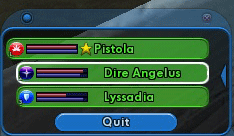
    You also need to care about the welfare of each of your teammates mid-battle. Your particular MMORPG, like City of Heroes, may allow you to have a sort of “Team Window” where you can monitor each member’s health and other vital stats.


    This little window is a godsend for healers. Out to the side, you can see all the little icons representing many of the buffs each character has on them–this helps me figure out who needs which buff, who needs healing, etc. I just look for the bright green icons to know whether I’ve buffed somebody recently, and I can easily watch their red Health and blue Endurance bars, too.

    Believe me, as a person who’s played just about every Archetype available in City of Heroes/Villains, damage-dealing characters do depend on their healer teammates to be the “net,” to catch them if they fall! Caring healer players can literally be the saviors of their teams during huge battles.

    Healers have to be responsible.

    Caring also entails responsibility. You have to be paying attention to where the team is going, not wandering off randomly by yourself because you accidentally closed your Map (*raises hand* Guilty). You also need to scan the battlefield at all times, not just focus on the particular enemy or ally in front of you. This helps you stay alert to rapidly-changing battle events.

    For example, here’s what happens when you focus too long on one particular thing as a Healer:

    I’ve selected one of my teammates’ names in the Team Window at left, denoted by the white box around the name, and have just healed him close to full health. My own health bar isn’t looking so great, though, because in healing my teammate, I’ve come a little too close to the battle front.
    See all those red numbers above Lyssadia’s golden halo? That means somebody’s damaging her. The red and blue bars just above the halo show her health and endurance–her blue endurance bar is nearly full, but her red health bar is almost half gone. I have to get her out of the line of fire fast!

    Healers have to be careful not to make themselves targets; that’s one reason I say to keep moving and keep watching your screen. Otherwise, you can end up with one very dead Healer…


    (This is what happens when I’ve gotten a little overzealous shooting stuff and forgotten to heal myself. Poor Lyssadia. Learn from my fail.)

    Healers have to FOLLOW the team, not lead.

    Healers actually work best at bringing up the rear–many healers have secondary attacks that they can fire off to prevent a few straggling baddies from stabbing the group in the back, and you can also monitor your teammates more carefully if you are behind them rather than in front of them. As the healer, don’t be the first to fling an attack or explore ahead of your group, because this is a good way to get your Empath character killed.


    (Through the confusion of colors, you can see the two names in green in this screenshot–those are my two teammates up ahead of me. Since I’m behind them, I can visually monitor what is going on, and I can click-and-heal them if I need to.)

    Several of my healers can fly, so usually I will hover above the fracas, healing, buffing, and offering a bit of cover fire when needed. This elevated position helps a Healer see more of the battlefield, and it can keep you in range of allies who would otherwise be out of range of targeted heals and buffs. Whether you choose to fight from the air or ground, however, it’s important to stay in a central position in the team–if you’re too far forward or too far back, you might not be close enough to a teammate to help them.

    Here’s Lyssadia in flight, going “pewpewpew” at the Auto Turret in her sights. My teammates were still in sight in the larger version of this screenshot, so I could take a few shots, then heal or buff if necessary.

    Healers have to heal/buff first and fight second.

    Even though most healers on City of Heroes are ranged attackers as well, they really work best if you focus on buffing everyone and healing everyone first, and only attacking if absolutely necessary. It can be very tempting to start fighting along with your teammates if you start taking damage yourself, but stay the course–if you can keep your teammates alive by a few well-timed heals and buffs thrown their way, then you won’t have to worry very much about taking damage!


    (In this shot, I’ve targeted onto one of my teammates, marked by the green box around his character, and am sending an application of Fortitude his way, which will increase his Damage Resistance to just about every type of damage for 1 minute.)

    Healers have to focus.

    Eating, watching TV, or doing anything else while trying to play a healer will not work. Even if you can type quickly, sometimes even chatting with your teammates takes too much attention away from the job at hand. Since much of the team depends on you to keep them in fighting shape, you have to maintain a focus that you don’t necessarily have to have when you’re playing a damage-dealing character.

    It can be a bit stressful, especially if you’re trying to keep up with a team whose members don’t talk about what they’re going to do before they do it. But if you’ve got a good team going, with lots of communication, it’s relatively easy to stay focused.


    (I’m staying a bit further back from the fray in this shot, because there are still several high-level enemies alive, but my teammates are generally mopping ’em up okay. I just need to be alert in case a teammate gets caught unawares by an enemy shot. This time, I’m not making Lyssadia fly into the fight just to get shot!)

    Summary

    Playing a healer does require a bit more work, but it is a very rewarding type of character to play if you enjoy being needed. It’s a team-oriented mindset that can make battle less boring and more involved…for certain, it is a VERY different kind of challenge. If you’ve never played a Healer before, give it a shot!

    Competitive Magic is for Plagiarists

    competitivemagicplagiarists
    I might be kicking a hornet’s nest with this post, but I feel this ought to be said. Competitive Magic: the Gathering, the kind played in tournaments, is usually a bunch of players copying and winning with strategies that someone else thought up, commonly called “netdecking.” When you go to tournaments, you can just about expect to see the same 5 decks over and over again. And it really makes me angry, to be honest.

    Netdecking: Plagiarism by Another Name

    Considering my background in English literature and composition, the idea of stealing an idea from someone else and claiming personal winnings from it is anathema. Where I come from, that kind of thing gets you kicked out of college, not 1st place in a Magic tournament. Any idiot can steal a term paper off the Internet, or copy from Wikipedia and the like; it doesn’t necessarily mean that they themselves have gotten any wiser from the copying. The same goes for Magic decks–just because you can copy a deck doesn’t mean you’re suddenly a star player.

    I view each of my Magic decks as an original work of art. Maybe it’s not an optimized game-winning machine, but I thought of it and it’s mine–it represents my creativity and my thoughts. Running someone else’s deck feels wrong somehow, as if I’m trying to take credit for the work they did in putting the original concept together. I would rather lose with a deck I created than win with something I didn’t have the slightest hand in shaping.

    Yet most tournament players these days win with decks they pulled off the internet, just like the player next to them did. Instead of introducing new ideas to the Magic: the Gathering community, they’re content to just take a “deck that wins” and profit from it. How does that express individuality and creativity? How does that prove anybody’s smarts? IT DOESN’T!

    This is why I get angry when I’m in a tournament full of nothing but copycat decks. I resent it when my playing skill and deckcrafting ability is judged to be of poorer quality because my lovingly crafted strategy didn’t win against a netdeck. And I hate it when these punks act so smug about winning with their netdecks, as if their win proves they’re somehow “smarter” than I am, when all they did was search Google for a few minutes. I feel like shouting, “Go home and build your own blasted deck instead of copying from everyone else, and then we’ll see who wins!”

    Why This HAS TO STOP

    I’d like to have fun again in Magic. And right now, the competitive tournament mentality is absolutely WRECKING the Casual Magic scene that I used to enjoy so much. Most people just bring in their netdecks now for CASUAL games, instead of working on deck ideas they actually thought of and want to test out. And you just can’t test a new deck against a netdeck that’s designed to win in 5 turns or less–it’s not even a contest, just a foregone conclusion.

    Maybe for everyone else, “fun” equals “beating the crap out of someone’s copied Tier 1 deck with your copied Tier 1 deck,” but it’s not fun for me, and it’s not fun for most of the Casual Magic players I’ve talked to, either. Competitive Magic definitely has its place, but I don’t want it in my living room, and I don’t want it in my casual games. Just for once, can we all just build our OWN strategies and actually have FUN?

    Depression: Not Dirty Laundry

    depressionnotdirtylaundry
    Depression isn’t something our society talks about very much. I don’t mean our “global” society–certainly in the celebrity world, we’ve heard quite a bit about depression over the last few decades. But in our individual societies, our towns, cities, apartment buildings, family units, groups of friends, we do not discuss depression very much. When it strikes our friends, or even our own family members, we are often the very last to know that there was even a problem to begin with.

    It’s sad that depression just doesn’t get talked about, not even with family. It’s somehow a shameful thing, or something we are “meant” to endure alone, not something to share…somehow, it’s almost too painful and personal to share. On the rare occasions when I have brought up the subject of depression, most people brush it aside–they either don’t want to talk about it (“I don’t like discussing somebody’s emotional dirty laundry”) or they disregard it as a real illness (“Well, if they’d go back to church/get a job/get out of their relationship/get in a relationship, they’d get out of it”).

    In this article, I seek to dispel some common misconceptions as well as offer some definitions of what depression does to a person.

    Depression is not just being “sad.”

    What most non-depression sufferers do not understand is that depression is not just “feeling sad,” but feeling NOTHING, as Allie Brosh of Hyperbole and a Half describes in her two posts on surviving her own depression. Things you used to love, you could care less about now. Life itself seems pointless, and enjoyment seems beyond the scope of your mind.

    For instance, when I suffered my last major attack of depression in 2008-2009, I watched as all my creative processes slipped away into the mist–first, my web designing, then my poetry, then my musical composing, and finally my singing. I didn’t just feel sad; I felt as if nothing was enjoyable anymore, and I suddenly had no mental energy left to do anything anymore.

    Depression is not mere laziness or “being emo.”

    It angers me when somebody implies that depressed people are just “being lazy.” Laziness isn’t even part of it–you WANT to get up, you WANT to do things, but the minute you try to climb out of the bed, the horrible nothingness crushes in on you again, leaving you breathless, absolutely unable to fight the slow encroachment of despair. Suddenly, everything takes so much darn effort; just going to the store and facing the stares of people is unbearable, and just the thought of trying to talk to somebody becomes a terror-inducing idea.

    As for being “emo,” the emo and goth cultures simply romanticize depression as sadness, and make a fantasy out of suicide; I dealt with the grisly realities of depression and suicide when I drove down the road every day after teaching and thought about driving straight into a telephone pole, just to end the monotony that my life had become. That wasn’t normal for me–I was nonviolent and shuddered to think about death, and yet I was nearly overcome with the need to escape my life.

    Depression eats your identity and your life.

    Each time I suffered depression, especially the last time, I felt hollowed out…and yet, to all the rest of my friends and family, I was normal. They could not see what I felt inside, and since I felt unable to talk to anybody about it (including God–it was like I had forgotten how to pray!), I endured most of it alone. Having lost the ability to feel and think as normal, having lost the will to be creative, my inner self seemed like just a shell of my previous personality, and I simply kept up the facade to keep others from asking questions and giving me advice I couldn’t even begin to follow.

    My life’s normal rhythms, too, seemed lost in a void. During the last attack of depression, I often came home from student teaching, thunked my books and papers on the desk, stripped off my shoes, and landed in the bed almost fully clothed, to sleep for nearly 6 hours. Then I’d be up in the middle of the night frantically trying to grade papers and crying too much for me to even focus on the task. Again, nobody else saw this; I tried to hide this change in routine even from myself. Depression overrode who I was for those endless months, leaving me with little energy, lots of irritability and impatience, and an overwhelming combination of boredom and sorrow.

    Depression manifests in different forms.

    My experience of depression is not uncommon, but there can be other symptoms. Other depressed and formerly depressed people reported loss of interest in hygiene, hoarding trash items, not going out in public anymore, and avoiding social contact, as well as trying to self-medicate with drugs and alcohol. Some depressed people don’t think about suicide all the time, but it can happen with any manifestation.

    For non-sufferers, realize that this illness changes a person, and the depressed person needs your compassion and understanding. Depression attacks every part of you, body, mind, and soul, but sometimes the attacks are a little more visible than other times. People who seem wonderfully well-adjusted in public may lock themselves away at night and weep about formless problems that make no sense.

    Depression can be fixed.

    The thing that really helps with depression are good friends and family who keep asking after you, who keep trying to contact you regardless. They can help you remember what’s good about life, as my friends and family did for me.

    I was incredibly lucky to not only have a supportive immediate family, but a wonderful boyfriend who stood by me, loving me regardless of the changes in my personality during that time. That, plus a timely divine intervention, saved me. (I literally was sitting on the end of my bed staring at the stacks and stacks of papers I had to grade, the stacks and stacks of assignments I had to complete for my graduate school courses, and I found myself thinking, “I might as well kill myself–I’ll never get them all done.” Then, a little thought I couldn’t identify as mine popped into my head: “Why do you want to kill yourself over pieces of paper?” Up until then, I thought the “still, small voice of God” was just a poetic metaphor. I have since experienced it as a real phenomenon, and it snapped me out of my desperation just enough to begin to heal.)

    For other depressed people, antidepressants work wonders and keep them stable long enough for them to recreate a life for themselves. I was desperately trying to avoid having to “take a pill every day for the rest of my life to stay happy,” and for now, I’ve managed it, but that doesn’t mean I won’t need one in the future. Depression can sometimes recur in cycles, but it is manageable if you get help (or have great friends and family who help you get help).

    A Few Final Thoughts

    One reason I decided to write this post is because I read an eye-opening book called The Noonday Demon, which is all about depression, its effects on people, its history and social knowledge, etc. Reading about others’ experiences with depression has helped me recognize more symptoms within myself and others. Though it’s a jarring, poignant read, I believe this book is very useful in learning how to empathize with depression survivors.

    By sharing my personal experiences of depression, I hope I’ve taken away some of the “dirty laundry” characterization of the illness. I was able to climb out of my depression without the use of antidepressants, thankfully, but there are an unfortunate number of people who cannot climb out without them. Depression comes in all shapes and sizes, all severities, and affects anyone. It strikes sometimes out of nowhere. And surviving it does not mean you’re any stronger than someone who is still suffering–it just means you’re lucky.

    Respect Retail Workers

    respectretailworkers
    Retail workers, as well as customer service personnel in general, have a very tough job, in my opinion, because they have direct contact with the public.  We as customers, admittedly, can be awfully tough on salesmen and saleswomen at times–how often have you seen another customer yelling at a cashier in line at a big-box store, or getting agitated while trying to return an item?  Heck, haven’t we all BEEN that customer at some point?

    What we as customers don’t realize is that we individually aren’t the only people that retail workers see all day.  Literally hundreds of people pass through their store every day, and each of them have their own set of demands to make.  Having worked retail myself, and having two parents who have worked pharmacy retail for nearly 40 years, I not only have heard horror stories, I’ve lived them, too.  Customer service and retail workers have a very difficult job, and it’s certainly not for everyone.

    Why should we respect these people who chose to take on this job?  Here are several reasons:

    They are expected to stand all day long.

    Most healthy people don’t think twice about standing in line for a few minutes, even if the wait is boring.  But how about standing on your feet for 6 hours with no rest, or 8, or even 10 or 12?  This is what is demanded of most retail workers who have to serve at cashier counters and the like.  You cannot sit down–if you do, it looks like you’re on break, and you have to “look available,” no matter how bad you hurt.

    For me, this turned out to be impossible to deal with–I have terrible nerve pain, bruising, and swelling of the legs and feet that make it excruciating to stand or walk for long periods of time.  Needless to say, I had to quit one of the retail positions I took because I hurt so badly.  But I saw many co-workers stand for hours without breaking a sweat or even losing their smiles.  They bore up under that physical strain, which is much more than it looks, and they did it while looking pleasant and friendly.  Not only do retail workers have to bear their physical pain day in and day out, but they have to make it look effortless so that their customers feel that they are being served by happy people.

    They are expected to deal with people who treat them like sub-human beings.

    Some people are just plain mean to customer service personnel.  As soon as they come in the door, retail workers cringe–suddenly, retail workers are the “enemy,” somehow, even though part of their job description is to be ready to help.  For instance, there was a woman I waited on in a local bookstore one time who barely even looked me in the eye, even as I tried to be friendly and assist her; she eventually called the manager on me twice, once because I was “hounding her,” and the second time because “I wasn’t assisting her.”  I was, admittedly, glad to see the back of her–I felt as if I were the lowest bug in the dirt when she spoke to me, and it made me mad, because I didn’t deserve to be treated that way.

    When you walk into a store or restaurant, it is important to at least treat the workers with civility, even if you don’t feel much like being friendly.  They are fellow human beings, after all, doing honest work for a paycheck just like you.  Believe me, a friendly customer is a blessing–someone who understands how busy a store or restaurant can get, someone who waits patiently rather than shouting “serve me now!!”.  Unfortunately, these customers are a minority–more often, you get shouted at, cursed at, or generally ignored until needed, as if you are a soulless creature with no emotion.

    They are expected to instinctively know when their place of employment is being robbed/defrauded.

    No human is equipped with eyes in the back of his or her head.  But it sometimes feels as if you need that surgery to be effective employees in retail work!  Somehow, amid your regular work of serving customers, running their purchases through, and keeping the business clean and tidy, you are also supposed to know just when a shady customer is about to make a five-finger discount.  It’s not easy–those who like to steal usually disguise themselves pretty well, and it’s hard to be assertive enough to walk up to somebody and say “Have you paid for that yet?”, not knowing if you’re going to get a gun or knife pulled on you.  Bravery is one of those “hidden” job requirements for retail personnel of any sort.

    They are expected to take on-the-fly schedule changes without a frown.

    Someone sick on Wednesday night when you have choir practice?  No buts about it–you’re coming in to work.  Your kid have a performance on Tuesday night, but the boss needs you to do emergency inventory?  No way around it–you’re coming in to work.  Retail workers are expected to pretty much have no highly-scheduled life outside of their jobs, because you never know when you’ll be called upon to cover someone else’s shift, or do extra work outside of normal job hours.  You are literally supposed to drop everything, even if that “everything” is really important to you, because people must be on hand to man the storefront. Since retail these days rarely even stops for holidays, the whole career is very time-sensitive, and you have to be ready to work at any time.

    Admittedly, many jobs are like this these days, with people becoming more mobile and business becoming more demanding.  Still, with retail being as punishing on the body as it is, you often need more time to recover than your schedule can give.

    They are expected to be constantly ready to give 100% or better.

    Are you a cashier?  You better scan and bag those items super-fast. Are you a waiter?  You better never drop a dish or forget a customer.  Are you a receptionist?  You better type at over 100 words a minute or bust.  And there’s tons of other retail- and customer-service-oriented jobs that demand more than your best.

    Whenever you deal with customers, they generally expect you to be expert at your job, know where everything is, be able to answer any questions–you are their window into the business, and they need information and service fast.  Many things are automated by machines these days, so it’s not surprising that many people treat human service personnel as if they should be machines too, never making a mistake, never forgetting a detail, and never needing to rest.  Unfortunately, not all of us can be Commander Data of the U.S.S. Enterprise; we get stressed out, overtired, or just plain sick, and things tend to go awry because we’re not functioning at 100% anymore.  But we still have to look and act like we’re functioning at 100%.

    Summary:

    When you’re a customer, keep in mind that the person waiting on you has likely been there for hours. He or she may be in pain, stressed or tired, or may be missing out on a part of life that doesn’t involve their job. But he or she is still serving you, and trying hard to meet your needs. 

    Even if salespeople seem surly or rude, patience and a smile can alleviate that very quickly–answering them with rude comments of your own will only exacerbate the situation.  Be kind to retail workers; they’re doing their job so you don’t have to do it for yourself!

    Politics: Remember “United We Stand, Divided We Fall?”

    unitedwestand
    Right now, the political climate in America is like trying to live on Venus–unbearable for most humans. In this highly-polarized, overheated atmosphere, we daily suffocate on sound bytes while trying to breathe in the facts and figure out what we believe to be true. The crushing gravity of “us vs. them” echoes through every broadcast and article produced by either side. “Our” side is always obviously right and true. “Their” side is always corrupt and hypocritical.

    In light of this, George Washington’s counsel against political parties in his farewell address rings bitterly true. With all this pointless bickering between political parties, we have done a better job dividing ourselves up than any other conquering nation could ever do. The reason most countries aren’t picking an open fight against us these days is because we are like an animal mutilating itself, tearing at its own feathers and skin, trying to scratch out its own eyes. Seems like impossible imagery, I know, but that is what is happening. We lose all respect for our fellow Americans when they tell us they are part of the “other” political party–instead, we stop listening to them and stop seeing them as an actual human being, because they happen to disagree with us politically.

    My Personal Experience with Political Divisions

    Take my situation, for instance. I’m a registered Democrat, which is about like saying I’m a registered Satanist where I live in the Southeast United States. I am a speck of blue in a sea of red; I cannot share my political opinions as “Democratic” beliefs anywhere I go, because it will immediately start a firestorm. I, instead, have to be careful to keep the word “Democrat” completely out of it, because as soon as most people from my neck of the woods hear that, they just stop listening.

    I have been personally called “baby-killer” because of the pro-choice movement associated with “my” party, even though I actually don’t like abortion at all; I have been accused of supporting illegal immigrants over my own fellow citizens, and contributing to the “nanny state.” Yet I am what most people would call a “bleeding-heart liberal,” because I support things like welfare, education, and healthcare. (At least, I think “bleeding-heart” is the proper term. I’m not even sure which derogatory label fits me anymore.)

    But We ALL Have Trouble with Divisiveness–Even Me!

    My negative experiences, however, do not make me the greatest listener when a conservative point of view is expressed. Some such opinions are expressed with such caustic verbal acid that I can only take so much before my ear canals begin to burn. Other opinions strike me as so horribly wrong that I can’t even begin to comprehend what logic produced them.

    Around here, for instance, I’m usually hearing nasty racial epithets about President Obama, or endless whining about either the “socialist” healthcare system, or how much deficit the government has run up in passing stimulus bills. Meanwhile, I sit there and silently fume that George W. Bush ran up just as much deficit ordering the Middle East wars, and that my own father, who’s worked hard all his life, has also benefited greatly from that “socialist” healthcare. My mind is utterly closed to these people while all this is going on–I hear nothing of what they’re saying after a while, and it’s hard to even view them as people of sound mind. Thus, I’m no better than the people I’m trying to listen to, because while I’m trying to be an “objective listener,” the rage is bubbling up the back of my throat, just waiting for a weak moment to burst forth from my lips and say something I can never take back.

    Divided = Defeat!

    This is exactly the kind of atmosphere I’m talking about, and it can’t go on. “United we stand, divided we fall” isn’t just a pretty platitude–we’re doing a great job of defeating ourselves as long as we continue not listening to each other and not supporting each other. American conservatives and liberals actually need each other, in my opinion. The conservative party is generally a party of doers, our military might, our sword. The liberal party is generally a party of thinkers, our social conscience, our shield. Liberals need conservatives to shake us out of our reverie and remind them of what needs doing rather than what needs thinking about. Conservatives need liberals to restrain their might and remind them of what needs more thought rather than action. (It’s not that there aren’t some thoughtful conservatives and some strong-willed liberals–this dynamic I describe simply seems to be the current general attitude of each party.)

    If we tilt too far to either side, or only listen to one side’s arguments, we will be weakened, as we are right now. If we, however, start listening to each other’s ideas and stop name-calling like first-graders, we might actually get something positive accomplished.

    Leveling Up in Life

    levelingupinlife
    These days, experience-based games like World of Warcraft are very popular. Players of these games generally play through many quests, defeating enemies, dedicating many hours to “leveling up” their character, getting ever closer to the top level, where they no longer have to gain experience, and they are fully powered-up and epic in battle.

    Does this sound familiar to people in the modern workforce? To me, it reminds me a lot of the “rat race”–the constant striving for promotions, raises, better hours, more vacation time, more leadership, etc. People play games like WoW to escape work, or so I thought, but instead they seem to be duplicating the same conditions in play as in work.

    Life Today = Meeting Goals Rather Than Having Experiences

    We generally live our lives, these days, like it’s a goal-oriented game rather than an experience. Stopping and smelling the roses went out of our heads a long time ago, replaced by a drive to get “the most” and “the best”, all in “the fastest” time. Students who take AP classes to get college credits while still in high school are hailed as “go-getters;” collegiates who manage to get through a four-year degree in three years or less by taking classes during the summers (and even winters) are praised for their “academic drive.” And people in the modern workforce who advance rapidly through their chosen field or company are looked on with favor.

    This drive even extends down to our children, sad as that sounds. No longer can kids just go outside and play at random games; now, they’ve got to be learning all the time with “educational” games. They’ve practically got to know how to read and write before they hit kindergarten, otherwise they’ll be considered “behind.” (Not knocking educational games, but surely there’s time enough for them to just be children, too?)

    This Used to Be My Life, Too

    I lived like this, trying to “level up in life,” for a long time. I was one of the “bright” kids in my school, a girl who was going to get out there and be somebody before she was 30. I picked up on things very quickly, was fast, accurate and (usually) neat in my preparations; I got good grades and participated in all sorts of activities, and so I got honors and won awards. I took that same drive into college, obtaining my BA in English with Magna Cum Laude and a slew of other academic honors. I even advanced into my ill-fated teaching career with that same attitude, pushing to get my Masters in Middle-Grades Education in 2 years so I could go out into the world and make money doing what I supposedly loved.

    But where did all that drive and ambition get me? I ended up crash-landing back at home, recovering from severe depression and suicidal feelings. All that pushing and stressing and struggling, and it had gotten me no honors this time, no rewards. I couldn’t teach anymore; I just simply wasn’t made for the job, even though I had worked so very hard to achieve it. So I began to question this “most/best/fastest” way of life. What had all my striving been for, in the end? What had I been doing with my life all those years I was working to become something? There are quite literally years of my life I barely remember except for vague memories of working my butt off writing papers or completing tests, all to get “somewhere better”–a better college, a better job, etc. I thought I was doing it right, living a correct life.

    My New Life: All About Experiences

    In the wake of my capsized teaching career, in which I had faced death at my own hands, “leveling up” in life didn’t seem as important anymore. I began to focus instead on rebuilding my charred inner world, trying to salvage what I could of my life and my interests. And, in fact, I rediscovered myself among the ashes, and began to write my novel as a way to pull myself forward. I began to live life as I had never experienced it before–weeks of just BEING rather than DOING, just writing rather than publishing, just playing the piano rather than performing, just being with friends rather than being constantly “busy.”

    Some people might look down on me for this, maybe thinking I’ve become complacent, lazy, and unmotivated. Nobody’s said anything to that effect, of course, but since I spent such a large part of my life driving ahead at 80 mph, it feels very strange to be going suddenly 30. Or maybe I’m still a bit paranoid about what “other people” think of my life, worrying that people will think I’m not as smart as I once was, or that I just don’t care anymore.

    But this new speed of life is far from “not caring.” Actually, in a way it feels like I’ve dropped an addiction: an addiction to perfection, to needing to be the absolute best, fastest, and most. Some days I’d like to care about that stuff again, because it felt somehow normal to be addicted to that lifestyle. But I know that if I start caring about it, it’ll be as virulent as any addiction, taking over my life again before I know it. I don’t have to chase after every success if the chase is going to dehumanize me and strip me of joy; I have to chase after the successes that are important to me. And right now, just living is enough of a success, considering I was contemplating suicide not too long ago.

    Am I Enjoying This? YES!

    Now that I’m not so worried about “leveling up” in life, I find myself able to enjoy my life. Sure, days aren’t as action-packed as they used to be; sure, I’m not doing a whole lot these days beyond writing, singing, blogging, designing, and gaming. But…I’m okay with it. I don’t have to get to the next level of my life soon–I think I’ll just roam around in this game and explore a bit, enjoy the level I’m on right now.

    Competitive or Casual?

    competitiveorcasual
    This is one of the most salient questions in all kinds of gaming, not just the nerdy kind with dice, but even video games and sports: do you play competitively or casually?

    The question may seem to be a no-brainer for some people–of course you play competitively. What other reason would there be to play, except to win and learn how to win more? Once you remove the competition aspect from a game, a lot of the fun of it leaches out, and it becomes a mere distraction instead of something you can rationalize spending time on.

    But, for others, the competitive angle actually eats away at the heart of what made the game popular in the first place: it’s fun. You know, fun? What we used to have playing this game before it became a nail-biting, tooth-grinding, money-gobbling event? For that matter, when a game is not played casually anymore, is it even a game anymore?

    Where I’m Coming From

    I’m mainly coming from a background of collectible card gaming and miniatures gaming with this article, but you can see elements of these same two schools of thought clashing in the worlds of sports, races, card games like poker, etc. In any type of game, it seems, you are always going to have the people who absolutely have to be the best at every game they play, and the people who play it to have fun with friends and socialize rather than win.

    But sadly, the competitive type tends to quash out the casual type when they are brought together, like hunters shooting bald eagles–the casual players are already endangered due to everything in life having to be a competition in this day and age. Once the competitive players start sucking the life and fun out of a game by making it all serious, the casual players eventually stop trying to play. It’s no fun sitting across the table or standing across the court or field from someone who acts like every missed roll or every missed play is a nail in their coffin.

    Yes, You Can Be TOO Competitive

    I personally am competitive in my heart, but I hate the way that competitiveness transforms me when I play a game. Suddenly, I have to win, I have to be the best, because I’m such a perfectionist I can’t stand to lose. It really drains the fun out of the game for me, and it’s not fun for my opponent to watch me disintegrate into wordless anger every time the dice don’t roll my way. Thus, I’ve largely gone toward casual gaming, to take some of the intense pressure off and to try to train myself to have fun again.

    One thing I’ve noticed, however, in my odyssey away from competitive gaming, is how much competitive gamers look down on casual gamers. To them, we are an inferior breed, weaker players, not really even worth “real” players’ time, because we don’t take the game as seriously. Having been very competitive before, I understand why they get like this–sometimes, it feels like the whole world is staked on your next card, your next shot at the basket. But when a game becomes that important to you, hasn’t it become less of a hobby and more of an addiction?

    When Games Are No Longer Fun…Re-Examine Yourself

    I don’t intend to solve this quandary in one blog post, but I did want to bring this to people’s attention. Whether you play games just to have fun or you play them to win, if you’re happy doing it, then you’re doing something right. The only time I worry is when it seems that games are no longer fun and they are instead things that you have to win at to be happy. Then, I believe, competition has crossed the line into obsession.