Category Archives: Saturday with the Spark

Creative pursuits and life-related happenings.

Papercrafting Post #6: Parchment Craft/Pergamano

Today’s post features a papercrafting art that is both decorative and functional: parchment craft (or Pergamano). It is generally used for greeting cards and gift tags, but it’s also extendable to ornaments, picture frames, and even boxes!

How Do You Do It?

To craft with parchment paper, you can emboss or paint designs onto the paper, and/or cut it into interesting shapes. Parchment is thinner than regular paper, so it takes better to raised designs, like fancy lettering or detailed shapes, but you do have to be careful with it so you don’t accidentally tear it.

Tools You Need and Basic Techniques

  • Mapping pen (used generally with white ink) – for drawing out larger, bolder designs on the “rough” side of the parchment paper before you emboss them
  • White pencil – for tracing smaller, finer designs before you emboss them
  • Embossing tools – for raising designed lines on the paper. Press down/rub back and forth gently on the “rough” side of the parchment, and on the other side, your design will appear as a whiter area. Narrower embossing tools make sharper lines; wider tools make softer raised areas.
  • Scissors – for cutting and shaping the paper
  • Needle tools – for perforating parchment, lending a light and lacy look–great for borders and within embossed designs. Single-needle and multi-needle tools are available to create different shapes!
  • Felt pads – for cushioning your parchment so that you can emboss and perforate the paper without damaging the paper or the surface underneath.

Other Fun Techniques

  • Add color with markers, acrylic paints, colored pencils, crayons, and even watercolors. Doing this gives your parchment crafts a more modern look, since colors were not traditionally used for Pergamano until the 20th century.
  • Use the needle tools in concert with small scissors to create interesting borders for your designs. Perforating and then cutting selectively can give you lovely snowflake-like looks in a matter of minutes!

To Learn More:

ArtofParchmentCraft.com
Parchment Craft Magazine
Free Pergamano Patterns
CreativePapercrafts.com Pergamano page
The Pergamano Place

No Drama Queen, Just a Theater Dabbler

This week, I thought I’d write a little creative anecdote instead of my usual “creative advice column”-style post. It’s all about drama–theater drama, not emotional drama. 😉

Acting as a Creative Impulse

Bringing a character to life is just as creative as other art forms–you have to make this character feel real, human, believable. You have to make the audience believe you ARE this person; the best actors make you love them or hate them even off-screen and out of character, just because of the character you saw them play last.

The skill with which an actor does this comes partially from knowing the lines and knowing the actions, and partially from the actor’s imagination, imagining how someone would look and sound doing these actions and saying these lines. And we instinctively know good, believable acting when we see it!

My Small Contributions to Drama

Though I’ve never been a complete theater buff, I have done some minor roles in local productions here and there, mainly during high school and early college. I’ve done enough to know that I may not be a show-stopper (my disabilities and clumsiness keep me from that), but I do seem to do comedy pretty well. (My life is full of pratfalls and epic verbal fails…maybe that’s where I got the practice. LOL)

Experiences On the Stage

I’ve played a random assortment of supporting characters (a friendly old biddy, a young schemer, a couple of motherly types), and pretty much any role is cool with me–I actually like to play supporting characters more than leading characters; less pressure, and sometimes you get funnier lines because you’re the comic relief.

I’m more easygoing about my role, mainly because I enjoy taking roles that other people don’t like to play. But it’s also because I’ve acted alongside some supreme prima donnas who wouldn’t take less than the leading lady’s role (there’s at least one in every production, it seems). People like that make the whole set tense!

I prefer to keep my out-of-character acting out to a minimum, though I will admit that long hours of rehearsal on flat, painful feet make my tongue a little sharper than usual. Physical endurance? What’s that? 😛 That’s one reason I’m not in major dramas; my body just doesn’t care for the tedious bits of rehearsal (of course, all done while standing in one place for what feels like hours).

I’ve been lucky, however, that in all of the productions I’ve been in, there has been time after rehearsals for me to rest–professional actors are not so fortunate always! I’ve also been blessed that most of the local actors I’ve worked with have been fairly sweet individuals, barring a few who thought too much of themselves. Generally, I have been part of convivial and companionate casts who truly cared about each other; a rarity, from what I’ve heard from others who are more experienced in theater.

Backstage: Character Prep Work

One of my trademarks in acting is that I flesh out my characters before I play them–I tend to go home on the first night after receiving the script, and extrapolate the character out from the dialogue and actions into a full-blown short story. It’s something like an autobiography for the character.

Once I do that, I have a much better and easier time playing the character because I “know where they’re coming from,” so to speak. (I’m not sure if this falls solidly into much-maligned “method acting” or not, but it sure works for me. I just act better when I can find something to empathize with in the character–even if she is a crazy villain. :D)

I like to flesh out characters because I want my acting to be the best it can be for the sake of the whole production. When people don’t care about their characters and are bored with the lines, it shows, and it really brings the rest of the scene down. Populating the scene with a well-acted “supportive character” can often help the other members of the scene get more excited (and deliver better performances of their own).

Onstage Helping? Yes, it’s Possible!

I also like being able to keep tabs of others’ lines as well as my own (thanks to God for the good memory I have), just in case one of them forgets a line; I am pretty good at ad-libbing in a reminder line if I have to.

I remember in high school, one very young, very frightened fellow student I worked with in one production forgot her entire semi-monologue in one scene during the performance. There was a very tense, gut-wrenching, eternity of a second, and then I prompted her with a question that rephrased the first sentence of her speech. She recovered enough to say the speech, and I was so happy for her I accidentally complimented her onstage with an emphatic “GOOD!” The audience got a huge laugh out of my reaction, and we carried on. The teacher later told me that I had done well (and even made her laugh).

This is part of the excitement of acting–being able to help out and make the production good, or react and recover from gaffes. Like the time I completely bungled my whole dance routine up because I literally got off on the wrong foot–since I was playing a granny, I waved my arms about and shouted to my dance partner, “Lordy, sonny boy, don’t drag me ’round this ole dance floor like a dead fish!” Much, MUCH LOL followed–I don’t think anybody kept a straight face! Stories like this make for great after-party anecdotes; afterwards, you can all laugh about how you made it through despite the fails.

Ever Tried Acting for Yourself?

I’d like to hear from my fellow actors out there–anybody ever done any off-off-off-Broadway stuff, or gotten write-ups in the local paper? ^_^ It’d be fun to hear from some actual famous people!

And even if you haven’t acted much before, have you ever tried your hand (or voice) at it? It’s a lot of fun, if you’ve never experienced it. 🙂

Christmas Glassics: Saturday with the Spark

Creative thinking and activity, ahoy! Today’s Glassics post features all the artsy posts I’ve done on Crooked Glasses since July 2011, from writing to papercrafting, music to drawing. You can also view my first Saturday with the Spark Glassics post for the creative posts I did before July.

Sparking Creativity

I’ve written a good bit about tapping into one’s own creativity. Using dreams to inspire yourself is one way; I’ve also used Play-Doh as an analogy for creativity (sounds funny, but it worked out well!). I want to encourage people to stop thinking they’re not good enough to be artists, allowing themselves to use things in their everyday lives to jump-start creative thinking.

Philosophies of Art

The big philosophical question I pondered this season was: “Is art for entertainment or for meaning?” This is one of the deepest-thinking posts I’ve written in this entire category so far, and I think it gets to the salient point of why we create art at all, as humans.

Writing

Knowing a good bit about the craft of writing (and doing my best to practice it and get better), I have blogged about practicing your writing skills every way you can, as well as inspiring yourself by finding a topic you love to write about. I also covered how to deal when writing feels like punishment, when it feels like your brain has locked up on you and won’t produce a single syllable more.

And, since I’m practicing my noveling craft (is that a word? Wellp, it is now), I’ve written a few articles as helpful advice for myself and other novelists. Wading through a tough/boring part of my book by experiencing what I’m trying to write has really helped me get back on the writing horse; my post about expanding the world inside my book made me remember to go back and add more details to my own works.

Crafts

Along with my thoughts on beautiful beaded jewelry designs, I began a series of papercrafting posts this season, as well: making greeting cards and gift tags, and learning the skills of ornare, quilling, and origami. I plan to expand this sub-category a good bit in the new year!

Visual Art

I’m not much of a visual artist, but I have written a few posts this time around about art. I did one that shows how to shade your artwork for a more 3-D look, and I also depicted my own versions of digital cut-and-paste art. (Might not be the best in the world, but it’s fun to do!)

Music

Since I’m a longtime pianist, composer, and singer, this category understandably exploded with posts on music this fall and winter. I wrote about how singing in choir saved my life, trying to write a “catchy fast song”, and musical exploration with just a keyboard. My great love for the key of C-sharp also peeped in this fall, as well as my affinity for making my own movie soundtracks (it’s not as laden with mad leet skills as it sounds, but it’s still quite fun). Lastly, I discussed my peculiar ability to find the musical note that matches someone’s personality, and even write songs about them.

Get Comfy, Read, and Be Inspired!

I hope these posts get you thinking about the types of creative work you’d like to do; I hope they also expose you to different creative thoughts and activities that you might like to explore more. They’ve certainly helped me explore the various reaches of my own creative thought, and even gotten me to try my hand at art techniques I never would have explored otherwise. 🙂 Enjoy!

Well, Have a Nap–Then Fire Your Cylinders!

[/shameless paraphrase of “End of the World” flash video]

Dreams as a Sleeping/More Creative Life

Dreams are powerful experiences, at least in my life. I often kid that I don’t read horror novels or watch scary movies because my nightmares are free (and forced on me). I’m sure Stephen King could have a field day with my subconscious’ meanderings; from horrible rites of death to gruesome imagery, my dreams often leave me terrified to go back to sleep, even at close to 30 years old. I could probably make money off these dreams if I wrote ’em down and made ’em into a book…but I’d probably go mad trying to write it all. LOL!

But as scary as my dreams can be sometimes, they also can be veritable reservoirs of creativity. During the night, your mind isn’t as constrained by what is “right” and “proper,” what is “beautiful” and “pleasing,” and sometimes you end up with powerful imagery and plotlines that are just crazy enough to work.

Creativity & Dreams through History

Many artists of every type have harvested their dreams for inspiration in their works. One of the more famous stories of a dream inspiring creativity is that of Samuel Taylor Coleridge, a poet of the Romantic era (1800s), who woke from an opium-induced dream and wrote one of his poetic masterworks, “Kubla Khan.”

We, too, can use dreams as a jumping-off point for our creativity (even without pharmaceutical help 😉 ); if we can allow ourselves to dream, we can allow ourselves to reach ideas we haven’t even TRIED to play with before.

Harvesting Creativity from Dreams

  1. First, you’ve got to have a really intense dream. Positive or negative, lovely or scary, whatever it is, usually the most intense dreams translate the best into waking creativity.
  2. When you wake, write down everything you remember from the crazy dream you experienced last night–don’t leave out any detail, as silly as it might seem!

    Don’t try to make sense of any of the images, or try to make it into a “sensible” story yet. If it happened in your dream, write it.

  3. Don’t let anything interrupt you, at all, till you’re finished. Coleridge, according to the popular story, answered the door in the middle of his poem, and when he returned to his desk, the dream had fully evaporated. “Kubla Khan” looks like a finished masterpiece, but in reality it was probably only a quarter complete.

    Whether this anecdote is true or not, dreams do tend to fade very quickly after waking. Don’t let this happen to you…capture as much of it as possible!

  4. Later in the day, go back and see what the meat of your dream is. Pick out imagery that really stood out to you; pick out characters that intrigued you, delighted you, even frightened you. Anything about the dream that really hit you, really made you FEEL and EXPERIENCE the dream, is worth thinking more about.
  5. Transform this raw material into any form of creativity you wish–a song, an instrument solo, a short story, a painting, a play, even a dance. Use those characters, that imagery, that feeling, whatever it was, to carry your idea forth in a way you may have never expected to do so.

Most Importantly, Have Fun!

Don’t worry about making this dream-creation “good” or “interesting to others”–primarily, enjoy your creative inspiration as your own, even if you weren’t aware that you were creating it! To embrace your creativity, your ability to MAKE cool stuff up, you first have to accept that you CAN do it…and your dreams give you the perfect license to do it.

Everyday Writing

What can you use writing for in your everyday life?

For many, writing is confined to their to-do lists, but there are many ways you can incorporate writing even if you don’t think of yourself as “creative.”

For one thing, look at the plethora of status updates and tweets that go around the Web on a regular basis. These bitsy life updates speak volumes about the people who make them, just as much as writing a long blog post would.

Today, I want to encourage you to write every day, even if you don’t think of yourself as a writer, even if words come with difficulty. Writing can be helpful, soothing, invigorating, and even cathartic. Try the following tips to incorporate a little bit of writing in your day:

Just a Word, a Sentence or Two

  • Leave a little positive note for yourself to discover in the morning. Just as you take time to write out or type up a to-do list, which can be more negative in tone, take a few minutes and make a happier-sounding note. Something like “smile, it’s almost Friday 🙂 ” or “don’t forget your awesomeness” can make you grin long enough to face your day with a little more happy.
  • If you hate writing (and reading) your to-do list, add jokes or hilarious phrasing. One of my permanent to-do lists is titled “THINGS I GOT TO PWN TODAY OMG LOL”, and it’s full of Internet and LOLCat references. (“I can haz chek in the bank?” XD) It makes me laugh every time I read it!

    It also casts my to-do list in a new light; each part of the list is something I have to pwn (defeat) rather than just drag myself through. I can pretend I’m a to-do list warrior!

  • Try a Twitter account, and post one short thought of yours, once every day. It can be a random philosophy you thought of, a question for other users, a grumble about something bothersome, or even just a statement about your day. The 140 character limit forgives those who don’t care to write a whole lot every day (one reason it’s called a “microblog”).

Step Up to a Paragraph

  • If you have a lot of worries running marathons in your head like I do, try writing them down in paragraph form. These five questions will help you shape your worry paragraph and get that worry out of your head at last:
    1. 1st sentence: What am I worried about?
    2. 2nd sentence: Why does it bug me so much?
    3. 3rd sentence: What is the worst-case scenario for this worry?
    4. 4th sentence: What is the best-case scenario for this worry?
    5. 5th sentence: What can I do to make the best-case scenario come about?

    Here is my example “worry paragraph:”

    I’m worried about my hard drive being unrecoverable. I fear losing 8 years of very hard work that isn’t backed up. At worst, I’ll have to restore data from my old laptop that died in June 2010, which means losing a year and a half of irreplaceable work and purchased digital content. At best, I will get all my data back. I can’t do anything personally to get my data back, but I can have it shipped to a data recovery company who can potentially take care of it.

    What this does is to quantify the worry. Instead of formless thoughts whirling about constantly, you can refer to this worry paragraph every time you find yourself thinking about it, and the paragraph details everything about the worry you need to know. Soon, you find comfort in what you yourself have written, knowing that the process need not be thought about anymore. (Mine’s already working for me!)

  • Along the same lines, if you’re sad and anxious, write a “5 reasons to smile” paragraph. All you have to do is find 5 answers to the question “How is my life going well today?” No matter how big or small the reason, if it makes you smile, it’s worth writing about.

    Here is my example “smile paragraph:”

    The headache I had yesterday is all gone (woot). So is the swelling on my ankle (yay!). I got all the gift wrap I need for under 12 bucks today, spending almost $20 less than I thought I was going to. I was able to fix the family laptop’s software problem. And I get to sing with my church choir today and tomorrow.

Try a Series of Paragraphs

  • Try an old-fashioned journal entry if you don’t want to post things on the Internet. Grab any size piece of paper and pen/pencil, and just start writing your thoughts down. Anything that’s on your mind, written any way you want to state it. Own the fact that you ARE writing! You can do this!

    Once you’ve written it, you can either read it over right away, hang it up somewhere prominent as inspiration, or file it away for later–just make sure to return to it within a week, and see how your writing affects you. You have to love your writing first before the passion for it seeps into its very substance, and to love it, you must experience doing it and reading it afterward.

  • Do you have a strong opinion about something? Write about it! Just like I write my opinions in my blog posts each week, you too can write a blog post or Facebook note about whatever you wish to.

    The following structure is something I go by to help me form my posts. It’s largely based on the five-paragraph essay style; you can take the girl out of English classes, but you can’t take the English-class training out of the girl. 😛

    1. Introduction/Hook: Make your topic sound interesting. Rhetorical questions about the topic (see where I used that in this very post? :D), or a personalized anecdote referencing the topic really makes me want to read about it.
    2. Background Info/Basic Concepts: For those who don’t know very much about the topic, give a little bit of basic information. This also gives you a chance to talk about the big concepts behind your opinion.
    3. Your Opinion: The meat of your blog post. Explain why you think what you think, in as plain language as possible.
    4. Others Who Agree or Disagree: Gather information from other bloggers or just other people about why they agree or disagree with your position; this gives your user a broader view of the topic than just your opinion. Quote the other people you’ve consulted, and link to them if possible within this paragraph.
    5. Sum It Up: Condense down your points into short sentences for a good summary. One sentence to describe the main point of each paragraph before your summary works very well.

Summary

Writing need not be intimidating. In fact, if you get a little bit of practice with it and accept your writing as it progresses, you can find yourself surprisingly expressive. Trying some or all of these various writing tips can give you the experience you need.

Start out small, maybe less than 140 characters at first; then, as you get more confident, try writing paragraphs, and then series of paragraphs. Who knows, you may be the next blogging sensation!

Papercrafting Post #5: Origami

Without Reading Rainbow back in the 80s and 90s, I would have never learned anything about this beautiful, sculptural Japanese paper art. Thanks to the Reading Rainbow episode The Paper Crane, I was intrigued, and since then I’ve tried my hand at it several times.

Starting Out with Origami

Trying some simpler origami crafts, even the ones meant for kids, may help you start with this papercraft if you’ve never tried anything like this before.

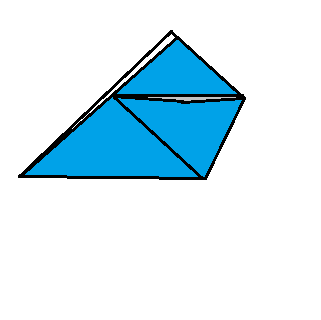
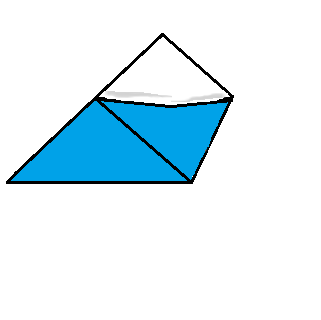
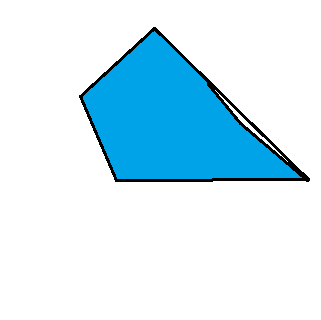
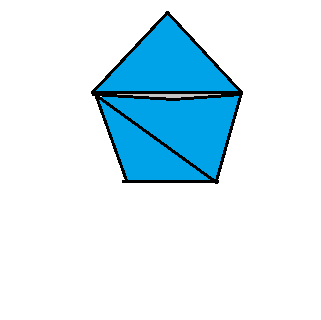
First, I’ll share with you my favorite simple origami form: the paper cup. I do this a lot at restaurants when I’m bored, using square paper napkins or whatever vaguely square paper is lying around. It’s also fun to do with wax paper–you get a cup you can actually use for a bit of water! (Forgive rudimentary images–this is what happens when your hard drive fails and you have no sophisticated image or photo software to work with. Microsoft Paint to the rescue, LOL!)

Origami Cup Instructions

1. Start with a square piece of paper. This is important, otherwise your cup will look deformed at the end! (speaking from experience… -_-)
2. Fold the paper diagonally in half. You’ll end up with an isosceles triangle like the one to the left.
3. Take one of the narrow corners and fold it across the triangle so that the tip of it touches the other side of the triangle. It should lay straight across, not pointing down or up at an angle.
4. Take the top point of the triangle (only one of the sides, not both) and fold it down across the folded corner. Then tuck the newly folded flap into the little “pocket” formed by the folded corner.


Flip your half-formed cup over and repeat steps 4, 5, and 6 on the other side, folding the other corner over, then folding the remaining top point down and tucking it into the second little “pocket”. (see following images on left)
You should have a finished little origami cup!

Other Instructions from Origami-Instructions.com

For More Advanced Learners: The Star Box

This festive, four-pointed folded box form is a form I have yet to master again–I used to make them all the time, but have lost my touch over the years. It’s a really fun craft (and useful for storing small trinkets, bobby pins, or anything else light and easily lost). Try it out if you’d like a more challenging origami form!

Instructions from EHow
Instructions from Origami-Make.com

Resources to Learn More about Origami

Origami @ Wikipedia
Origami-Resource-Center for all levels of crafters–easy and kids’ origami, novelty origami (with toilet paper!), and even Star Wars/Star Trek-themed projects!
Origami.com Diagrams for the more advanced paper-folders–detailed, almost scientific step-by-steps.

Choir Saved My Life

This is not a melodramatic title. This is truth. I sincerely believe that if I had not joined choir in 7th grade, I would not be here today.

My (Pitiful) School Life Before Choir

Before I joined the middle school choir in 7th grade, I was a complete nobody in school. I was generally ignored or teased–treated with either indifference or malice–by the people I went to school with. I had no place in my grade’s social structure, not even the dubious grace of a “label” to slap on myself. If anybody called me anything, it was all based on negatives–there was nothing that I positively contributed to my grade level’s society, nothing I did that was particular to me.

As a result, I felt completely alienated from the rest of my classmates, and life was emotionally very stressful. When school mornings came, sometimes I would lay in bed worrying about the horrible school day I was going to face, and end up making myself sick, ending up in the bathroom all day. (Now, I know I was likely having anxiety attacks, but back then I thought I was just sick with stomach flu all the time.)

This behavior, both on my part and the part of my classmates, peaked in 6th grade, and by the time I turned 12 I had had it with my life; I thought about death every day, because death seemed like a blissful nothing in comparison to the shouted insults and often physically painful teasing. Not only that, I didn’t think I was DOING anything good with my life–it seemed like I didn’t mean anything to anybody anymore, not even myself. Depression had me fast in its grip, and in that dimness I saw nothing of the people who indeed did love me during that time.

A (Supposedly) Throwaway Decision

When it came time to sign up for 7th grade classes, I didn’t much care what I did–I was gunning more for the end of the year and a well-deserved summer away from all the mean kids I went to school with. But the musical category of classes caught my eye, and in particular 7th-grade Chorus. Both my older cousins had been in Band most of their school years and had enjoyed it, but I wanted to try out Chorus–“just for a year,” I explained to my parents. “Then, if I don’t like it, I can always switch to Band.”

My other motivation for choosing Chorus was that I had been in my elementary school’s choir for a year, and I had enjoyed singing, though I didn’t think I had much of an instrument to work with. My voice always came out kind of breathy and soft, though everyone who listened to me said the pitch was true. I figured I had nothing to lose by joining Chorus, and if it turned out I didn’t have anything to work with after all, I could switch to something else musical instead. I already played the piano, and thought that if my voice wasn’t enough, I could potentially learn another instrument.

So, after discussing it with my parents, both of whom encouraged me to join the chorus, I signed up to start in the fall of my 7th-grade year.

The Turnaround

This one decision changed my entire life within months of joining the chorus. As I’ve noted in my blog post Joining My Voice with Others, I discovered the strength of my voice, and began to thoroughly enjoy singing in choirs. Not only that, it is a creative outlet I have continued even into the present.

But WHY did it affect me this way, at 13?

Part of it lies in the psychological effect of being part of a big group doing something larger than any individual could do. I had a social place in my school, at last–I had a reason to go to school, a positive label to put on myself. I could point to the choir and say “I’m part of that;” I was no longer just “the ugly girl” or the “fat girl,” but “the girl who sings.” And my voice was no longer breathy and soft, but strong and powerful. I had a gift which was finally being recognized by the kids I went to school with. 7th grade was still stressful for me in places, but it was a watershed year; I could bloom, at last.

The other part of why choir saved my life was how it interacted with my personality. I like to be able to help other people, to do things that other people find valuable. (This blog is an example–I write six posts every week, hoping that someone else finds as much value in them as I do.) 7th-grade chorus allowed me, for the first time, to do something others considered valuable without them running away from me in horror. (When I’d tried to be nice to my classmates before, that was their typical reaction…I still have no idea why.) Now, the kindnesses I could do for others were appreciated and returned to me, not discarded, and I felt a lot more positive about my life as a result.

Death suddenly had very little attraction for me; I had something to go to school for, something to live for. Other people began to talk to me in more positive tones, about my music and my voice, and I could finally hear them, after years of having to shut them out because they were making fun of me. Chorus changed the social topography of my life, utterly, and most definitely for the better.

How Does This Link to Creativity?

This is a story not just of coming back from depression and suicidal thoughts, but of creativity, too. Not only did I feel more comfortable living my life, but I felt more comfortable doing creative things in my life, as well. My works were beginning to be valued, and at 13, it was exactly the kind of boost I needed for my self-esteem. Working with other singers, all striving for a great performance, gave me purpose, and gave me fuel for my own works–my writing and my music.

This is why I’m such a proponent of music education, and indeed all fine arts education, in schools. If fine arts had been taken out of my school before I had a chance to be in it, there is a very good chance I would not have seen my 14th birthday; my life would have had no hope in it, and I would have likely turned my thoughts of death into a reality. If fine arts and creativity can soothe the savage beast of depression and anxiety, which our modern schoolchildren are indeed suffering from in droves, then more of it, not less of it, should be incorporated.

I know, I know, we should be training our future workforce in “useful skills,” which is why fine arts education has been cut or eliminated in many schools. Many people who have never experienced the power of art on their lives may wonder, “Why waste money on teaching them skills that won’t help them in the real world?” But here is the flip side: we do want our future workforce to actually reach adulthood, don’t we?

As I well know from my teaching days, a life without creativity, without beauty and devoid of passion, is a life nearly not worth living. A life with creativity, on the other hand, with the capacity for beauty and passion, is a life that sings with our souls.


Art for Entertainment or Art for Meaning?

It feels like an either/or choice for many artists, including myself. Do we choose to create something that will be marketable, useful, widely accepted, and easily profitable, or do we choose to create something personally and passionately meaningful and hope someone else understands enough to buy it or appreciate it?

As an artist who is currently not making any money off her artistic pursuits, be it writing, music, or web design, I know I don’t have much perspective on the financial part of making art. But I do experience the tug and twist of the decision every time I pick up the pen or sit down to the keyboard (musical or computer): do I make something entertaining, or do I make something meaningful? Do I make something universally relatable and instantly likable (and possibly trite), or do I make something relevant to me, filled with loads of “new” meaning, and wait for others to pull the meaning out of it?

Art for Entertainment = Art for Everyone, But Art for Money

This might not seem like much of a decision. Of course you make marketable stuff. Of course you’d choose to create something that millions of people can get into and understand. That’s how people like us (artists, I mean) make any money, after all. If you want to succeed as an artist, you have to make things that lots of people enjoy and get meaning out of, not just an elite few who are critics in their own right. Plus, you can still couch grains of personal meaning in your work as an entertainment artist, and no one has to be the wiser–and you might get more genuine response. It just has to sell first.

Art for Meaning = Art for Artists…Sadly, Often Literally

And yet there’s the flip side, those of us artists who choose to create art that is personally meaningful first, without concern for how it will “sell.” I can count myself among these–I don’t want to be reduced to doing “things that will sell” just because of money. For me, doing art purely for entertainment seems to cheapen the act of artistic creation; it’s no longer about the work itself or the artist behind it, but about the dollar signs spewing forth from it. Yet, if artists do works that are less universally relatable and often regarded as strange or un-artistic, then what happens to the works? They are disregarded, and forgotten except by other artists.

Is There a Middle Ground? Or Do We Need Both?

To be honest, I don’t know if there’s a middle ground between art for entertainment and art for meaning. I do know, however, that both types must exist.

Yes, I just said that. Both pure entertainment and pure meaning must exist in the artistic world. The old classics in literature are wonderful creations, chock-full of meaning and beauty, for example, but sometimes you just want a Twilight book or a Danielle Steel novel, something you don’t have to pull teeth to understand, but that you can just EXPERIENCE.

Just like our bodies are designed to take in foods of wide varieties, our minds, too, are designed to take in arts of all kinds. Lady GaGa may not ever be considered a “serious” musician (what does that mean, anyway?), but her music has spoken to people all over the globe, because it’s got a good beat, an easy-to-catch meaning, and you can dance to it. Is her work any less meaningful to people’s lives for being dance-y? Does everyone always have to be in the “super-heavy-serious-music” category if they want to be considered “real” musicians?

Another example: Twilight has gotten a bad rap for its fluffy plot consistency, much like meringue on top of a pie–and I won’t deny that it is more for entertainment than for meaning. But it was also a book series that I experienced and didn’t feel the need to academically dissect like a typical piece of literature for my English major courses. THAT was welcome relief to my overtired mind. I was able to relax and let the story dissolve into my brain, like milk chocolate melting on my tongue.

I like to think about art the same way I think about food. A plate of super-healthy steamed vegetables would be good for us and would nourish us…they’re great. (Well, for people who like vegetables… LOL!) But I don’t want vegetables to eat all the time–sometimes, I wake up and just WANT a bag of Reese’s Peanut Butter Cups, or a big slather of Nutella spread and strawberry jelly on bread.

Same thing with art: while it might be healthier for our brains to take in all the old classics and spend our days in heavy-duty collegiate criticism of the works we’re studying, we don’t necessarily WANT to. Some days, we’re tired (“mental mush,” as my boyfriend puts it), and we want something that’s warm, comforting, and easy to mentally digest. When we’re feeling better, we’ll go back to the harder-to-digest but wonderfully-nourishing art, because you can get sick of sweet and non-nutritious after some time. (Trust me, after almost a month of having to eat soft foods like pudding and ice cream, I am getting starved for protein and salty snacks. I’ve never craved Fritos so much in my life. XD)

Basically: Lady GaGa produces the Reese’s Peanut Butter Cups of music, while J.S. Bach produces the hot plate of steamed vegetables with tons of fiber and vitamins. The wonderful thing about us artists is that we can produce both types of art–the art that invigorates (“serious” art), and the art that comforts (“entertaining” art). Lady GaGa could just as easily produce an unfathomably deep and “serious-music” kind of song (and probably still make it have a good beat); in several of the short stories I read in college, Jane Austen proved that she could parody the popular storylines of 18th-century novels in a delightfully tongue-in-cheek way, and make her writing more for entertainment as well as meaning.

Perhaps the Debate Need Not Even Exist

So, the time-tarnished debate of “art for entertainment” versus “art for meaning” may be a fruitless fight, after all. People may clamor on both sides, saying “I hate having to dissect and pull apart art to get at the meaning–give me something easy to take in!”, or “I hate art that doesn’t mean anything and is just for money–give me something deeper, something serious!” But both types, in my opinion, must exist, because we have a need for them. And any artist who creates is helping in their own small way. Even my rich and heavy songs, like a huge bowl of fettuccine alfredo pasta, have a place in the art buffet.

Summary

Balance is the key in creating and using art–we use art for relaxing and for awakening our minds. Neither side is somehow “better” than the other, because they are for different purposes. My art process relaxes me and invigorates others; I take in art that invigorates me sometimes, and other times I choose entertainment. For me, it seems all art is to the good, for whatever purposes the listener, reader, or viewer can use it.

The Elusive “Catchy Fast Song”

Though I love to write music, I admit it–I’m terrible at writing fast and catchy songs.

Most of my music is slow; I write lyrics that are heavy with meaning, couched in melodies that unwind across 20 seconds rather than 5 or 10. And, as I’ve observed during performances, not everybody enjoys slower-paced music. In fact, given my druthers, I’d like to write faster, more dance-like music, since that’s what I listen to the most. Slow music that isn’t mine bores me, unless I’m not actively listening to it and doing something else while it plays in the background.

But it is quite difficult to write a “fast song”, something that you can dance to, that doesn’t have vapid/meaningless lyrics. If it’s fast, according to today’s stylistics, then it nearly has to have very few words (because nobody can spit out hundreds of words at a fast pace, like a machine gun, unless they’re rappers). I don’t like the idea of a song having very little meaning just because it’s upbeat–that’s like trying to feed yourself on cotton candy alone. Yeah, sure, it tastes good, but it’s not very filling.

Some Ideas for Crafting a Faster but Meaningful Song

I’m not sure, at this point, how to get over this particular hurdle in my songwriting. But I have a couple of ideas:

  • Use a synthesizer or a beat generator to mix up a fast, dance beat that I like, instead of trying to generate one on my own
  • Come up with two short sentences that describes the idea I’m going after in my song

Why use an artificial generator for my beats? Simple–I ain’t good at rhythm. My pitch is great; rhythm…eh, not so much. Not sure why, but it’s hard for me to put together a rhythmic sound that doesn’t sound old. Giving me a playground of various beats can help me figure out what I like and don’t like, and what could be good as the background for my song. Sites like QWERTYBeats.com, and even a game like Sound Matrix can help out quite a bit!

The two-sentence idea makes me get to the point of my song, instead of winding up to it over the course of two verses and two choruses. I’m famous for writing long-winded stuff–if I’m forced to condense it into two coherent and meaningful (yet short) sentences, maybe I can craft that into a dancey tune that still means something.

Summary

I’m still working out the kinks on this idea, but you can be sure I’ll update you on my odyssey toward writing thoughtful songs that are catchy and dancey too. 🙂 After all, creativity IS a process!

Putting a Drawing in the Shade

Even though I have terrible luck with coloring my pictures (either the markers make it too dark, the pencils are too light, or the crayons are too textured), I seem to have a knack for shading. Somehow, the application of a pencil tip to the page in just the right places, moved quickly but carefully over the page to create gray gradients, clicks for me, where regular coloring doesn’t, at all.

And yet I’ve met many artists who have a lot of difficulty with shading. They can “never get it to look realistic,” or “it always ends up too dark for the rest of the picture.” These are the same people who draw absolutely real-looking still-lifes, who can sit down and in 15 minutes have a portrait of me or anybody else that looks like it took hours, and yet they have difficulty shading?

I think that the varying strengths and weaknesses of any artist in any art field depends greatly on each person’s individual skill set. I don’t have the patience for most coloring and most line art–I do very simple forms and hate to add color (usually because it ends up ruining my drawings!). Yet I love the soothing feeling of the pencil against the page as I shade; something about the quick movements makes me feel like it’s not taking terribly long, but the results look more masterful than the effort I put into it.

Shading may or may not be necessary for the kind of art you like to do, and it doesn’t have to be necessary at all, just like color is not necessary for my simple sketchlike forms. There are people in this world who can color in the lines, and then there’s me. XD But shading seems to come naturally to me, and so I try to make it a part of my drawings.

As a way to show others how to shade, I’ve written this blog post to explain how I shade (which is just one way of doing it).

Where’s the Light Coming From?

Before you find out where the shadow is on the page, you have to determine where your light source is. If this is a picture from reality, it’s as easy as looking at your subject and seeing where the light is coming from. If it’s a picture from your imagination, you have total freedom as to where the light comes from.

One of my art teachers taught me this trick in middle school: lightly draw a little sun image at the extreme edge of the page where your light source is, to show where the light is coming from. It’s a visual reminder, if you lose yourself in drawing and shading, that the light is coming from top left, or top center, etc., and you can easily erase it when you’re done shading.

Once you’ve decided where the light is, you know where the shadow is–it’s always directly opposite the light. Light coming from the left? Shadow’s going to be darkest on the right side of the object or person being shaded. Light coming from top right? Shadow’s going to be darkest on the bottom left side.

What’s the Shape of the Object to be Shaded?

Cylindrical shapes are the easiest things for me to shade–shade very darkly on the opposite side from the light, then gradually go lighter and lighter as you approach the other side of the shape. The gradient is done smoothly and evenly from one side to the other.

Unfortunately, you’re not likely to be shading just cylindrical shapes. Vases and faces, flowers and buildings, and all types of other shapes exist in art, so you have to figure out how the light falls on these objects and shade accordingly.

For a shape that is narrower in some places than others, I’ve found that the most realistic-looking shading brings shadow closer to the light side in the narrower spots. For a rounded shape, doing shading around the edge of the object farthest from the light seems better.

Do the Darkest Shading First

Once you’ve decided where the light is in the picture, the farthest and most opposite part of the object being shaded is where your darkest shadows will fall. I find it easier to do the darkest shading first, really scrubbing the pencil lead, charcoal, or ink into the paper, so that you know where your opposite point is. Line the shadowed side of the object, following its contours closely, with the darkest shadow color.

From here, you can shade lighter and lighter until you get to the other side (the light side) again. (It’s easier for me to do a gradient effect by hand if I know how dark the darkest shadows are supposed to be.) Build up your color in the darkest-shadow area gradually, making sure it’s right ahead of time (you’ll understand when and if you try to erase it, but more about that later). If you don’t get the deepest shadows right, it will be very hard to make your lighter shadows look real later on.

If In Doubt About Shading Placement, Go Lightly

If you’re not sure that your contouring or placement is right, shade very lightly first and check it. Does it look “real,” like it’s going to pop off the page, able to be touched? If it doesn’t look real, change it with either a few more lines of shading, or a handy (and good) eraser.

Once you’ve got the right placement for your shading, you can add more or take away as needed until the entire object is given its third dimension.

The Eraser is Your Friend–IF You Shade Lightly First

Erasers will not get rid of your darkest shading, so it is important to make sure your darkest shadows are correct. Erasers are, however, great for retouching parts of the medium- to lightest-shaded places in your picture. If you’ve gotten a little overzealous with your medium color shading, an eraser can lighten it up just a touch; it can also erase completely the lightest shading in your sketch.

Summary

Careful placement and a (generally) light touch with your shading implements, as well as constant observation of your object and whether it looks “real” on the page, is key to getting shading right. But as with all art, don’t get discouraged–keep trying to shade, even on little doodles, and you’ll get the hang of it. Every bit of practice helps!