Tag Archives: gaming

Sometimes, the Alter Egos are All You Need

Recently, the Alter Ego mechanic has been introduced to HeroClix. Now you can get Superman and Batman both for 48 points, or spring in Wonder Woman for 32 points, etc. Admittedly, you don’t get the figures at their absolute best, but it provides you a cheaper way to get the bigger figures on your team.

But what if you could care less about getting the bigger figures? For those of us who play swarm and support strategies, Alter Egos provide an infusion of small-point-value figures that are still combat-capable.

To me, the Alter Egos of today match up well with the Golden-Age era, little swarm figures of yesterday…which is why I’m writing this article. Sometimes, you don’t even NEED to pull in Batman or Wonder Woman, or Etrigan, or even Spiderman or Hulk. Sometimes, Bruce Banner, Diana Prince, Jason Blood, and Bruce Wayne can handle it all on their own.

The images used in this article came from the HCRealms Units page, a wonderful resource for Clix players to find figures and build teams. They also provide a preview for new sets coming out, so checking this page will keep you updated on the game. Just search under “Rank” for “Alter Ego,” and a full list will come up.

What’s the Special Power on Speed for Most of These These Figures?

That is the Alter Ego power–it is almost always on movement, and usually occurs on the last two or three clicks of the character’s living dial.

How are You Judging These Pieces?

I judge from my perspective as a Clix player. I do not play larger-point-value figures as a general rule, so I’m liable to see smaller figures as more playable. I also love supportive powers (like Prob, Telekinesis, Perplex, Outwit, and Support itself), so I gravitate toward small, one-trick-pony pieces that have these powers.

Lastly, I don’t play theme teams much at all (too restrictive), so I look at pieces solely for their “toolbox” value. I always ask, “What abilities can they bring to the table, and how much do I have to pay for it?”

Worthy AE Pieces

Ben Reilly

Why?: Wildcard team ability for 38 points? OKAY! And how about Combat Reflexes that gives him 19 defense up close? SURE! (He might not be all that combat-capable, but I would SO use him on a Wildcard Mystics or Wildcard Bat-team setup.)

Bruce Banner

Why?: The Perplex and Energy Shield is gravy, but the special powers on attack and defense are crazy good. The attack power is Incapacitate with an attack stat boost if you’re trying to Incap a figure with 4 or more damage. The defense is an automatic Alter Ego transformation if he takes 2 or more damage and reveals the defense power.

With a possible 11 attack against Superman and other godlike buddies (the Incap boost + Perplex), he’s a lot better than he looks for 50 points.

Bruce Wayne

Why?: Combat Reflexes with a 17 defense, and Outwit for 3 clicks, plus the 10 attack to start. He’s a combat-ready Outwitter–I’ve actually KOed opponents’ figures with him before. 😀

The slow movement aside, he’s very much worth the 48 points. And if the low movement bothers you, just have one of your flying pieces carry him around. (Especially fun with Green Lantern pieces or flying pieces with Phasing…lol)

Diana Prince

Why?: A Medic with 9 attack is almost necessary in these days of 17 and 18 defenses. Not only that, she’s 17 defense at range, and you’re likely going to keep her back from the front lines anyway, so she’s more easily defended against attack. A very worthy Support piece at 32 points, and great if you can’t afford/can’t use a Night Nurse.

General Thunderbolt Ross

Why?: While Leadership, S.H.I.E.L.D. team ability, and Enhancement make him a good supporting character, his special attack power is hilarious. Quoting the rules text:

“Once per game, give Thunderbolt Ross a double power action. Choose a square anywhere on the map. Modify General Thunderbolt Ross’ attack value by +3 and make a ranged combat attack that does not target, and compare the result to each character occupying the chosen square or a square adjacent to the chosen square. A hit character occupying the chosen square is dealt 3 damage. Other hit characters are dealt 2 damage that causes knock back from the chosen square. Destroy all walls and squares of blocking terrain in or adjacent to the chosen square.”

…Better than Energy Explosion. BAM!!!

The OTHER General Thunderbolt Ross

Why?: The Willpower/Leadership combo is great (especially for 42 points!), but again, it’s the special attack power that pushes him over the top. Other adjacent characters you control that are 75 points or less get +1 attack when they’re attacking someone with Super Strength. And, if they’re attacking a Hulk, they get +1 damage.

This figure can single-handedly help a little swarm team beat down a larger-point-value beatstick. Superman beware!

Jason Blood

Why?: Why NOT?! Let’s see, he’s got Prob, 18 defense at range, AND Mystics team ability…um, yeah, even with the low movement speed, he’s awesomely, annoyingly playable for 44 points. (He’s nearly the smallest Mystic in the game, too, which makes him hilarious to play with larger-cost Wildcards like Ultra Boy and Vet Supergirl, too.)

If it isn’t obvious already, I heart this piece. 😀

John Jameson

Why?: Forget the first click and the last two clicks. Look at the middle two clicks, the team ability, and the point cost for why Jameson is playable. Fun with Wildcard Mystics–the Toughness makes him able to soak more damage, but if he can’t soak it all, oh well, tough nachos for the guy who just hit him. Mystics damage for the win. 🙂

(And the Super Strength with 10 attack/17 defense? Even though it’s only for one click, it’s AWESOME for 38 points. You just don’t find that kind of ability in wildcards that low.)

Matt Murdock

Why?: The special damage power. Outwit normally on anybody, or Outwit Stealth, Perplex, or Outwit on anybody within 6 squares who’s 75 points or less, regardless of whether he can draw a line of fire to them. WIN!

Walter Kovacs

Why?: He has a trait that gives him Stealth, and he has Shapechange. Annoying enough for 38 points, right? WRONG–check out his special attack ability. Quoting rules text:

“At the beginning of your turn, choose a keyword belonging to an opposing character adjacent to Walter Kovacs. Until the beginning of your next turn, modify the attack value of Walter Kovacs or a character friendly to Walter Kovacs by +1 when they attack a character that possesses the chosen keyword.”

Um, if I play this piece and you play a keyworded team…hee hee, you are in more trouble than you think.

Kinda-Worth-It AE Pieces

Peter Parker

Why?: Super Senses makes him annoying, Wildcard team ability makes him versatile, and Perplex makes him supportive. But you have to push him to get Perplex, and that means losing that nice 17 starting defense.

For 50 points, you get a basic but solid Wildcard-fodder piece that can actually help out your team, but you may have to wait too long or risk losing him before you can use him.

Rick Jones

Why?: He’s a fine source for a Wildcard team (the Avengers team ability is not bad), and he has the ability to use another team ability himself. Give him Bat-Team, Mystics, or something else silly for extra LOLs.

The only issues I have with him is that he is remarkably short-lived for 48 points, and he doesn’t keep his abilities for very long, either. But if you’re looking for something to fill in the gaps (like an extra team ability or an extra Perplexer), this could work.

Unworthy AE Pieces

The OTHER Bruce Banner

Why?: For 55 points, you can find better Energy Explosion pieces (his special attack power is based off Energy Explosion), and the one click of Outwit does not help his cause much, either. This is a “Waiting-for-Hulk” piece, not a piece on his own.

Eddie Brock

Why?: He’s a “Waiting-for-Venom” or “Waiting-for-Anti-Venom” piece (the special attack power gets Anti-Venom, the special speed power gets Venom). Not much else. Shapechange is okay, but he’d mainly be an annoyance piece if you’re just playing him and not planning to change him out.

Clark Kent

Why?: Because you have to push him once to get to Perplex, and he’s not as combat-capable. He’s more a “Waiting-For-Superman” piece than a piece on his own. Not worth it to me, especially not paying 48 points for what amounts to a slightly-upgraded Con Artist.

Norman Osborn

Why?: Let’s see. He’s got a trait that pretty much uses a dice roll to determine which figure you can pull in when you Alter Ego. Bleh, leaving that up to chance is not my style. Also, he’s 66 points–who’s he going to Mastermind damage to in current environments? I’d rather have a REAL defense modifier, but then again I dislike Mastermind anyway. LOL

The saving grace here is the Outwit he’s got for 3 clicks, but I ain’t paying 66 points for just an Outwitter. Basically, he’d be a third-string attacker and Outwitter, and would be more dead weight than anything.

Summary

While a few Alter Ego pieces are not worth the investment, many of the AE pieces offer combat and support at low point costs. If you’re looking for bargains on Prob, Support, and Outwit in a Modern-Age environment, I’d say your search ends with this blog article!

Desktop Tower Defense 1.5

As an avid player of tower defense games, I’m pretty selective when it comes to the TD games I return to over and over again. Desktop Tower Defense 1.5 is one of those–the whole series is awesome, but the first version I played was 1.5, so it has a special place in my heart.

Basic Gameplay

You receive a fixed amount of money to start the game off–80 gold–which allows you to buy as few as 2 towers (a Frost and a Dart tower) or as many as 16 Pellet Towers. It all depends on what you want to defend yourself with.


The little green box,
made by your cursor,
shows where you will place
your tower if you click.
The range of the tower
is the orange outline.

If the little box is red,
it means it’s overlapping
another tower, or you don’t
have enough money to build it.

When you’re all set up, hit the “Start” button, and the first group of enemies will appear!


I’m on ur desktop, killin som doodz.

With every group of enemies (collectively called a “creep”), you will receive gold for defeating each enemy within the group. (In the screenshot above, you can see a red “+2” in front of the towers. That’s where an enemy has just fallen, and the game has given me +2 gold.) Then, you use this money to build/upgrade your towers so that they can take down progressively stronger creeps.


Select a tower by clicking it. Its information will appear in the tower selection pane to the right. In this screenshot, I can click the green “Upgrade” button to upgrade my Pellet Tower to a Pellet Tower 2.


This is what it looks like when you’ve chosen to upgrade one of your towers, with the orange progress bar showing you how far along it is. When you’re upgrading a tower, it cannot fire, so it’s best to upgrade between creeps.

Your objective, as noted in the first labeled screenshot, is to keep your enemies from going all the way across the desktop. You can do this by placing towers so that they divert enemies. (A tried-and-true way is to place towers in undulating lines within the desktop space, so that the max number of towers can fire on enemies as long as possible, and the only way enemies can get by is to run along these predetermined paths.)

Also, as the game goes along, the dropped gold from each creep enemy gets slowly bigger (not with every creep, but every few).

Types of Towers

Pellet Squirt Dart Swarm Frost
Fire Rate: Slow

Damage: Good

Range: Fair

Upgrade Costs:
– 5 to place
– Upgrade #1: 5
– Upgrade #2: 10
– Upgrade #3: 20
– Upgrade #4: 40
– Upgrade #5: 120 (final)

Special Effects: None

Final Form: Sniper Tower (-fire rate, +damage, +range)

Fire Rate: Fast

Damage: Fair

Range: Fair

Upgrade Costs:
– 15 to place
– Upgrade #1: 12
– Upgrade #2: 23
– Upgrade #3: 35
– Upgrade #4: 75
– Upgrade #5: 290 (final)

Special Effects: None

Final Form: Typhoon Tower (+range, +damage, +fire rate)

Fire Rate: Very Slow

Damage: Great

Range: Great

Upgrade Costs:
– 20 to place
– Upgrade #1: 15
– Upgrade #2: 30
– Upgrade #3: 55
– Upgrade #4: 90
– Upgrade #5: 165 (final)

Special Effects: Splashes damage on a group (ground only)

Final Form: ICBM Tower (+range, +damage +splash)

Fire Rate: Slow

Damage: Great

Range: Fair

Upgrade Costs:
– 50 to place
– Upgrade #1: 30
– Upgrade #2: 50
– Upgrade #3: 75
– Upgrade #4: 125
– Upgrade #5: 310 (final)

Special Effects: Only shoots at fliers, fires 4 missiles at a time

Final Form: Storm Tower (+range, +damage, +splash)

Fire Rate: Slow

Damage: Good

Range: Fair

Upgrade Costs:
– 50 to place
– Upgrade #1: 25
– Upgrade #2: 25
– Upgrade #3: 25
– Upgrade #4: 25
– Upgrade #5: 50 (final)

Special Effects: Slows enemies way down, splashes damage on a group

Final Form: Blizzard Tower (+range, +damage)

Enemy Group Types

Normal Group Immune Fast Flying Bosses
Vulnerable to all damage
Move at normal speed
Vulnerable to all damage
Clump together for movement
Invulnerable to frost damage
Move at normal speed
Vulnerable to all damage
Move at fast speed
Invulnerable to dart damage
Fly over towers
Move at normal speed
Each boss takes on one of the five other forms
Moves at slightly slower speed

Strategies

I generally buy two or three different types of towers at the start of the game. A Frost Tower is almost indispensable for slowing ground and air enemies, and is wonderful for fighting big clumped-up groups. Also, using a Squirt and Pellet Tower in conjunction with each other is a good tactic to start off with–the faster firing rate of the Squirt tower compensates for the slower Pellet Tower, and the Pellet’s higher damage compensates for the Squirt’s lower damage.

You’ll need at least one Swarm tower to fight air enemies, but you shouldn’t need a line of them. Just make sure your Swarm tower is lined up straight with where the enemies come in, and your Pellets and Squirts should make up the difference.

Dart towers are wonderful for splashing damage–they work well alongside Frost towers, which slow enemies enough for the Dart tower to shoot at them multiple times.

Don’t build too many towers early on; focus on upgrading the towers you have at first, and then start building a couple here and there when you need them to direct creep flow or need the extra damage.

Use all the desktop space given you for undulating lines of towers–don’t make it easy to get to the other side.

Last-ditch effort: Install a few towers on the other side of the map, close to the exit, to catch stragglers. Make sure these towers stay upgraded along with your front line, otherwise they won’t be much help.

Play the game: Desktop Tower Defense 1.5

Taking Back Social Console Gaming

Last week I wrote about how gamers have started getting away from console gaming and social gaming in general. Gaming has transferred itself from arcades to homes, and from homes to online, in a matter of a few years rather than decades.

What online gaming has done to social gaming may be irreversible–it has taken gaming out of the more social environment of the home and placed it in a virtual zone that is nearly unreachable except to the single player. Along with becoming more and more online (and yet more and more isolating), gaming has become uber-competitive. The fallacy here is that games must be won to be enjoyed.

But gaming does not have to be competitive to be fun. Nor does it have to be won to be enjoyed. That is like saying that food has to be eaten to be enjoyed–and anybody who’s ever stood outside the kitchen smelling cookies baking can tell you food can be enjoyed without ever being eaten. Sometimes, it’s the gossamer touch of experiencing happiness that is all you need, like the scent of cookies wafting toward your nose.

My Social Gaming Anecdotes

Some of the best times I had with friends back in the day was just getting together and beating face on games like Soul Calibur and Super Smash Brothers Melee–me and three or four guy friends, all madly tapping buttons to do fighting moves and directing our characters around the screen.

More shouting and laughing went on than cussing and ditching the controllers aside, thankfully, and we all managed to have fun. It wasn’t about winning so much as just playing around (even if we did have some mini-competitions going on). The most prevalent emotion that veils those memories is camaraderie; I knew these guys well and we were all great friends, both within the games and outside them.

These days, I don’t get together with that old group as much ( 🙁 ), but I do play some cooperative video games with my boyfriend. Playing some Gauntlet II: Dark Legacy or Marvel Ultimate Alliance gets us working together, and we have a lot of fun whomping up on imaginary bad guys. ^_^ Not only do I get to spend time with my love, but I get to show him how my knack for screwing around and not getting the mission done can actually lead to finding secrets within games. 😛

Getting Back that Gamin’ Feeling

Because of my experiences, I don’t think social gaming is lost to us forever. As long as we have real-life friends who can come over to our real-life dwellings, and as long as we still eat real-life food with these friends, we can still game socially. Here is how I think social gaming can be won back from the brink:

Building a Social Gaming Night

  1. First, invite a few friends to get together at your house/apartment. However many is comfortable for your dwelling–no need to have 20 people at your apartment if you can only seat 3, right?
  2. Make or get easy party food, like nachos, wraps, chicken fingers, vegetable trays with dips, mini pizzas, etc. Pretty much any finger food you and your friends like would be great. (Good food + gaming = good times guaranteed.) And don’t forget drinks–ask ahead of time what everyone would like to drink so that you have it on hand, if possible. (Alcohol isn’t preferred if you’re going to be using kinetic controllers…just sayin’.)
  3. Make sure you have comfortable seating for everyone, or at least clear floor space in front of the TV you’re going to be using for game night.
  4. Bring out some of your best multiplayer console games. If you don’t have any games like that, renting or borrowing some games would be the next best option. Great options for multiplayer game parties would be:

Conducting Your Gaming Night

One of the best things you can do is to keep your computers and phones off during gaming night. I know, I know, we’re all welded to our personal gadgets these days, but just for a night, put them all in a safe place away from stray gamers’ flying feet and hands, and just enjoy being with your friends in the same room. Twitter, Facebook, and the rest of the Interwebs will not miss you for a few hours while you enjoy yourself, and you’ll be much more fun and have much more fun if you’re completely engaged in whatever’s going on. (Take it from me, just writing a status about what you’re doing is lots less fun)

Second, if you have more players than can play all together at once, make up rules for taking turns on the controllers. With my old group of gaming buddies, we used to take turns on fighting games with the rule of “Loser of this fight gives the controller to the one who isn’t playing.” Whatever makes sense for your group and for the game you’re playing, just make sure everyone gets an equal chance to play.

Third, switch games every so often. Smash Brothers is awesome, but not for five hours. Change up the game discs about every 45 minutes to an hour or so, just to keep things fresh, unless you all are really having fun with the one you’re playing. This way, nobody gets bored or tired of the games, and the group keeps trying new things.

Fourth, resist the urge to go online with your gaming console. When you have four or more real live players in the same room, who needs the online world?!

Fifth, keep paper towels and wipes handy for drink/food spills and greasy hands. You might not think you’ll need them–you will.

Sixth, make a rule: “No drinks on top of the console/TV/anything electronic.” Speaking from sad experience here. 🙁

Lastly: make sure that you’re not keeping anybody out too late. Between jobs, family, and personal time, not everyone has the ability to game all night–be considerate of each other’s time, and you’ll be more likely to get another gaming night together sooner rather than never.

Summary

If we work at it, social console gaming can come back in a big way. Not only is it freer entertainment than paying to play an online game every month, but it’s a great way to get back in touch with your favorite examples of humanity in a relaxed setting. It’s just more fun with everyone in the same room!

Getting Out of Console Gaming?

Time was, consoles were how gamers passed the time. From the time Atari made its first console, to the early 1990s when Nintendo created the SNES and Sega crafted its Genesis, and even on to when the Playstation 2, Xbox, and Gamecube warred for market dominance in the early 2000s, consoles have all but ruled gaming life.

But now, that is increasingly no longer the way of things.

With the advent of gaming on the Internet, consoles are not often needed to play games anymore. People are now able to use computers as TVs, media creators, Internet browsers, and now even gaming consoles. It’s possible to play monthly-fee online MMOs like World of Warcraft, League of Legends, and City of Heroes (OMG LINK) as well as single-player online Flash games for free. Indeed, gamers of today can get their gaming fix without ever buying a console or its games (especially due to the pirated game downloads and emulators).

I am one of the gamers who has all but ditched console gaming in favor of online gaming. Though I buy and use my games legitimately, turning on a separate machine besides my computer just to game seems almost alien to me now, even though I literally grew up playing video games on systems like the SNES, Playstation 1, and N64. I haven’t touched my Playstation 2 in weeks, and my Wii sat so long unused that it doesn’t even turn on anymore. And, from what I can tell, I am not alone; many old-school gamers have turned to computers as well.

Why Might Consoles Go the Way of the Dodo?

  • A computer keyboard can be easier to manipulate than controllers (especially for kinetic controllers like the Wii–I still can’t completely figure ’em out)
  • Games online are free or small-fee to play, and can be played anywhere you can set a laptop; console games require special equipment, a set place to play, etc.
  • We increasingly require more and more online components from our consoles, so they end up being small computers in and of themselves
  • We are living downsized lives economically, and people can better rationalize paying for a new computer rather than for a new gaming console

But Wait a Moment: The Social Gaming Perspective

As much fun as online gaming is, there is a vital component of gaming that it’s still missing: true social gaming.

Much of online gaming is single-player, unless you get into MMOs (Massive Multiplayer Online games). And even with MMOs, everyone is hooked up to different computer screens and communicating via typed or voice chat. It’s just not the same as playing with three or four of your buddies in front of a single TV screen, with controllers hooked up and a ton of laughs (or muttered curses) going on.

There’s something about playing a game with others in the same room and on the same screen that engenders more honest, real communication and socializing, much more than playing online with others does. Even playing an online game with someone while they’re sitting in the same room with you is different; you’re still looking at different computer screens, still disconnected from them somehow. Social gaming–the kind only seen in console gaming, 4 players at a time–is in danger of dying out.

I found an XKCD-style, long comic panel about a year ago that really explains this all visually, but I’m darned if I can find it again. (Hating dialup a whole bunch right now for not letting me search faster!) Basically, it showed how computers make many facets of modern gaming easier (buying, stealing, playing multiplayer), but the social gaming aspect, the “playing on my couch with a bunch of my friends” concept, is woefully lacking. Poor little stick man just cries alone in his room, with only fond, poignant memories of gaming with friends.

Next Week: What’s So Special About Social Gaming?

As wonderful as social console gaming is, it deserves its own blog post. Tune in next week to hear the rest of this story, full of personal anecdotes and nostalgia. 🙂

The Choosy Collector

I’m not exactly like most other gamers who focus on collectible pieces. I don’t have an “extras box” or a “trades box” that’s overflowing with figures and/or cards I’m willing to let go of. In fact, I generally peruse other people’s trades boxes and buy from or trade with them. I’m what you might call a “choosy collector.”

What Is a Choosy Collector?

Choosy collectors build their gaming collections solely out of the figures or cards they play. They don’t have extensive collections at all–they may not even have a “trades” box or bin at all. They simply aren’t interested in keeping gaming items that they aren’t actively using.

Choosy Habits

Never Buy Boosters
I rarely buy booster packs, because I’m not guaranteed to get something I want in them–they’re randomized. Instead, I usually buy or trade with other gamers. Saves money and helps other gamers get rid of extras or stuff they won’t play.

Do Research on Which Cards/Figures You’d Like to Get
I also do my research beforehand and only go for the items I KNOW I would love to play. I use services like MTG.com’s Gatherer and HCRealms.com’s Units page to preview items from the newest expansion sets, so that I can figure out what might work best for the decks and teams I plan to play in the near future.

This way, I don’t waste money buying several booster packs just looking for one item in particular, and I don’t junk up my house or my gaming collection storage with items I’m never going to use.

Shop Local Gaming Stores Before Going Online
Lastly, I shop my local comics/gaming store’s singles counter–they buy single figures and/or cards from local gamers, and also open a couple of boosters to supply the counter with new material. This leaves their shelves full of the newest stuff, so I can browse it one at a time. If I’ve done my homework beforehand and know what I’m looking for, I can go right to it; if I’m just looking through their collection of new singles, sometimes I come across cards or figures I didn’t even know existed.

Shopping local means I don’t have to wait for it to be shipped, and I’m helping out my local store while I’m at it.

Why Is Being a Choosy Collector Helpful?

  • Less to carry around–easier on the arms
  • Less to store in my house–the less junk I bring in, the better
  • Less items to dig through if I’m looking for a particular card/figure
  • Generally happier gaming because I’m playing with cards/figures I enjoy

Becoming a Choosy Collector Yourself

If you’d like to become a choosier collector:

  1. Pick out the cards and/or figures you most like to game with, and set them aside.
  2. Sort the rest into boxes, keeping them in as good a condition as you can–you’re looking to trade or sell them to other gamers, after all.
  3. Sell to your fellow gamers as much as you can, or failing that, trade with them for items you’ll love just as much as your existing favorites. Don’t trade for anything you don’t absolutely love–it’ll only exacerbate the collection problem.
  4. If you can’t sell or trade some of your stuff to other gamers, sell to your local gaming shop, or list on CardShark, eBay, iOffer, Craigslist, or similar sites. If you’re really desperate to get rid of it, you can even try sites like Freecycle.
  5. Once you’ve pared down your collection to just your favorites, you can now keep your collection low by only buying the items you absolutely will use in your strategies and nothing else.

Summary

Gaming collections, just like any other collections, can get out of hand very quickly, and you can end up with a junky game closet or even a junky game house. Whittling down to what you play with and nothing else will free you up, and as a choosy collector, you don’t ever have to worry about an overstuffed “trades box” or “extras box” ever again.

Trust me, even as a mildly-OCD hoarder, it’s much easier and more fun to game like this. 🙂

Christmas Glassics: Thursday in the Zone

Today’s Christmas Glassics focuses on the gaming posts I’ve done since July 2011, when I compiled my first Glassics post from this category. Browse this list and see what catches your eye–I literally write about ANYTHING gaming-related, even the littlest Flash game.

General Gaming and Strategy Articles

In this category, I covered basic helpful gaming topics like organizing your collection of gaming stuff, why casual gaming is still valuable. I also spoke about various strategies and playstyles, like spider strategy, high-defense playstyles, and one-track-mind gaming.

Internet Games

Some of my favorite Internet games appeared in my Thursday in the Zone category this time around: Kaboom! (quick reflexes required), Swan Lake Dressup (all ballet costumes), Loops of Zen (like curvy Tetris), and Bride Hair Dresser (easily one of the best “hairdressing” games I’ve ever played).

Console & PC Games

City of Heroes
I covered Empowerment Buffs and how to cope with playing a low-level character this fall and winter, delving into deeper issues that CoH players deal with on a regular basis. This sort of article is directed toward both new players and veteran players alike–they are accessible and yet informative.

Console Games
Pikmin and We Love Katamari, as favorite console games of mine, made it onto my blog for a fresh topic change, after all the more theoretical gaming-related posts I did. I couldn’t leave my favorite offline games out of this blog for long!

Collectible/Tabletop Games

Magic: the Gathering
Articles on building the right mana base, poison counters, and “porting” in a strategy type from another card game appeared this fall and winter. In my example, I switched an old Yu-Gi-Oh! strategy into Magic, in a three-part blog series: figuring out what parts of your strategy can be imported, searching for matching cards, and proxying cards to test strategies. (I still need to actually BUILD this deck, but that will come in time. IRL stuff gets in the way too much.)

HeroClix
My new take on the old Green Lantern Tank strategy was the only HeroClix article I wrote this time around. Methinks I should fix that in the new year. 🙂

Resident Evil: Deck Building Game
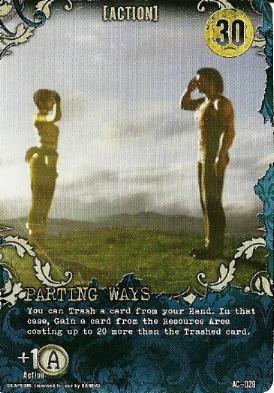
I wrote a bit more about the Resident Evil deck building game this fall and winter, since my boyfriend and I spend a good amount of time playing it these days. Item Management was a target for thought-provoking argument, and I also reviewed the Outbreak expansion.

Philosophies/Opinions on Gaming

Turning my insight on my own gaming and my own habits, I wrote more thoughtful pieces on why humans game, what gaming teaches us, and when gaming becomes less fun than it used to be.

Power On

I hope reading these articles will help you get inspired to get back to your own gaming this holiday season, if you have the time to devote to it. It’s fun to feel like a kid again, even if it’s only for 5 minutes…or 90… 😉

Forming a Collection Catalog: The Organized Gamer

Buying the pieces of your gaming collection is the easy part of starting to play a game. It’s much harder to keep track of everything you’ve got (and everything you want that you don’t have yet)…especially if you’re like me and have a habit of leaving your room in a mess of sizable magnitude. XD

I’m likely the last person anyone would suspect to be organized when it comes to gaming, given the usual state of my room and my purse. XD But indeed, I keep my gaming collections all divided up and even indexed in a few files on my computer. This article will show you how to build a collection database of your own, using spreadsheet software.

Step 1: Sort Your Collection into Sections

Are you collecting Magic: the Gathering cards? Sort them first by color (White, Red, Artifacts, Hybrid, etc.), or by type (Creature, Enchantment, Instant, etc.). Got a heap of HeroClix cards and figures? Sort them by comic universe (Marvel, DC, Indy), by point values (below 50 points, 50-100 points, etc.), or even by combat values, like range (0 range figures over here, 6 range over here, etc.). Whatever system works for you is best.

Sorting your collection is key–it gets you physically interacting with all of the stuff you have, so that you’ll remember it better when you begin to catalog it all. Through sorting my Magic collection one afternoon, I discovered no less than 20 cards that I had bought and then promptly forgotten about–they were cards I still had on my “want list,” even though I had already bought them months ago!

Now, once you have everything sorted out, don’t just cram it all back together in one box or shelf when you need to put it away for the night. Have several different boxes or dividers for your collection, no matter how big or small it is, so that you don’t ever have to sort it completely out again. Trust me, this saves a lot of time and relieves a lot of frustration when you have to add to, delete from, or edit your collection.

Step 2: Figure Out Which Section is Your Smallest, and Start There

Once you’ve got everything sorted, it’s time to catalog. But you need to determine which section of your collection is the smallest, so you can work with it first.

Why do I say to start with the smallest section? So you don’t get discouraged about the size of the task in front of you–for instance, I started cataloging my section of HeroClix figures over 100 points first because I had so few of them (around 20 at the time). This was a very manageable number to start out with and helped me feel better about trying to tackle it.

Starting with a smaller section also ensures that you can iron out any problems with your cataloging before you get too deep into it to turn back. When I started cataloging my Magic collection, I started with my Black section (the smallest), and quickly discovered that if I was to have a complete catalog, I had to list all the sets that my cards were from, as well as the number of each card I had, the condition it was in, etc. Because I’d started with a small section, I didn’t have much to go back through and add. If I’d started with the White section of my Magic collection, and had to go back and edit it all over again…I probably would have just sat in front of my computer and cried. LOL

Step 3: Begin the Cataloging Process

With your smallest section spread out in front of you (whether it’s miniature figures, cards, etc.), start noting all the important details about each item. Ask yourself: “What do I really need to know about each item?”

This process can take many different forms (and have very different timetables), so I have included three examples of cataloging from my real-life gaming databases.

Exhibit A: Robin’s Magic: the Gathering Trades Collection
With a good bit of my massive collection of M:TG cards sitting useless in boxes at home, I decided to make up a comprehensive database for them so I could remember what cards I had. That way, if anybody asked me if I had certain cards, I could tell them right away without having to search through endless boxes at home.

For my M:TG collection, I noted the following pieces of information about each card I owned:

  • Color
  • Name of card
  • Rarity (Common, Uncommon, etc.)
  • Type of card (Creature, Enchantment, etc.)
  • What expansion set(s) it came from
  • What condition my copies of the card are in
  • How many I have of this particular card

These are the things that I most needed to know, because when people trade for cards, they are usually after a certain expansion set’s printing of the card, and they want it as Near Mint in condition as possible.

The following screenshot shows part of the White section of my M:TG Trades Database:


(click for larger picture) I went with very simple formatting for my Trades Database so far, since I don’t want to flood it with colors and styles it doesn’t need. This would be a good style for a table you will often search with the “Find” function rather than visual search.

Time It Took to Complete: 6 months (because of collection size and health)

Exhibit B: Robin’s Magic: the Gathering Decks
Once I created my Trades Database, I realized that I also needed a way to digitally keep up with the changes I was making to my active M:TG decks. So I turned to Excel once again to create a database for all my active decks’ decklists.

For this project, I needed to know the following:

  • What types of cards were in my deck
  • How many of each named card I was running

Because I only needed to know a few details about the items I was trying to catalog, my decklist spreadsheets are much simpler than my M:TG trades database or my HeroClix database (later in this article). Below are a couple of examples of decklists:


(click for larger picture)This decklist is for my Elvish Piper deck, which has mainly Creatures in it; thus, the Creatures section (closest to top) is the largest.

The four main columns represent how many of each card I’m running. For instance, Elvish Piper herself is in the rightmost column because I’m running 4 of her in the deck, while Silvos, Rogue Elemental is in the leftmost column because I’m only running one of it. This visual arrangement made the most sense to me while cataloging, and it makes it easy to see where I can increase or decrease the number of a certain card I’m running in the deck.


(click for larger picture) This deck has mostly artifacts and creatures, being an Artifact-heavy Life-Gain deck, so the Enchantments, Instants, and Sorceries categories are nonexistent. Here again, I make use of four columns to show how many of each card I’m running.

Time It Took to Complete: 2 days of consistent work

Exhibit C: Robin’s HeroClix Database
My HeroClix collection used to be all jammed together in a fold-out makeup box, which worked okay, but didn’t let me see all the figures I had at one shot. I ended up playing certain pieces over and over again because they were the ones I could most readily find. That left me frustrated–I KNEW I had more figures than just the 30 or 40 I was playing every week! I needed some way to sift through them faster. Thus, the idea for my HeroClix Database came into being.

With my HeroClix collection, I needed to know the following data about each figure I owned:

  • Name
  • Experience Level (Rookie, Experienced, etc.)
  • Point Cost
  • Range Value
  • Targets (# of opponents the figure can target with one attack)Team Symbol
  • Whether they are Flying or Grounded characters
  • Keywords
  • Which of my five HeroClix trays it’s stored in
  • When it was last played
  • Complete dial, with power colors, special powers, and stats

Looks pretty involved, right? Well, when I’m building a team, I don’t always feel like hauling out the whole collection and methodically clicking through each piece I own to find the ones I want to play. This very detailed list helps me know as much about the figure as if I was holding it in my hand!

And if all this detail looks scary, don’t worry. Actually, once you get the hang of it and you’ve done several individual items, it’s not all that bad. Here are two examples of what my HeroClix Database (in Excel) looks like:


(click for a larger picture) This shows a small selection of the figures in my collection ranging from 20 to 34 points. Here, each of the Rookies is denoted with the yellow color behind its info; each of the Experienced figures has blue, etc.

(By the way, the reason Scarab (the only red one) doesn’t have any Keywords listed is because I haven’t gotten off my proverbial posterior to find out what they are yet. XD )


(click for a larger picture) This is a selection from the largest-point-value Clix figures I have (73 points and up). Lot more red (Veteran) and even a silver (Unique) figure listed in this section, because more of the higher-point-cost figures are Veterans or Unique figures.

Time It Took to Complete: 5 months (because of collection size and detail)

In a Nutshell: Cataloging
Determine what you need to know about each item you want to catalog. Is it just a few points, like my M:TG decklists, or are you going for a super-detailed database like my HeroClix one? This will determine how long cataloging takes (it took me 5 months to finish my HeroClix database, versus 2 days for my M:TG decklist), as well as the usefulness of your catalog once you’re done.

Step 4 (optional): Format Your Data

If you want your data to be easily read visually instead of just searched by the “Find…” option, it’s important to format what you have just cataloged. Using color, bold, and italics to good effect, as well as a big enough font size, will ensure that you won’t be cursing yourself months later when you refer back to your database.

With my HeroClix database, I formatted it so that entries could be read left to right along rows. However, when I got to the “dial and stats” portion, I was stymied: how could I combine one row of data on each figure’s basics with four rows of data on its stats?

After a while, I figured it out–the Merge and Center command in Excel is my best friend. Basically, for each character, I took four normal rows and merged them together everywhere that I just needed one row for data, like character name, keywords, etc. Then I left the other part alone so that I could fill in the HeroClix dial stats. Result: a pretty sweet-looking database, if I do say so myself.

Similarly, for my M:TG decklist, I wanted it to be visually easy to read and understand (at least for me), so I used both row names and implied column names to help me sort through each deck. The result is neat and clean without looking like an info overload.

Formatting my data was optional for my M:TG trades collection, however, because I mainly just search it digitally rather than visually. I still wanted it to be readable, but I didn’t have to worry so much about info overload per spreadsheet page.

Summary

Cataloging does not have to be a drag–in fact, once you do it, it can make you freer to do more things with your gaming time than fruitlessly search for things that you know you have but can’t find. If you have a gaming collection of any size, it does make a difference.

I will admit, it is a good bit of work at the beginning and does require a bit of upkeep (adding new, deleting old, editing, etc.), but the payoff (building teams without ever handling a figure, and changing decklists on the fly) is amazing to me. (Plus, it makes my all-too-obvious OCD happy. XD )

Thanksgiving Special: Loops of Zen

While you’re in your tryptophan-induced haze after mounds of turkey, dressing, and more sweet potatoes than you could ever want to see in a year, why not enjoy a game? Loops of Zen is that odd combination of rest and challenge–a peaceful yet thought-provoking game.

Gameplay

It looks and sounds fairly basic and simple: get all the curves, lines, and wavy pieces to link together into a shape that leaves no loose ends exposed. Not all lines need to be connected to the SAME shape–i.e., you could have random curves forming two separate circles and still win the level. To connect the various pieces together, you’ll have to turn them 90 degrees at a time with just a click of your mouse, until the game is satisfied that there are no loose ends remaining.

This, however, is more challenging than it seems, as you get fields of random lines and curves looking something like this:

Somehow, you have to make order out of this chaos. And it CAN be done–just click around, explore various ways to connect the pieces together.

I find that it’s something like a curvaceous form of Tetris, without the time limit. It takes time to plot your next moves, to turn pieces to their best advantage. You may have to form several different shapes before you hit on just the right one, and Loops of Zen does not penalize you for that. It only counts how many levels you completed, not how long you took to beat each level. (I love that about this game!)

A Sample Game in Progress

Below is a series of three pictures showing how I progressed in solving one of the game’s many svelte puzzles:


This is what I started out with. Hmmm…well, there’s a tackle-able mess at bottom right, let’s get that shored up first. But what can I turn to connect all those wonky pieces at top left?


Well, that got some of the randomness from the other side of the picture out of the way. I still have the wonky lines at top left, though.


Kinda looks like two aliens sitting and having a conversation, now! XD But what am I going to do with that random curve at top middle, and that random straight line at bottom middle? Not to mention the “arm” off the left “alien guy” shape. LOL, this gets funnier by the minute!

Bonus Section: The Music

Loops of Zen is kind of unique among Flash games in that it has an absolutely beautiful and appropriate song as its background. The song, “Surrealism” by XGamer, was an instant favorite of mine as soon as I played the game the first time. Its darkly flowing chords in F-sharp minor provide the perfect ambient-trance backdrop for this game, and it’s one of the reasons I enjoy this game so much.

Summary

If you want a Flash game that is utterly different from everything currently out there, I strongly suggest you check this out. It will make you think, and yet it is relaxing, too…perfect for an afternoon with a full belly and a comfortable chair. 😀

Play the game: Loops of Zen

Resident Evil: Outbreak

As the second official expansion set for the Resident Evil deck building game, Outbreak has a lot to live up to; its immediate predecessor, Alliance, set the bar pretty high for cards added to the game’s repertoire. And in most respects, Outbreak does not disappoint.

New to Gameplay: Infection System

Gameplay has not changed very much from the way the Base Set and the Alliance box play…except for one big addition: the Infection system.

Basically, every turn you do not Explore the Mansion, you receive one Infection Counter, in the form of face-down cards dealt from the Infection Deck (new to Outbreak). You can also get infection counters from creatures you happen to face within the Mansion, from other players facing creatures, or even as a side effect of someone playing a card. There are a few ways to get rid of Infection counters, but a whole lot more ways to accumulate them.

When you get 10 Infection counters, you take all the facedown cards you were dealt from the Infection Deck and add them to the deck you’ve been building since you started the current game. You officially become an Infected creature yourself at this point, and all you can do is attack the other players until the game ends.

The Infection System: Pros and Cons

Pros: Makes the game go a lot faster; makes for different levels, challenges, and styles of gameplay (i.e., struggling to keep yourself uninfected, actually trying to defeat the Mansion, or getting completely into the role of the Infected creature and taking out the other players).

Cons: Can’t get rid of counters as easily as you can accumulate them; one more thing to worry about in-game; distracts from original purpose of game; makes characters die a lot faster because you almost have to explore every turn.

My verdict: Infection system is not fun to play, because I like being able to have a decent weapon before I’m forced to explore the Mansion, and I hate having to focus precious game time on getting rid of those stupid counters. But for those who enjoy a faster gameplay or want something different from a typical deck building game, Outbreak does just that.

Amazing New Cards

I like this card especially for the “draw 3 cards” thing…but it’s fun to get 2 free actions, too. Can help you start an Action chain just like Reload did in the Base set.
This is THE way in the Outbreak box to Trash things out of your deck. Also great for Buying stuff without using up your Buy for the turn!
Not a joke card, by any means. You CAN now shoot stuff for mega damage, and it gets better when played at night. I like the situational boost, and I can only imagine the ruckus that the Base Set’s Jill Valentine would cause with this thing. See, she can reach the point where she keeps Explosives weapons instead of having to Trash them after every use, so… 😀

Imagine these two paired with The Merchant (Base Set), or with Gathering Forces (Alliance). Mwahaha. So much card-Gaining action…and SO much damage potential.
Yes, you get +1 Explore (usually, I hate that). But if you draw an Infected creature that is 20 or less health, you can put it back on top of the Mansion. And look–it’s a FREE 10 damage! Take that, Combat Knife.

To Learn More

Resident Evil DBG Wikia (source for Stun Rod and Samurai Edge images)
RE DBG: Outbreak on BoardGameGeek.com

Support for Single- and Serial-Task Gamers

There are people who manage multiple tasks, in life and in games, quite efficiently…and then there’s me. :/ I am not a multi-tasker. In fact, I’m the opposite–a single-tasker, or a serial-tasker, whether I’m living my life or playing a game.

Are You a Gamer Like Me?

I’m perfectly fine when there’s one thing to manage on-screen. Two things is a little like juggling–it’s okay, but not ideal for my concentration. Then you add a third thing, and that gets a little excessive. With four or more things to manage onscreen, I have to quit playing because my head is spinning. Diner Dash, for instance, is a really cool game, and I wish I could master it–but once I get more than two tables to manage, I’m no good. (I wouldn’t last a minute as a real waitress!)

Perfectionist Purgatory: Multi-Task Games

Time management and multiple-task management games are very difficult for me mentally; there are just too many places to look at on the screen, and too many timers to keep up with. Couple that with a touchpad mouse cursor which I have to keep finding onscreen, and the sense that I’m trying to do all this RIGHT and FAST, and I get very bothered. It’s simply too much to focus on, and I end up working very hard instead of relaxing.

A Perfectionist’s Paradise: Single-Task and Serial-Task Games

I focus better on single tasks at which I can excel, rather than doing multiple tasks, which forces me to settle for being “adequate” rather than “perfect.” Games that allow me to master one task or to completely own one skill are much more fun than trying to wrap my head around 12 or 13 at a time.

If I have to do multiple things, chaining them into a single-file line of serial tasks (do this, THEN this, THEN this) works a whole lot better for me, which is why I do better at games like SimCity–first, I build the power plant, THEN the residential areas, THEN the roads, and so on.

I also do better with turn-based games like Magic: the Gathering and HeroClix, though oddly enough, I usually have many small parts of a combo put together rather than fewer big pieces. Not sure why I can manage a battlefield full of Clix…though even then, I sometimes “forget” certain of my pieces exist! I think it’s because I can use one figure to attack, another figure to enhance damage, yet another to reroll a bad roll, etc–there are different single tasks all over the field that activate at different times.

Other Examples of Multi-Task Games and Mechanics

The new Resident Evil box, Outbreak, introduces a mechanic called infection counters, which work like Poison Counters in Magic–if you get 10 infection counters, the game changes drastically for you. You become an Infected creature yourself and spend the rest of the game attacking the other players.

Infection counters in Resident Evil are just as annoying as Magic’s poison counters. It’s another timer to keep up with–every turn you don’t explore the Mansion, you get a counter. If someone Explores and hits a certain couple of creatures, you get a counter even though you didn’t even do anything. Someone else can also give you a counter just by playing one of the other cards from the Outbreak box.

This is a good example of something extraneous I don’t like focusing on as part of a larger game. It’s another task to keep up with, and it makes the game feel like work instead of relaxation. For me and gamers like me who like to focus on one thing at a time, time-management and multi-task games are much more difficult. (One reason I quit Farmville–too much stuff to build, too much stuff to keep up with!)

The Possible Brain Reason Why

I mentioned perfectionism before, but I think my particular aversion to multi-tasking comes from how intensely I pay attention to the tasks I’m on. Once I’m on a task, I zone in very tightly on it. I’ve been known not to hear someone calling me or speaking to me because I’m reading or playing a video game; I’ve also been known not to notice one person who’s trying to talk to me if I’m really listening to someone else. It’s like I’m deaf and blind to everything else–I literally DON’T hear or see other stimuli while I’m working on something; it’s not me being rude or ignorant, but simply very, very focused. (This is why I didn’t make a good teacher. 30 kids to try to help at one time? Not going to happen with my brain set-up. XD)

When you take this mindset into gaming, you can understand why I get overwhelmed by too many rules, too many things to remember, etc., in a game. Too many things to focus on means that nothing gets any attention because I’m getting flustered. A game that allows me to focus on one task or one task at a time is a much more relaxing (and fun) game for me, while it might be too easy for those who multi-task well.

More Online Games for Other Single- and Serial-Task Gamers

Personally tested by yours truly for amount of fun and relaxation. I’ve enjoyed all these games, and I think you will too, if you like your games with a generous dash of intense focus rather than scattered attention everywhere.
Dice Wars
The Sand Game
Loops of Zen
Chain Reaction
Sloyd^3
Flowerseed