Category Archives: Thursday in the Zone

Gaming-related posts, covering games of my particular interest from the collectible, video, and PC genres.

2013 HeroClix Rulings Changes

The 2013 HeroClix Rulings (which are in effect as of July 1st) contain quite a few little rules changes–especially changes to the standard powers. Did you know, for instance, that Probability Control characters’ powers are limited to their range, with a minimum value of 6 if their range is 6 or lower? Or that Leap/Climb and Hypersonic characters no longer automatically break away from other characters? YEP!

To bring you this post with the most accuracy, I have consulted my favorite fair and honest HeroClix judge (also known as my awesome boyfriend).

Changes to Movement Powers

Leap/Climb and Hypersonic Speed no longer automatically break away. Instead, they both add 2 to the d6 roll to break away.

Mind Control deals 1 unavoidable damage if the successfully hit targets’ combined point value is 150 or more. Mind Control used to deal 1 unavoidable for every 100 points, totaled, of combined point values. This means the Mind Controller is taking a maximum of 1 damage of “feedback” now, as compared to potentially several points.

Plasticity now prevents opposing characters from automatically breaking away, as well as forces opponents to -2 to their d6 roll to break away. Opposing characters entering a square adjacent to a character with Plasticity must end their movement even if they would not have to do so normally. The exception to this is a character who ignores other characters for movement (such as by Phasing or the Improved Movement: Ignores Characters symbols).

Force Blast works like it used to. However, it has a new addition: when this character hits with an attack, you may choose that it generates knock back if it doesn’t already. This works with any attack: close or ranged combat.

Sidestep: One of the new pink powers, this allows you to give the character a free action to move with a locked speed value of 2.

Changes to Attack Powers

Energy Explosion’s “splash” effect no longer deals damage based on the number of times the splash hits. Energy Explosion now combos with any ranged combat action, similar to how Blades/Claws/Fangs does. It sets up what is called an “area of effect” for the splash itself, including untargeted characters adjacent to one or more hit targets. Characters in this area of effect, if they would be hit by the attack, are dealt 1 damage for each printed lightning bolt of this character’s range. A few special powers were updated in the Player’s Guide to compensate for this change.

Pulse Wave is back to ignoring all game effects before drawing lines of fire for targeting. In the most recent rules before this update, effects that blocked lines of fire from being drawn, such as the Hand or League of Assassins ATAs, would stop Pulse Wave. This has been fixed.

Super Strength now allows characters to put down objects that they are holding, just like picking them up, if they wish, but they can’t both pick up and put down objects in one turn.

Incapacitate now deals 1 penetrating damage to targets if they have 2 action tokens on them already. This can trigger Mystics or similar TAs, unlike pushing someone through the use of Incapacitate.

Smoke Cloud puts out up to 6 hindering terrain markers, now, with a minimum range of 4. Characters occupying these markers modify their attack value by -1 unless they can use Smoke Cloud or ignores hindering terrain for line of fire purposes.

Precision Strike is a new pink power. It allows attacks the character makes to not be evaded. Also, the attack’s damaged dealt can’t be reduced below 1 or transferred.

Changes to Defense Powers

Defend: The wording for Defend has been altered so that the sharing of defense can be done at any time, not just during attacks. The end result, though, is ultimately the same.

Combat Reflexes no longer allows the user to choose to take knock back. Instead, it now ignores knock back completely, just as Charge does.

Invincible is a new pink power that allows characters to ignore half of the damage they would be dealt. Round up, as always, so 3 damage attacking Invincible ignores 2 (1.5 rounds up).

Changes to Damage Powers

Ranged Combat Expert and Close Combat Expert now allow you to split the +2 bonus among just Damage, Attack and Damage, or just Attack.

Support’s wording has changed, spelling out the process of making an attack roll without ever officially calling it an attack roll. This has led to some quick discussion online about whether Critical Misses or Critical Hits still matter for Support; the ultimate call is that they do, but that the Player’s Guide will clarify this using wording that doesn’t use those terms since Support isn’t an official attack roll.

Probability Control, Outwit, and Perplex are all now equal to the character’s range, with a minimum range of 6 if range is lower than or equal to 6.

Empower is a new pink power; it is essentially the close combat version of Enhancement.

Mental Magic

If you’re familiar with Magic: the Gathering and other such games, you know that usually, you come to the gaming table with a deck you built ahead of time, and you know generally how to play the deck so that it wins.

The only problem with this setup is that boredom can set in after a while. After you’ve played the same two or three decks against another player, it almost becomes predictable–you play this card, then this one and this one, and then in a few turns, you win. There’s not a lot to shake it up.

That, my friend, is where Mental Magic comes into play (quite literally). If you want an unpredictable Magic game that makes you REALLY think about the cards you’re playing, give it a shot!

How to Play

A game of Mental Magic always begins with a big random stack of cards and at least two players (though it’s hilarious with four or more). Each player draws seven cards to fill up their hand, then they choose who goes first (first player doesn’t draw). Then the game begins!

The basic challenge of Mental Magic: to play these randomly-drawn cards not as themselves, but as another card with the exact same mana cost. For instance, if I drew a Fog (with the mana cost of 1 green), I could not play that card as Fog–I would have to think of another card which costs 1 green instead, such as Noble Hierarch, Llanowar Elves, Rancor, Oxidize, etc. Once you have played a card name, you cannot play another card by that same name until the game is over.

This requires you to have more internal card knowledge, not depending on a decklist or an established strategy, but depending on your own wits. This is a great way to test how much Magic knowledge you have, AND you can learn from your group of friends as you play.

Now, from here, Mental Magic’s rules diverge greatly depending on the group you learn it from. There are several different rules sets out there, so I’m going to briefly cover a few of them under the following headings.

Mental Magic the Mike Flores Way

  • Players can play out of a single shared library or have separate libraries.
  • You can play any card facedown as a land which can produce 1 mana of any color.
  • Make sure to have a good mix of colors and mana costs, for the most randomized and fun game.
  • All lands should be taken out of the stack of cards beforehand, so they don’t get confusing.
  • Don’t play deck-searching cards, land-return cards, or cards that get stuff back out of the graveyard–these effects are too overpowered for Mental Magic.
  • Follow the Type 1.5 Banned/Restricted list.

Source:
Mental Magic: The Beginning

Mental Magic the Team War Zone Way

  • Players have separate libraries.
  • Some nonbasic lands may be allowed, and played as any other land card.
  • Basic lands are sorted into a separate pile and divided amongst the players–these piles are called “Utopia Libraries,” and these lands can be played facedown or faceup as a land which can generate 1 mana of any color.
  • When you draw as a part of your turn, you can either draw a card from your regular library or from your Utopia Library.
  • Any spell that targets a player’s library can target either the regular one or the Utopia Library.
  • When a card is discarded to the graveyard, you can name it as a particular card, but you don’t have to.
  • Certain cards’ rules texts have to be bent a bit for Mental Magic’s unusual format, such as Gaea’s Blessing, Demonic Tutor, Timetwister, etc. See linked rules document for a complete list and appropriate rulings.

Source:
Mental Magic Rules V1.21

Mental Magic the Steven Glowacki Way

  • Players preferably have separate libraries.
  • Lands can be left in the stack or taken out at players’ discretion.
  • Certain card mechanics, such as Domain, spells requiring certain land type, library searching, graveyard abilities, flashback, etc., should preferably not be played, since they can be too strong for the format or may not work properly.
  • The cycle of Wishes (Golden Wish, Burning Wish, etc.) should preferably not be included.
  • Be careful with mechanics like Cycling, Madness, and Morph. (See linked rules document for more on this.)

Source:
Laying the Rules for Mental Magic

Footnote: Mental Magic Strategies, and Why They’re Kind of Unnecessary

There are several articles out there discussing ways to build up a good stack of cards for Mental Magic, and what kinds of cards and plays to set up. For instance, Mike Flores’ Mental Magic: Basic Strategy article demonstrates a few basic things, and ChannelFireball’s Travis Woo discusses more metagame tactics on Breaking Mental Magic.

Trying to strategize is great, and if that helps you enjoy the game more, then go right ahead. But I think that actively strategizing to win a game of Mental Magic kind of misses the point. After all, Mental Magic’s not really a tournament, and it’s not really a real format of Magic (at least, not yet). It’s basically a way to expand and test your knowledge of the cards that have been printed, and it’s all up to chance what kind of cards you draw.

Yes, you can come up with some cool combos, very splashy effects, and even a game-winning effect on occasion, but that’s just icing on the cake. Mental Magic offers you a rare opportunity to learn from other players about cards you may have never seen printed, or to use 2 or 3 cards together in a way you would have never tried before. It offers room to innovate, room to try dumb things that actually end up working when they hit the table. It’s great just as it is; it provides a lot of laughs and a lot of camaraderie along the way, if you don’t get too caught up in trying to “win win win.”

Further Reading

Mental Magic @ MTGSalvation.com Wiki
Mental Magic Format @ Wikibooks.org

Gotham City Strategy Game

If you’ve ever played HeroClix or other miniatures games, you know that you’re playing against one or more opponents, winning points by defeating their pieces. But what if the miniatures game had less to do with actual combat and more to do with resource management, strategic placement of figures, and leveling up to become stronger?

That is the main challenge behind the Gotham City Strategy Game. Part tongue-in-cheek role-playing game, part miniatures game, this is a situation in which the players are major Batman villains, each struggling to reign over the 12 blocks of Gotham City–but not without some intervention from Batman!

Point of the Game

Be the first villain to hit Level 10 (to be the most powerful villain in Gotham City).

Playable Characters

  • The Joker
  • The Penguin
  • Two-Face
  • Killer Croc

Each of these characters is represented by a Heroclix-style plastic figure, called a “SwitchClix” piece because the figure can be removed and placed on a HeroClix dial. (Batman is also a part of this game, but he is not a playable character.)

Game Resources

As a Batman villain, you have various tools at your disposal to attempt your takeover of Gotham City. They are:

  • Threat: These tokens, labeled with a gun, are put down to take control of various blocks in Gotham City. The different villains begin the game with various numbers of Threat tokens available, and you can get more as you level up.
  • Money: These green tokens are mainly used to buy Henchmen, which help you gain and keep control of city blocks. How much money you start out with depends on your villain.
  • Information: These yellow tokens are mainly used for moving your figures (your Villain and his Henchmen) around the map. How much information you begin the game with depends on your villain.

Every Player Starts Out With:

  • Their villain’s plastic figure
  • 5 Villain Ability cards, which are chosen one by one as you level up
  • Their villain’s Player Screen, a stand-up piece of cardboard which has all your pertinent information on how to level up the character. As you play, you hide your money, information, and available Henchmen behind this screen.
  • The number of money and information tokens appropriate for his/her character.

Playing the Game, Turn by Turn

As one of Gotham’s villains, you must first establish your villainous presence in the city by taking over city blocks, and then maintaining and growing that presence to level up your villain. To level up, you must meet various goals within the game (for instance, one goal might be to have 5 information tokens, or to control 3 city blocks, etc.). The Criminal Plot cards, dealt out at random from a common deck until every player has 5 cards in hand, help you gain resources, attack other villains, and meet those goals.

To start the game, the player with the most speeding/parking tickets goes first; if there’s a tie, the person with the most recent ticket goes first. Then the game flow goes clockwise from there.

Every turn, you follow this procedure:

  1. Check to see if you can level up one (or more) levels–sometimes you can jump ahead 1 or 2 more if you’ve met all the conditions at the beginning of your turn!
  2. If you leveled up, check to see if you got any benefits from that level, such as being able to gain a Villain Ability.
  3. Play at least one Criminal Plot card from your hand (more about those below).
  4. Hire a Henchman if you have the money and inclination to do so.
  5. Spend an Information to move some or all of your figures anywhere on the map if you wish.
  6. Draw a new Criminal Plot card to replace the one you played this turn.

The Criminal Plot Deck

Criminal Plot cards look like this:

criminalplot_income criminalplot_batsignal

On the top half of the card, you’ll generally have a stipulation reading “The ruler of [a named city block] gets this block’s income,” like the one on the left above. When you play the card, whoever controls that city block gets that income, which could be Money (green icon) or Information (yellow icon). It works out great if the named block is one you control, so that you can gain the income from it, but if not, don’t worry about it too much. (On some Criminal Plot cards, like the one at right above, you’ll see a Bat-Signal icon on the top half of the card–instead of someone gaining Money or Info off the card based on controlling a city block, you have to draw a card from the Batman deck instead.)

On the bottom half of each Criminal Plot card, you’ll see a game effect described. If you want to activate that effect, make sure to pay the appropriate costs listed, and then you’ll receive the effect. If you end up with a Criminal Plot card you just can’t use or don’t want to use, you can simply discard it for either two Money tokens or two Information tokens. This counts as “playing” it.

Remember, Batman’s Watching!

I mentioned the Batman deck above–this is where the game introduces a neat little twist. Not only do you have to defend your villainous territory against other villains, but you also have to contend with Batman being a vigilante hero and messing up some of your grand plans!

When a Criminal Plot card involves a Batman card, you never know what will happen; you could end up knocked down a few pegs, or you could mess up another villain’s progress. Who knows, Batman might even end up “helping” everyone…it all depends on what Bruce Wayne feels like doing that day! (Note: Of all the villains, Two-Face is the only one who can manipulate the Batman deck–with one of his Villain Abilities, he can look at the top two cards of the deck and choose one to draw.)

Which Character Is More Your Style?

The Penguin The Joker Two-Face Killer Croc
“Crime boss” mindset–let others do your dirty work while you build up.

Has the easiest time gaining Money and Information, but starts out with the least amount of Threat tokens. If played right, Penguin wins every time; if played wrong, Penguin loses every time.

“Prankster” mindset–toy with Batman (or other players) as you wish.

Does okay gaining Money, Information, and Threat, but not as quickly as other characters. Joker is more about setting up and thinking ahead than big splashy game effects every single turn.

“Manipulator” mindset–undoing other players’ work while advancing your own agenda.

Can gain Info and Money almost as well as Penguin, but it’s more chance-based (fittingly). He is the only one who can manipulate the Batman deck and lower the numbers of other players’ Threat tokens in a zone.

“Harasser” mindset–throwing a monkey wrench into everyone else’s plans through combat.

Starts out with the most Threat tokens, but typically has a hard time building up Money and Info. He can move around more freely than any other character, so combat is easiest for him.

For More Information

BoardGameGeek.com Reference Page
Gotham City Strategy Game Category @ HeroClix.com
Preview of Gotham City Strategy Game @ WizKidsGames.com

3 Ways to Break Out of a Gaming Rut

It happens to us all, even with games we absolutely love. Sometimes, you just get TIRED of a game…it doesn’t seem to have the same level of challenge and fun that it used to. Whether the game is on a disc, online, or played on a tabletop, sometimes we just lose interest–it seems we’ve conquered everything.

But wait! Before you sell off that game disc, close out your online account, or trade away all the game pieces, take a moment to rethink. You might not be “done” with the game–you might just need a new perspective on it.

Perspective Change #1: Observe How Others Play

Once you’ve been playing a game for a long time, you can get set in certain ways of playing. You might set up your item inventory the same way all the time, or you might play certain card combos in exactly the same way. All that sameness is very comfortable, but it can also be…boring.

To start shaking up your gaming experience, simply watch other people play the game, and take note of how they do things differently from you. This works even better if you’ve lent them your game/game pieces–for instance, how do they play that Heroclix piece differently from you? What can you learn from their approach? Just taking time to appreciate another’s gaming style as opposed to your own can help you feel less bored about the game.

Perspective Change #2: Try Something New in the Same Old Game

I’m quite guilty of choosing the same character or same playstyle all the time, especially when it comes to fighting games. It’s hard for me to learn a different character’s fighting style when I’ve gotten so used to mashing X for a jump attack or A and B together for a super-punch, and so on. But choosing a different character or playstyle can be just the ticket to refreshing your interest in the game–you just have to be willing to be a “newb” again.

What do I mean by “being a newb?” I mean starting with a playstyle you’re not familiar with at all–trying something completely off-the-wall, something that goes against your traditional choice. It might be difficult at first, but think of it as a new challenge in an old game. (For instance, if you have only played Red decks in Magic: the Gathering, how about trying a Blue or White deck?) Also, ask other players for advice as you try new things; it’s not a cardinal sin, and you might just revive their interest in the game, too!

Perspective Change #3: Teach a Newbie

Not all of us are natural teachers, but you can at least demonstrate the game to a person who’s interested in playing. Show them your favorite parts of the game–if it’s a video game, show them your favorite area of the game, or your weapons/items of choice, for instance. Tell them why you enjoyed these bits of the game so much, and what drew you to these items, etc.

As you show the new player these game features, take time to observe their reactions, and really listen to their questions. For them, this is all uncharted territory–it’s all new and exciting! Allow this attitude of discovery to rub off on you; see your old “boring” game through their eyes. Who knows, they might discover something new about the game or point out a challenge you never knew was there. Remember the old adage about “seeing things with fresh eyes?”

Summary

Gaming ruts don’t have to last forever! With these tips, you might just find a whole new gaming experience hiding underneath all that boredom. Give them a shot!

Flipping Cards Like Burgers: The Transform Mechanic

One of the more recent mechanics introduced in Magic: the Gathering is the “Transform” effect–if you’ve gotten any cards that have both front and back faces printed with a Magic card, then you’ve seen cards that behave like this. They can seem difficult to learn, but as you’ll see in the following article, there are just a few simple rules:

How Do You Play Transforming Cards?

villageironsmith ironfang

Above, you see Village Ironsmith and Ironfang, which are two sides of the same card. When you have a Transforming card in your deck, you start out by playing the side of the card marked with the “sun” symbol face up. (Note that the “moon” symbol side doesn’t have a mana cost, so you couldn’t just cast it directly onto the battlefield anyway.)

Next, check the rules text of the card to see what conditions would trigger the card to be Transformed. In Village Ironsmith’s case, it’s when no spells were cast last turn. Then the card is flipped over to reveal the moon side of the card–and Ironfang comes into play!

Note that when two or more spells are played while Ironfang is face-up, the card flips back over to be Village Ironsmith again. There are some cards which can transform back and forth during the game, and there are some, like the pair of cards below, which cannot transform back and forth:

cloisteredyouth unholyfiend

Cloistered Youth, seen above at left, can be transformed into Unholy Fiend, but Unholy Fiend cannot transform back into Cloistered Youth. Just watch the rules text when you’re playing a Transforming card, to make sure you’re playing it right!

Other Important Rulings to Know

  • Transforming cards are officially called “double-faced cards” in M:TG lingo. This just refers to the actual card itself, not any game effects.
  • When a double-faced card is in your hand, just pretend the moon side of the card doesn’t exist if someone has to look at your hand, or you have to reveal cards from your hand, etc.
  • When one side of the card is face-up on the battlefield, the other side’s information doesn’t count.
  • If you Enchant or Equip a Transforming card with an item, or if you put any counters on it, those effects stay with the card even when it transforms. (YAY, no wasted spells!)

More Examples of Transforming Cards

The Transform mechanic is not limited to creatures or to certain colors–there are many types and colors of cards that reference Transformation or take part in it! Green gets quite a few Transformers, for instance (no Optimus Prime, unfortunately :P). Plus, artifacts, planeswalkers, and even an instant or two get in on the action, as seen below:

chaliceoflife chaliceofdeath
garrukrelentless garruktheveilcursed
scornedvillager moonscarredwerewolf
moonmist  

For Further Information

Transform Mechanic Article @ Wizards.com
Transform Official Rulings and Knowledge Base @ MTGSalvation Wiki
MagicCards.info (where I retrieved the card images for this post)

Pitching City of Heroes to Google: You Can Help!

After the hubbub last fall over the closure of City of Heroes, most people outside the City of Heroes playerbase (and many people in the former playerbase, for that matter) probably think that the #SaveCoH movement is dead.

Not so.

In fact, a relatively new part of the #SaveCoH movement, called “Task Force Hail Mary,” is gathering steam over on the CoHTitan Forums (see details in this forum thread). They are in the process of pitching City of Heroes to Google, following up a tendril of interest from a contact of Mercedes Lackey’s within Google.

Now, before you scoff at your computer screen or utter a cynical “That’ll never work,” please realize that everyone involved knows this is a long shot. But if enough people send letters to Google supporting this idea, perhaps we can make enough waves and draw enough attention to the game to make Google or another company interested in picking it up. After all, what’s the use in rolling over and playing dead when we are most certainly not dead yet?

How You Can Help

What the Task Force Hail Mary needs now is letters–real, paper letters, telling Google how much you enjoyed City of Heroes, how unique a game it is among MMOs, and how it could bring Google positive press and profit (as well as a permanent place of affection in the playerbase’s collective heart). Be heartfelt but also grounded in reality, acknowledging that the company needs to profit from this move just as much as the players need to.

When you have written your letter, send it on to:

Jeson Patel
Engineering Manager
Google Inc
Google Mountain View
1600 Amphitheatre Parkway
Mountain View, CA 94043

This is the original contact within Google who was interested in seeing a City of Heroes pitch. You may also want to send your letter to Jamie Rosenberg, Vice President of Digital Content, using the same mailing address.

A Final Note

Since one of the posts I made about City of Heroes garnered some negative opinions about the game, as well as shaming comments about people who wanted to save the game, I will go ahead and say this: if you don’t care about the #SaveCoH movement or are glad that the game was shut down, then please do not post. Every gamer is allowed his or her opinions, and the #SaveCoH movement is no different. If you believe we are silly for trying this, if you think the game was stupid and isn’t worth saving–we simply don’t want to hear it, and any such derogatory responses will be deleted from the comments. As I said before, we know this is a long shot, but if we do not try, we will indeed be “playing dead” when we are not dead at all.

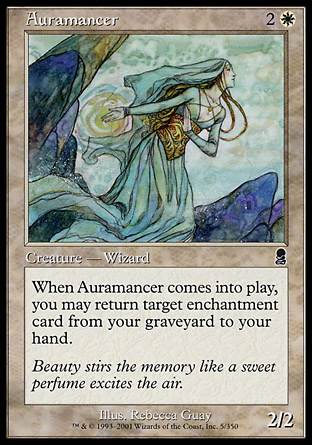
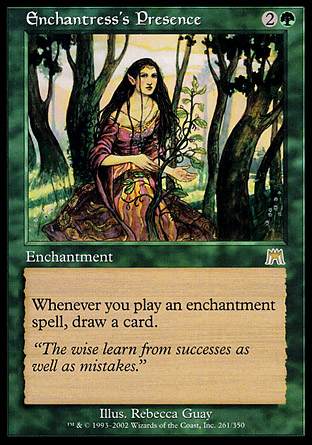
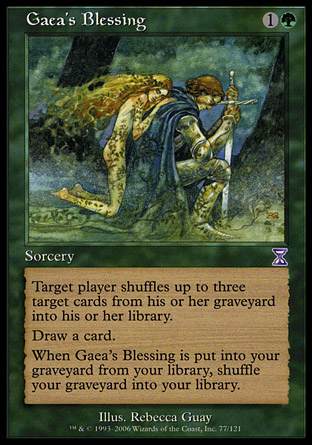
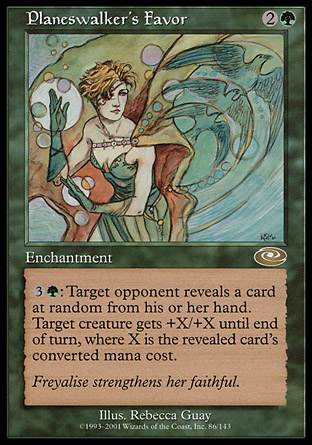
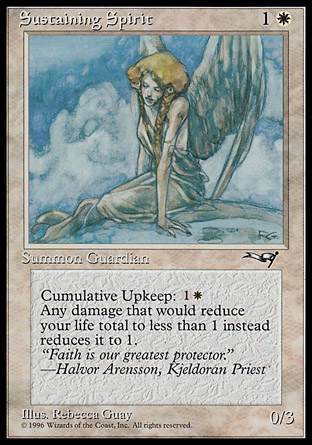
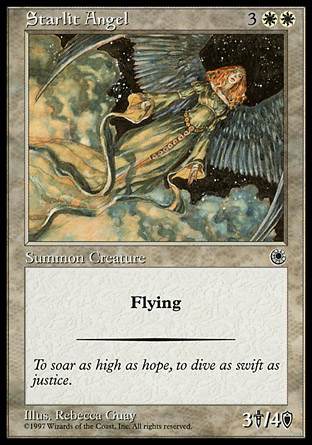
Graceful Shades and Lines: The Art of Rebecca Guay

Of all the art in Magic: the Gathering, many of my favorite card arts come from one artist: Rebecca Guay.

She’s well known throughout many fantasy gaming franchises, such as Magic: the Gathering, the World of Warcraft TCG, and Dungeons and Dragons, but I first became acquainted with her art through M:TG. I was immediately drawn to her use of subtle shading, thin lines, and overall soft coloring, plus the general subject matter of beautiful natural landscapes and graceful yet powerful ladies dressed in flowing, soft fabrics. All the pictures seemed like the kind of illustrations I remembered from fairy tale books, just right for some of the fantasy flavor that M:TG included in its worlds.

So, with this appreciation for her artwork, it seemed only right that I should honor some of my favorite Magic: the Gathering card arts by her in a blog post. Scroll through and see what I mean about “graceful shades and lines!”

angelicpage angelicrenewal
angelicwall atalyasamitemaster
auramancer calmingverse
devoutharpist dwellonthepast
elvishlyrist enchantresspresence
gaeasblessing haruonna
nantukoshrine oborobreezecaller
planeswalkersfavor predict
resuscitate samiteblessing
seedtime serrasblessing
silentattendant starlitangel
sustainingspirit travelerscloak
wallofwood wanderlust
wordsofworship yavimayadryad

For More Information

MagicCards.info (where I retrieved all the card images)
RebeccaGuay.com
Wikipedia article about Rebecca Guay
Gatherer Card Search: Cards illustrated by Rebecca Guay

Split and Merge: How They Really Work

Recently, a new way of playing multi-figure bases has been given life in HeroClix: the ability to Split the multi-figure base into its composite characters, or to Merge two or more characters into a multi-figure base.

This new set of rules gives quite a bit more team flexibility and options, especially with all the Duo and Trio figures floating about, but along with those options comes a slew of rulings questions. So, today, I thought I’d bring to light some of the stickier points about Split and Merge rules, to make it a little easier to understand.

(Note: Each of the following rules questions and some of the answers appeared on HCRealms.com. The answers have been checked by and expanded on (if necessary) by an official HeroClix judge [also known as my awesome “rules lawyer” boyfriend :D].)

First, The Official Rulings

Split: Give this character a power action if it has no action tokens. Replace this character with one or more qualifying characters each from a different entry listed on this character’s character card. The qualifying replacement character(s) must have either qualifying name and total no more than this character’s point value (unless those characters previously used the Merge ability to be replaced by this character). Replacement character(s) are assigned an action token and can’t be given an action this turn. Replacement character(s) begin a number of clicks from their starting line equal to the number of clicks from this character’s starting line. This ability can’t be countered.

Merge: When this character is adjacent to other friendly characters that each represent one distinct qualifying character listed on a Duo character’s character card and all of them have no action tokens, give this character a free action to replace all of them with that Duo character, the same number of clicks from its star ting line as this character. The combined point value of the qualifying char acters must be equal to or greater than the point value of the Duo character (unless that Duo character previously used the Split ability to be replaced by these same characters). The Duo character can’t use the Split ability this turn. This ability can’t be countered.

Question #1: Which Click Do Split Characters End Up On?

So let’s say I want to split the 400 point Avengers Prime after he had taken 5 clicks of damage. So when I split him, Thor, Cap and Iron Man all begin on their fifth click, right? What if I started at the 300 point starting line? If Avengers Prime had 5 clicks of damage, would Iron Man, Cap and Thor start on their 5th click or their 8th click (since Avengers Prime’s 300 point dial begins on click 4)?

CORRECT RULING: It is from the starting line you started with. So if AP had taken 3 clicks of damage, they should be 3 clicks from their starting line no matter which points version you used. So Cap, Thor, and Iron Man should all be 3 clicks from their starting line.

Question #2: What If Splitting a Multi-Figure Base Would KO One of the Individual Figures?

What if I split Avengers Prime but realize one of three he splits into doesn’t have enough life to survive the split? Meaning, what if Avengers prime has taken 8 clicks of damage and splits and Captain America only has 6 clicks of life. Does Cap get KOed or would the split be declared invalid?

CORRECT RULING: Cap would be KOed–IF you chose him as one of the figures you would split Avengers Prime into. If you did want to split Avengers Prime and they were too beaten up for one of your figures, you are not required to split into that character.

Meaning, if A.Prime has taken 6 clicks of damage and is on “click 7” and the only Captain America you brought with you is HoT Cap, which only has 6 clicks of life, you are completely able to split A.Prime into just an Iron Man and a Thor as long as those 2 still meet the requirement of being costed = to or less than A.Prime.

Question #3: When Merging Figures on Different Clicks, Which Click Does the Multi-Figure Base End Up On?

Let’s say I have an Iron Man on click 3, a Cap on click 4 and a Thor on click 1. The three merge together – so which click do I put Avengers Prime to?

CORRECT RULING: Whichever one was given the free action to use Merge, their click number would be used. So if Cap was given the free action, Avengers Prime would be on click 4; if Thor was given the free action, then Avengers Prime would be on click 1.

Question #4: Do You Have to Specify Beforehand Which Characters Your Multi-Figure Bases Will Be Splitting Into?

When I go to an event, do I have to declare which Iron Man, Thor and Captain America I will be using for the splitting or can I bring a big baggy full of Ironmen, Caps and Thors and mix and match depending on my opponent? I feel like it is the former but I feel like I have to ask.

CORRECT RULING: You need to have your replacement figures specified before the game starts. However, how many figures you are allowed to have specified as “replacements” may vary by event rules, game shop house rules, or personal preference (if playing a casual game). (See Question #7.)

Question #5: Do All Merging Figures Need to be Present In Order to Merge into a Multi-Figure Base?

CORRECT RULING: While there are 3 figures represented, I see nothing in the rules that all 3 need to be present to use themerge ability. All that is required is that the character using the action be adjacent to the other qualifying character and their point value either be greater than the duo or have been split into those characters previously.

Example 1: 400 point Avengers Prime is on click number 8. A.Prime uses Split and turns into FCBD Thor on click #8 and CW201 Iron Man on click 8. Those 2 figures are equal to 400 points combined and meet the requirements of the split.

Example 1B: In the same game, Iron Man has used Regen and ended up on click 4, and has been cleared. He is adjacent to FCBD Thor on click 8 who is also without an action token. Iron Man takes the free action to use merge. As their point costs equal 400, they can merge into Avengers Prime at 400 and would be on click 4. Later in this game, A.Prime could split into a Captain America if one is present

SO A.Prime has another layer of complexity because it has 3 qualifying characters where most duos only have 2. This gives them a huge level of variety in what they can accomplish and turn into at any given point. (It’s also probably why they limited the “sideboard” because there could literally be hundreds of combinations of those 3 characters in Heroclix.)

Question #6: Do You Have to Use Exactly the Same Figures to Split and Merge Into Each Time?

Obviously I get the [basic concept of Split and Merge]. Thor & Herc (300 points) split into Thor (125) and Hercules (131) legally because 131+125= 256. Those two can rejoin even though 256 is less than 300 because of the exception. You just can’t start with the two and merge unless you have a 256 point Thor & Herc duo.

Here’s the sticky part: What defines “same character?” I know if you split Batman & Robin into Bats and a 40 point Robin, you can’t then grab a different 17 point Robin to glue back to Bats, unless Bats is at least 121 points. But how does this work with those characters merging and splitting with other people?

CORRECT RULING: You could merge Batman with a different Robin to form the Duo again, but you would still have to meet the requirements to be able to go back to the 138-pt base. Those requirements: if you’re going to split, choose figures of lower or equal points to the duo’s point total; if you merge, the characters have to equal or cost greater than the duo, unless they’ve already come from the duo before.

Question #7: How Many Figures Can You Have “Waiting in the Wings” to Split Into?

CORRECT RULING: Your force can be limited to just how many replacement characters can be waiting on the sideline. The rule book itself does not require a specific number, just like it doesn’t require a specific number for your build total. But the HeroClix Tournament standard will be 2 per 100 points of Force with a maximum of 12 characters.

Rulebook Article for Replacement Characters

(Note: Most players around my local shop have never heard of this “2 per 100 points” rule…to be sure you’re building your force right, ask your local shop’s HeroClix judge or shop owner about what they would prefer players to do for each tournament. Also, keep your ear to the ground for more rulings news about this point.)
Question Sources

Forums Post for Questions 1-5
Forums Post for Questions 6-7

Favorite Magic Cards, part 3: Permanents

I enjoy playing permanents in my M:TG decks, certainly much more than playing one-turn-only spells–I like game effects that continue on past one turn, that help me build up strength, life points, etc. The following twelve cards help me toward that long-term-survival goal:

angelicchorus
Angelic Chorus: Finally, a reward for playing the creatures with huge toughnesses! Indomitable Ancients, anyone?
boonreflection
Boon Reflection: Because gaining single-digit totals of life is paltry. 😀
pristinetalisman
Pristine Talisman: Hmm, tap it to not only get a mana, but gain a life. Fun with Well of Lost Dreams. xD
quietdisrepair
Quiet Disrepair: This is one of those cards you can use to destroy your opponent’s enchantment or artifact, or use on your own stuff to gain a free 2 life every turn. It’s a win-win!
scourgeofthenobilis
Scourge of the Nobilis: Firebreathing and lifelink, together in one creature enchantment!
shieldoftheoversoul
Shield of the Oversoul: I admit it: I play this because of the indestructible ability. Makes Green stompy creatures that much funnier.
steelofthegodhead
Steel of the Godhead: The combo of lifelink and unblockability is AWESOME.
storycircle
Story Circle: Because the Circles of Protection, as cool as they are, are only situational. THIS one covers the board.
sundroplet
Sun Droplet: Because it’s hilarious to watch your opponents grimace as you get back all the life points they knocked from you, one turn at a time.
testofendurance
Test of Endurance: I love this win condition so much I have a deck built around it.
wheelofsunandmoon
Wheel of Sun and Moon: The #1 way to survive a mill deck’s onslaught. Also funny in a deck that draws a lot of cards–this way, you don’t accidentally deck yourself!
worship
Worship: Just never block with your last creature, and make sure you have a way to quickly put out another creature on the fly, and you won’t have to worry about dying from combat damage!

Favorite Magic Cards, part 2: Spells

Building off of last week’s post about favorite creatures, this week I’m focusing on favorite spells in Magic: the Gathering. This list is much, much shorter, because I don’t play a whole lot of spells–I usually play permanents more than anything. But these eight cards have made the list:

dawnglowinfusion
Dawnglow Infusion: Epic life-gain for Green/White.
dwellonthepast
Dwell on the Past: Not only do I love the art for this card, but the ability to bring back 4 cards from the graveyard for 1 mana is very attractive.
holyday
Holy Day: Also known as “how to completely frustrate your combat-heavy opponent for one turn.” 😀 (I also like Fog and Darkness for the same reason.)
kindle
Kindle: This card’s strength ramps up over time–eventually you’ll be able to do 5 damage for 2 mana. And if your opponent is using Kindle also…well, the damage can get pretty silly. 😀
lightningbolt
Lightning Bolt: Simple. Effective. Classic.
lightninghelix
Lightning Helix: Being able to do direct damage to a creature or player, PLUS life-gain? YES PLEASE!
rootgrapple
Rootgrapple: See how this says “destroy target noncreature permanent?” That means this card can destroy LANDS. Treefolk have Land Destruction. Awwwwwww YEAH.
safewrightquest
Safewright Quest: Being able to search for a Plains on first turn is POWERFUL. This one card helps the mana flow in about 90% of my decks.