Contrary to popular belief, Pinterest is not just a pictorial haven for wedding planning, DIY projects, crafts, and beauty tutorials. It also boasts a fairly robust humor section, which most casual users may not know about. People have pinned a variety of hilarious images from hundreds of websites–here is a small selection (read to the end for the “Piece de Resistance”):
Especially on math finals…”yeah, yeah, I know some of these variables!” xD
That’s one savvy florist right there.
I call it “web-fu.”
Why does this bunny exist? Likely because somebody was BORED. LOL
*snort*
I remember these days all too well…
Second pic needs a “NOM NOM NOM” caption so bad. xD
Looking on the bright side of the BMI chart…
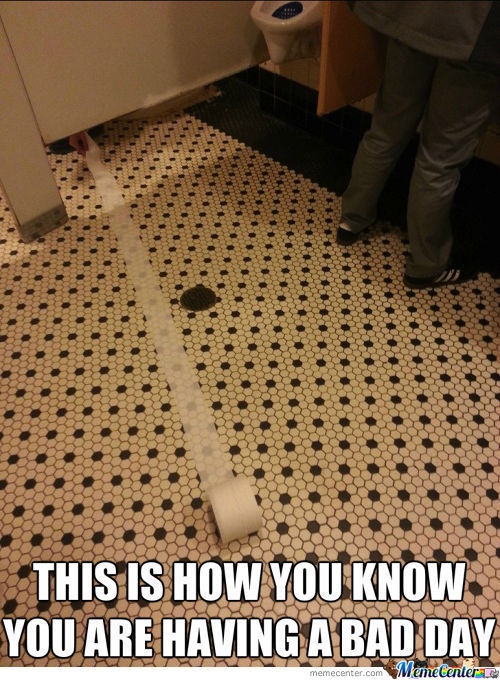
Spiteful toilet paper.
Math books always seem full of these ridiculous word problems…lol
EVERY. TIME. Photography fail. LOL
This note begins with a roar and ends with a mew. Aww.
Wowwww…a Harry Potter/Chef Gordon reference mashup. xD
What a cruel, unusual, and hilarious phone prank…
Very punny, Thor, very punny.
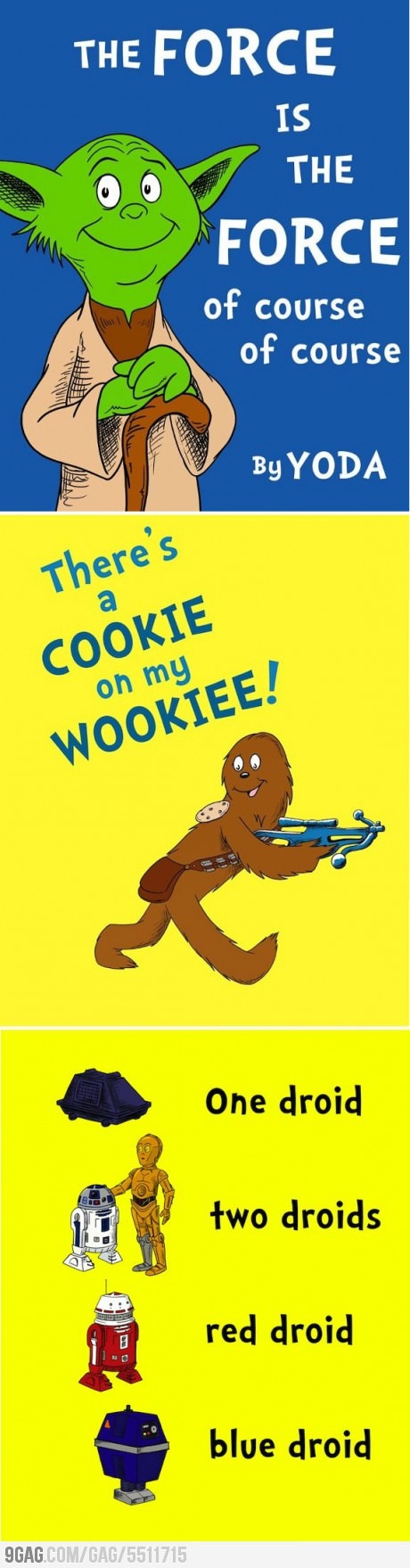
Cookie on my Wookiee, xD! (Also, why is Yoda semi-quoting Mister Ed? LOL)
I need this sign, so badly.
Accurate description of Southern slang. 🙂
So precise a description of modern “friendship,” it hurts.
OMG, it’s not just me!!!
You know, I never gave this much thought until now…LOL
I see a future in high-fashion editorial modeling for this kid. Not sure why. LOL
I think the “for all eternity” line applies to how long you’ll be paying said loan off!!
“TL;DR,” meaning “Too long; didn’t read,” is a common acronym found around the Internet these days, usually in response to a longer story or essay. Sometimes, authors will even write a short, one- or two-sentence summary of their point as a preface to their article and have “TL;DR” out beside it for those readers who don’t want to read further.
But this is more than an acronym. This is a PROBLEM.
Two Reasons This Is a HUGE Problem
As an English major and former English teacher, I find this “too long, didn’t read” trend distressing, for two big reasons:
All of us–including those of us who study literature and written publications–are becoming entirely too impatient when we read. Either that, or we feel easily daunted when we see long blocks of text. We have become more dependent on short written bursts of news and entertainment, and most of us do not take the time to read on a deeper level daily.
Because of the instant gratification of TV and the Internet, our kids are growing up with this same “TL;DR” mentality in schools. This doesn’t help them learn to deeply read literature–they find shortcuts online or read Cliffs’ Notes, rather than sitting down and really studying the actual work.
Even I’m finding it hard to concentrate on a long essay or a long work of literature these days, and I used to be one of those folks who consumed the written word like it was candy to my brain. One could attribute it to stress or illness, but I think there’s something else wrong–my ability to concentrate has dwindled with the lessening need for extended concentration. And I’m likely not the only one.
The (Sad) End Result?
I fear that the day is quickly coming where people will not know how to make themselves read for long periods of time, and will forget how to lose themselves in well-written literature for hours. I fear that we as a society will forget how to pay attention to something that isn’t flashing and/or brightly colored.
The main reason I fear this? Because it will, quite simply, put me and other writers out of a job. As a writer, I want generations of people to read my novels, to immerse themselves in the world I am painstakingly building with my words. But if in the future no one can pay attention for that long, will my words ever be read and enjoyed at all? I’m sure I’m not the only writer out there who worries about this.
The Solution: Building Up “Reading Stamina”
I believe that we all must work on our “reading stamina”–the ability to read for long periods of time without getting distracted or bored. The reason I call this ability “stamina” is that it can be trained and increased, just like physical endurance. We can endure longer reading sessions; we just have to want to do so, and schedule time to “work out” in the mental gym.
Search up a subject you really enjoy, and read 2 articles about it. Compare and contrast how each author approaches the subject. For instance, I might read a couple of articles on astronomy, music, the geek life, etc., and see how each author’s opinions match up with each other, and where they differ.
Closely read 1 short story, poem, or 1 chapter of a novel per day. Don’t just scan the work, but read it almost as if you were reading it aloud, going word-by-word. Really delve into what the author is saying; study their word choice as if through a microscope. How does the piece of writing make you feel? What is the author’s point?
After you finish reading anything, mentally summarize what you read. Does what you just read change your opinions or worldview in any way?
Share what you’re reading with others on social networks. Offer questions on the points you didn’t understand in what you read; offer opinions on the points you understood and reacted to. Start a discussion!
These are all exercises that will help you beef up your understanding of what you’re reading, which will make it easier to read for longer periods of time–you won’t feel so overwhelmed. Just like you have to start exercising with short bursts of activity and longer rests, so you must train your brain with short bursts of reading every day, rather than jumping into a huge novel right away.
I’m also suggesting that you make reading a more social activity; it’s long been seen as something that isolates us, much as computers isolate us today, but in fact becoming well-read can help us make new friends as well as enrich all our conversations.
Summary
(Ironic that I’m putting a summary on this article, isn’t it? LOL) If we want to continue being a literate society, we need to stretch our reading muscles. We need to be okay with reading longer works, or reading for longer periods of time, because being willing to read deeply can help us do everything from enjoying literature to avoiding financial pitfalls (reading the fine print). If we don’t use that skill, we lose it; if we lose the ability to read longer pieces of writing, how long before we lose the ability to read deeply at all?
You can tell it’s spring here in the South when my normally-blue car gets a nice yellow-green coating on it. (Living in the midst of trees and blooming flowers as we do, it’s par for the course.)
It usually does no good to rinse your car off in these blooming spring days, either–a few hours to a day later, the yellow sheen is back. I have even taken to calling my car the “Pollenmobile” recently, since the bees seem to like my car even more than the flowers. (Case in point: at a long stoplight in town the other day, a few wasps and bees visited my side mirrors and the hood of my car…they had a grand old time crawling around in the yellow dust.)
But as yellow-green as my car has looked recently, it doesn’t even hold a candle to these lovely depictions I’ve found all over the Internet. Take a look at some of these pollenmobiles, and feel better about your own car this spring!
When I say the word “troll,” you might think of the children’s stories where a troll hides under a bridge, just waiting to surprise and take advantage of innocent passersby. In reality, “trolls” on the Internet are much subtler and more insidious than this.
What Is An Internet Troll?
The definition of an Internet troll is a person who posts inflammatory comments on articles and websites just to start fights or disagreements, not to express a valid opinion. Trolls often take advantage of an already-heated discussion, or pester people who strongly believe in their opinions. Basically, they want to feel important–this is why they do what they do.
What Doesn’t Work: Asking Them to Stop Posting/Arguing With Them
As a victim of many Internet troll attacks over the years, I at first responded to them with bewilderment or anger. I had no idea why they were saying such horrible things to me, nor did I know why they kept coming after me and attacking me. Thus, I kept trying to battle them back with either pleas for them to stop or logic to try to debunk their arguments.
Neither of these tactics works against a troll–it actually just feeds them, giving them more amusement and more fodder for trolling. Remember, they are only doing this for laughs and/or attention. They aren’t interested in your opinion, only your reaction. The larger and more dramatic your reaction, the more they laugh and the more they keep coming back to get it–as I unfortunately found out.
How To Beat Trolls: Ignore Them and Devalue Them
The way to handle and defeat trolls is twofold:
Firstly, if you are a member of a forum/website where the troll is posting, ignore the comment entirely. Remember, they just want attention, so don’t give them any.
Secondly, if you are an admin of a forum/website where a troll is posting, delete their comment(s) and block their IP address from posting on the board. Don’t make any announcement about it, since you don’t want to draw attention to the troll’s attacks–just do it quietly, as if the troll never even existed.
This strategy may just seem like a revision of the tactic “Ignore them and they’ll go away,” but it’s not. What I’m suggesting is both ignoring and devaluing their commentary, silently telling them that their words are not even important enough to keep around on the Internet, much less react to. This is about the only way to get rid of trolls, because you’re not giving them what they want: a reaction, either for laughs or to make them feel important.
A Final Note: This is Not Cruelty, but Self-Preservation
This may seem cruel; for years I resisted following this course of action, because I felt bad about treating another person this way. But what we have to remember in dealing with trolls is that they are entitled to their opinions, but you are also entitled to yours. On your own forum/website and in your own world, you don’t necessarily have to keep their opinions around to look at, nor do you have to let their comments influence your life.
The bottom line: trolls are basically Internet bullies, and both bullies and trolls are sad, pitiable individuals who try to make themselves feel important by stomping on others. Pity them, sure, but pay no attention to what they say. You’ll have a much better time on the Internet if you do so.
Recently, as I purged my bathroom of all sorts of old shower gels and shampoos, I realized I had quite a little collection of almost-but-not-quite-used-up bath products. Most of them were a bit old to continue using for their original purpose, but, being the borderline hoarder that I am, I didn’t like to see wads of money going in the trash can if I could repurpose the leftover products for any other household use.
I was quite at a loss, till I discovered that there was a way to make your own foaming soap using some of these unwanted products. Yes, you read that right–your own foamy soap, without having to go out and buy it! With this process, I’ve been able to both use up leftover products AND save money on hand soap…a definite win-win!
The Process
(There are many blog articles about this out there on the Internet, but the tutorial I followed was this one over at KingdomFirstMom.com. I have added my own tips and advice to this, gained through trial and error.)
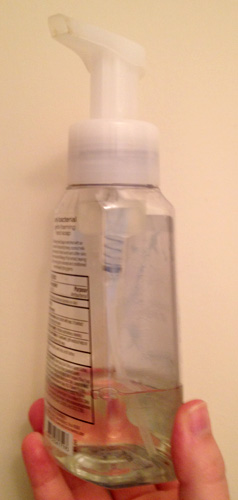
First, only use shower gels/shampoos that are see-through for this project. If it’s not a see-through product, it will not foam well at all, AND will gunk up your foamy soap dispenser to boot. (Learn from my fail.)
Make sure your foamy soap dispenser is rinsed out completely.
Measure out 1-2 tablespoons of your chosen product and pour it into your dispenser bottle.
Run a very thin stream of warm water into the dispenser bottle until the bottle is filled up almost all the way to the top, leaving room for the foamy dispenser top to fit in.
Screw the top of the bottle on firmly, and then begin to turn the bottle over and over in your hands slowly to combine the soap and water. (This is important–if you shake the bottle too hard, all the foam will be “stuck” in the bottle and won’t come out the top. Learn from my fail.)
I find that turning the bottle over to the rhythm of “thousand-1, thousand-2, thousand-1, thousand-2” works well.
Turning the bottle end-over-end ensures that the product distributes throughout all the water in the bottle.
After a few minutes of this slow-churned process, try out your foamy soap by pumping the top a couple of times. (If it doesn’t foam right at first, try a few more pumps, or shake the bottle up a teensy bit faster–some shampoos and shower gels distribute at different rates in water.)
YAY! You have your own foamy soap, made from a repurposed product!
One Final Note: Obtaining a “Foamy Soap” Bottle
The real trick to making anything into “foamy soap” is the bottle, or more accurately, the top of the bottle, which adds air into the soap/water mix as you pump it out of the bottle. There are some fillable foaming soap pumps out there, but most of them have really bad reviews, either for being leaky or for the foamy dispenser part clogging up really easily.
At our house, we had several empty Bath & Body Works foaming soap bottles and pumps lying around; I just rinsed one out and repurposed it for my “homemade” foamy soap. This has worked out really well! So, if you can’t find a foamy soap pump you like, you may want to ask friends if they have any empty storebought soap pumps they’d be willing to let go. One less item of clutter/trash for them, one very cheap way to stretch soap for you!
Amid all the beauty articles you’ll see me post every now and again, there’s one topic you’ll never see me cover: eyebrows. You know why? Because I, unlike so many girls and young women my age, have never and will never pluck my eyebrows to shape them. It’s just a part of the typical female beauty routine that I have never adopted.
In thinking about this issue, I realized there was a little more to it than just not liking to pluck eyebrow hairs out. It has more to do with my philosophy of beauty, which is vastly different from the beauty industry’s philosophy of beauty (not to mention society at large). Read on, to find out how a simple pair of eyebrows could make such an elegant point.
How My Brows Actually Look
As evidence of my unplucked eyebrows, I have a few pictures of myself, with no makeup and no retouching:
Barring the fact that you can tell I haven’t slept right in several years days (LOL), my eyebrows are thick and nearly-black, going almost straight across rather than having the thin, graceful arched shape so coveted in the beauty industry over the last several decades.
Every eyebrow article I read subtly tells me that I, too, should want those perfectly groomed and plucked brows for my own face. It’s almost like your face isn’t “feminine” enough without plucking these hairs out of your face every week, or having them waxed off every few months. But I just haven’t done so. Being as squeamish about pain as I am, it seems ludicrous to inflict such pinching pain on myself for a goal that I’m not even interested in.
Now, why would I not be interested in such a beauty goal? Because when my eyebrows are taken in context with the rest of my face, as seen below without glasses and with glasses…
…they actually look pretty normal, fairly well-scaled to the rest of my facial features. True, they’re thick and straight, and some kids I went to school with used to pick on me for having “guybrows,” but they do what God intended them to–namely, to keep sweat out of my eyes (which is very handy during Zumba).
The Eyebrow Epiphany
I used to think about “getting my brows done” (as it’s usually called), but I don’t anymore. And I think this whole eyebrows thing has led me to an epiphany about beauty:
Beauty is not for other people, but for the self.
If you think about it, it’s true. Each of us are the only ones who know what that makeup product feels like on our faces, what those false lashes feel like when they’re glued to our eyelids, how much those eyebrow hair roots can hurt when they’re plucked out with tweezers. Isn’t it, then, up to us which products we use and which beauty routines we do, rather than depending on someone else to tell us “what we SHOULD be using” and “what we SHOULD be doing?”
And yet, the beauty industry–and modern society as well–does not think that way. In most people’s eyes, beauty products and routines are used to visually impact other people, not to make ourselves happier…in effect, saying that our outward beauty is solely for the visual consumption of others.
I don’t buy into that line of thinking anymore; I’ve had my turn trying to “fit in with the crowd,” beauty-wise, and I just don’t. I would rather spend my time using products and doing routines that make ME feel good about ME. Thus, why I’ve never touched my eyebrows with a tweezer, but instead use hand softeners, scrubs, and lotions to make my hands feel baby-soft after a good workout.
People might even judge me through this blog post, thinking “Why would you ever let yourself look that ugly?” or “You ought to shape your brows, you’d look so much better,” but neither opinion really matters. After all, they’re my brows on my face–if some folks don’t like them, that’s perfectly okay, because my brows are not on their faces and they don’t have to live with them. My beauty routine is for me and me alone, and I think more girls and women have a right to think that way as well.
I’m not saying that we all throw down our tweezers and stomp ’em–if you love to keep your brows groomed and plucked because it makes you feel better, then that’s awesome; keep doing it. But if you’re clinging to old beauty routines and products just because some expert said you ought to or because your friends all do it, then maybe it’s time to reevaluate your beauty thinking and start doing only the things that make you the happiest about your appearance. After all, it’s your appearance–if others don’t like it, they ain’t got to live with it!
Recently, I caught sight of this picture floating around the Internet, and it admittedly ruffled this little robin’s feathers:
I retrieved this picture from buzzfeed.com, but it’s all over the internet.
Now, I have censored out the language for propriety’s sake, but what I really took issue with was the last sentence or two: “Bloggers aren’t real writers.”
At the risk of opening myself up to criticism, I’d like to address this viewpoint, because it seems to be shockingly commonplace among most non-bloggers. As a writer who has picked up blogging as a hobby, I find that this acid view of blogging is overly simplistic and based in ignorance rather than truth. I seek to dispel at least some of that ignorance with this post.
#1: All Bloggers Are Not Identical
One cannot categorize “bloggers” as one solid group of people with one fixed set of interests, methods, and talents. That’s like saying “all fruits taste the same” or “all sneakers fit the same on everybody’s feet”–it’s simply not true. People blog about all sorts of things, and they blog in various ways; some use mainly pictures, some use video, and some, like myself, use mainly text to get their point across.
I could potentially understand this person’s perspective if all bloggers just used visual media as their posts; visual media does not require as much text editing and revising. But not all bloggers use pictures and video to the exclusion of all else. I’m a prime example, and I know plenty of other bloggers who produce text-heavy posts as well. Given that, how is text blogging not real writing, when it is primarily carefully-chosen words?
#2: Text Blogging Forces More Careful Editing
Blogging is a time-sensitive form of writing, produced on a schedule and conforming to content demands as well as formatting and time demands. What kind of writing does that sound like? Journalism! And, while blog articles are not always the highest of art forms, producing a good blog article DOES require a certain ruthlessness and discernment in one’s writing and editing process, which most if not all types of writers can benefit from.
For instance, I’ve noticed that I’ve become a much more concise, word-conscious writer since I began my blog in January 2011–I used to go on for days about a topic, and now I can condense that into a paragraph or two and get my point across much better. Blogging has forced me to reevaluate my writing style, and has helped me cut out some of the unnecessary verbosity as I revise and edit. My paragraphs are shorter and feel more “zingy” as a result.
Given this, how is blogging not real writing, when it requires the same amount (or often more) of typing, editing, and revising that I did while working toward my English major in college?
#3: Blogging = Written Communication = WRITING
Blogs, even and especially text-heavy blogs, communicate ideas between people, break news, and invite discussion, much as TV news stations and newspapers do. How is this not real writing, when all of these tasks are precisely what writing was first designed to do? People have been using writing as communication for over a millennium now, at least, and many forms of writing have since developed. Text-based blogging, while relatively new to the literate scene, is just as viable as any other form.
I don’t know for certain, but I have a feeling that the creator of this particular image categorizes “writing” as “creative writing” or “expository writing” only–basically, that “real writing” is only telling a fictional story or getting across an academic point. Unfortunately, that is like saying that “carrots and onions are the only real vegetables, and everything else you grow in your garden is a fake veggie;” it is a perspective that ignores every other opinion or fact as “invalid” except its own narrow, opinionated view. Writing is not only for creativity nor just for arguing points of opinion; it is also for communicating facts and discussing points, which bloggers do quite well.
In Conclusion
I don’t claim that text blogging is the be-all and end-all form of writing, but it does take time and patience to craft and complete well-thought-out articles, and it does take discipline and dedication to produce such articles on schedule every day or every week. It is no different from the other forms of writing out there, which have similar mental requirements.
Additionally, if this person and others like him/her believe blogging is so stupidly easy, I would challenge them to try keeping up a daily text-only blog for about 6 months, coming up with original articles (about 500-1000 words apiece) and fresh perspectives every day. I think their experience would teach them quite a bit about how blogging IS “real writing” if done in this way.
Even in my earliest memories about food, I can remember the terrible consequences that would follow when I ate any meal which combined tomatoes and citrus together. Most often it happened if I drank orange juice and ate something with ketchup on it–within minutes, my tongue felt as if it had raised, painful ridges on it, red ridges which itched and burned like crazy and would not be soothed with drinking anything. Ice relief lasted only as long as the ice lasted in my mouth, and then the aggravating itch and burn would be back. Sometimes I resorted to scraping my tongue with my teeth or fingernails, which didn’t really help but made me feel a little less powerless against this until it finally went away (it usually took about an hour).
My mother always called this condition “geographic tongue,” and I learned that members of both sides of my family had experienced this reaction to certain foods or combinations of foods. For my immediate family, we quickly learned to avoid the tomato/citrus combination for my sake, and I became more aware of what I was about to eat. But sometimes it snuck up on me, or I forgot about it until it was too late–like the time I ate a slice of cheese pizza slathered in tomato sauce along with a citrusy drink for school lunch. (Let’s just say getting through third block was VERY interesting…)
However, while doing a bit of casual Googling and Wikipedia-ing about this topic, I noticed that there is more to “geographic tongue” than a simple, silly-sounding temporary food reaction. In fact, this is a medical condition, one that explains far more about my own gustatory habits.
What Exactly IS Geographic Tongue? (Warning, Picture Ahead)
Geographic tongue, aka “benign migratory glossitis” or “erythema migrans,” is a harmless mouth condition that affects about 3 percent of adults around the world. (Yay, I feel special now, LOL.) It seems to be more common in middle-aged and older adults than children, and more common in women than men. Upon eating foods with high acid content or strong flavors (it varies among sufferers), the tongue burns, stings, and/or itches. And, if you look at a geographic tongue, you’ll see patches of red and white all over it in map-like formations which give the condition its name.
As an example: my own tongue.
As you can see, my tongue looks pretty strange–it has always looked patchy like this, even in my childhood. (Bonus: not only do I have strange patterns all over it, but I also have deep fissures in my tongue, which often appear in people with geographic tongue–you can see a big one running right down the center of my tongue in this pic, and there are other smaller ones as well. These fissures tend to exacerbate geographic tongue, producing swelling when already irritating foods get down into the fissures.)
The reason all these weird patches show up is because my tongue is missing papillae (the things that contain taste buds) on the redder parts of my tongue, while the lighter parts have papillae in abundance. The areas of darker and lighter red can change places at random, so you can never tell exactly what my tongue is going to look like (LOL). This “missing papillae” phenomenon doesn’t sound like much, but apparently it’s really important when it comes to processing strong flavors or acidic foods. People still don’t really know why it happens.
Is It Contagious/Dangerous?
If you’re one of the 3% of human beings who has this, do not fret: this is NOT a precancerous/cancerous condition, but rather a “minor annoyance” condition, at least as doctors classify it. (Ha, it doesn’t FEEL minor when it’s happening and you can’t do squat about it!) Also, it seems to have nothing to do with oral hygiene, though a lack of said hygiene can make geographic tongue worse in some cases. If you develop very painful sores or swelling on your tongue that keeps you from breathing correctly, however, get to a doctor ASAP.
Geographic tongue is not contagious; it appears to be purely hereditary, and the same people who have geographic tongue often have allergies, asthma, eczema, and/or are more susceptible to hay fever. There are also suspected links to anemia and psoriasis as well. (Yep, all this is in my family, too. [sarcasm] YAY. [/sarcasm]) Lastly, there may be a connection between geographic tongue and celiac disease, though more research needs to be done.
What Can Cause Geographic Tongue to Flare Up?
Foods/Drinks
Oral Products
Other Triggers
Spicy foods (esp. chilies, chili powder/chili sauce)
Citrus fruits, especially pineapple
Sour foods
Oregano
Walnuts & pecans
Raw spinach
Chard
Tomatoes
Eggplants
Really strong cheeses (like bleu cheese)
Strongly-flavored candy (esp. peppermint, chocolate, and cinnamon)
Alcohol
Mouthwashes (esp. with strong flavors)
Whitening toothpastes
Tobacco (esp. chewing tobacco)
Environmental sensitivity (see previous section on heredity)
Stress (possibly)
Diets high in sugar or processed foods (possibly; needs more research)
Vitamin B deficiency
Psoriasis flare-up
Hormonal changes
What Can Help Soothe/Keep Down Geographic Tongue?
Vitamin B supplements
Zinc supplements
Toothpaste for sensitive teeth with no additives
Ice (temporarily)
Anesthetic mouth rinses
Mint gum/lozenges (supposedly)
(If constantly painful, a doctor can treat geographic tongue with certain topical ointments, antifungal products, or even corticosteroid treatments.)
Living With Geographic Tongue
For me, the list of “trigger foods” surprises me; most if not all of those are on my “do-not-eat” list. I never have been able to enjoy cinnamon-flavored gum or candy, for instance, and I’ve always been very particular about the kind of orange juice I get–it’s got to be “Low Acid.” And though I love sweets, too much chocolate with nothing to drink with it leaves me with a burning, “coated”-feeling tongue and throat.
In light of this condition, my picky eating makes a little more sense, since I’ve been avoiding many foods possibly based on how they make my mouth feel rather than the taste. And it also sheds light on why my tongue often feels so irritated after I brush my teeth, too, since I use a lot of whitening agents and special mouth rinses.
I don’t know whether adding Vitamin B or zinc would help me, nor am I sure if my geographic tongue might be connected to stress, allergies, psoriasis, etc. But these sure help give clues as to what I can try!
“Wait, what?” you’re probably thinking. “There are PROS to being a big woman, in today’s society of ‘thin is in’ and size 0-2 being glorified in every clothing store?”
Yes, there are pros. As a big woman myself, it’s taken me many years to come to terms with my shape and size since I plumped up and began to gain my adult form at 11 years old. But I’ve finally reached a place where I am content with my body whatever shape it takes. And in this skinny-crazed society we live in, it’s important for all of us bigger ladies to stop hating and punishing ourselves because we don’t “look thin” or “weigh X amount.” There’s more to fitness than just weight, as I’ll discuss in a moment.
One Important Note Before We Begin: “Big” Does Not Always Equal “Fat/Obese”
Now, I am not saying that there are pros to having severe obesity which causes medical problems. Believe me, I began to suffer a painful pre-arthritic condition in several of my lower body joints about six years ago due to weight, and through exercise I am beginning to conquer it. Body size which compromises health is something that must be addressed medically (not just with fad diets and such), otherwise one’s quality of life will wither away–I experienced that firsthand.
Fitness is NOT Measured in Body Weight Alone
BUT! My body frame is just larger than what’s considered “thin/small enough,” and I would guess that I’m not the only woman built like this. (From shoulder to shoulder, I’m 17 inches wide; from hip bone to hip bone, I’m 25 inches wide.) My shoulders and hips are just wider than some girls’, and all of my bones are thicker than most. (Even doctors have marveled at the thickness/density of my bones on X-rays.) Because of my skeleton’s structure and density, I can carry more weight without it looking like I weigh that much. Most people who look at me cannot believe I’m 300 pounds (yep, I said it–it’s just a number!); most folks guess that I’m 200 pounds or so.
Too many people focus on just their weight number, thinking that fitness is solely based on how much you weigh, and it just isn’t. There are plenty more factors that go into fitness, such as muscle flexibility and strength, heart health, joint flexibility, lung capacity, ability to walk and move easily, etc. My doctor tells me my knees are stronger and my heart and lungs are performing better than they were six years ago, yet I’m the first to admit I’m not completely fit yet.
But even with all the exercise classes I take and healthy food I eat, I will never shrink down to be a smaller woman skeletally. I will never be dainty, petite, and tiny. I am a tall woman (5’8″) with broad shoulders and wide hips. This is something I must accept about myself, because it has to do with how my body is formed at the skeletal level, something that diet and exercise cannot change. I and other girls built like me will always be somewhat larger than “model” size.
And you know what? THAT IS OKAY. In fact, it’s more than okay to be big–sometimes, there are even advantages! Thus, the reason I came up with the following tongue-in-cheek yet accurate list:
Why It’s Great to Be a Big Woman
Our height and body structure makes us look more authoritative/confident
No breast augmentation surgery needed–large breasts usually come with the “big woman” package
More padding, so if you fall or bump into things, you won’t break a bone or damage internal organs
Halter tops look great on broad shoulders and large busts like ours
We can use our weight against potential attackers
Wringing out clothes is easy–just wrap the clothing in a towel and sit on it! LOL
Our figures can look more like the vintage “pinup girl” posters
There are good men out there who genuinely appreciate our bodies
We got hips that don’t lie (and that can shut car doors by themselves)
Carrying/delivering children is a little easier (especially with our wider hips)
We can pull off those lovely retro-style dresses and skirts
Since we can carry more weight on our frames, we can usually carry heavier things more easily
Who needs body pillows to snuggle with when you’ve got us? 😀
As a little girl growing up in the late ’80s and early ’90s, I knew without questioning that I had a smorgasbord of opportunities in front of me. I could be ANYTHING. I could play with any toy I liked, be friends with anyone I chose, read any book I wished, and dream of one day being in any career that I felt drawn to.
That freedom was something I very much took for granted. It was not until later in school that I began to hear about “feminism” and “Women’s Lib” as a social movement, and that it hadn’t been very long ago that it was considered improper for young ladies like me to just read any book they wanted, or play with any toy they liked, etc. I learned, from my own relatives and community members as much as from the textbooks, that a woman’s dress, speech, and even life goals prior to this movement had been fairly proscribed, a beaten track which you simply had to walk. The recent documentary on PBS called Makers describes the feminist/Women’s Lib movement in detail, and has in part spurred the following post.
It was downright odd to learn about the Women’s Liberation/feminist movement, especially in the context of my own life. Keep in mind, I was (and still am) the type of girl who played with Barbie dolls one minute and Micro Machines the next; I would play sports with the boys at recess and yet still play at “teatime” with my dolls at home. My toybox was a mishmash of traditional “girls’ toys” and “boys’ toys,” dressup clothes and dollhouses right alongside Legos and basketballs. If it was fun to play with, I played with it, basically. I had no idea of the “gender lines” I was crisscrossing; to suddenly learn that these choices I took for granted had once been forbidden to girls was a shock.
But this very way of life, the way of life I adopted even before school-age, is what I believe the Women’s Liberation movement was really all about, and what feminism is still about today. Yet the movement has its fair share of detractors as well as people who don’t really understand what its purpose is…and I’m sad to say some of its proponents seem to have lost sight of what the movement is really about. (More on that in just a moment.)
This issue is really big and unwieldy, so I’ll simply try to describe what I believe the movement is about in the context of what it’s meant to my life: a certain freedom of choices.
What Feminism/Women’s Lib Isn’t: A Movement for Dominating/Getting Rid of Men Altogether
Many boys and young men sneer at or don’t like talking about the Women’s Lib/feminist movement, saying that they feel threatened or even belittled by it. Some wonder about the femininity of women who join or believe in such a movement; others question why women felt the need to break out of a social role that seemed perfectly fine.
I admit, feminism does seem pretty militant sometimes, especially looking back at its history. And the imagery of a woman doing battle is somehow more frightening to society as a whole–somehow, she’s an uncontrollable, unpredictable force. (People in America have fought militantly for the rights of many other social groups over time, though–why is fighting for the rights of women still so alien to society even today?) Feminism, however, is in my opinion not about getting rid of men entirely, nor is it about absolutely dominating men the way that women were so often socially (and physically) dominated.
I am a feminist and a liberated woman, but that does not mean I want to crush male anatomy beneath my heel and crack a whip over men’s heads. All I want, as a feminist, is for female human beings to be treated as socially, economically, and personally equal to male human beings. (That particular fight is still not over, by the way, since working women still make less than working men, often at the very same jobs.)
What Feminism/Women’s Lib Isn’t: A Complete Destruction of “Homemaker” as a Career Option
This is where many of my fellow feminists slip up in their definitions of feminism. I have heard too many “strong liberated women” disparage girls and young women who have gone on to become wives and mothers rather than take a “real career” out in the world. One of my Facebook friends actually received some nasty messages about her personal choice to become a homemaker–one of them said, in part, “I guess you just want to live in the nineteen [bleep]ing fifties if that’s all you’re gonna do with your life.”
To me, this is another perversion of what Women’s Lib/feminism is about. If you look down on a woman for not taking a career outside the home, then you are in effect telling her that her personal life choice is invalid, the same way society used to tell women that their life goals to work outside the home were invalid. As any wife and mother will tell you, homemaking is most certainly a career in and of itself–a 24-hours-a-day, 7-days-a-week, decades-long career with no vacations and no paid leave, requiring physical strength and endurance as well as nurturing and patience. Feminists fought for women to have the freedom to make life choices–who then are we, as feminists, to attack another woman based on her freely made, personal life choice?
What Feminism/Women’s Lib IS: A Movement for Social/Economic/Personal Freedom
I believe this movement is, at its core, about CHOICES–the choice to live our own life dreams and to use the spiritual gifts that God has blessed us with. Not all women want to be homemakers, wives and mothers, for instance, but some do and some are. Not all women want to be career women, but some do and some are. The point is, we have that choice.
Women’s Liberation was and is just that–a liberation from absolutely having to choose “public school -> marriage -> kids” (or just “marriage -> kids”) if a woman wanted to do something else with her life. Just as men as human beings were free to choose their careers and life paths, I believe the feminist women of the Women’s Lib movement wanted and still want that same freedom of choice for female human beings. I know I certainly do.
Now, being “free” does not mean that all of us will choose out-of-the-home careers and cast off the apron forever. Nor does it mean that we will eventually do away with men completely, except as occasional, dominated sex partners. We will simply be as free as men to choose our life’s path, and to use our God-given gifts. (That day has not come yet, either–there are still many subtle social hurdles to jump before we get there.)