Tag Archives: inspiration

Sometimes, You Have to Let Your Mind Go Wild

Have you ever been hopelessly stuck on a creative project? I sure have. For all the times I bragged about how I never got writer’s block, I’ve sure endured it enough times now to be sick of it. It’s such a frustrating feeling, KNOWING you want to create and yet feeling stymied by your own brain.

While blundering about trying to solve my latest writer’s block, I found an unexpected solution–try writing something completely different. Think it sounds crazy? I did, too, until it worked for me.

Writer’s Block from Heck–but Just on My Novel

I had been spinning my mental tires for nearly a month on my novel. I felt increasingly silly about continuing to write it; I was beginning to lose faith in my ability to write it, and in the strength of the novel’s themes and ideas itself. Some days, I couldn’t even bring myself to open the file.

But, it seemed, I was perfectly able to do other creative stuff…like the hilariously teenagerish fanfiction story that was simply busting to come out of my head. It was like a hyperactive bunny in my brain–it would not leave me alone. I resisted working on it for a while because I wanted to use that awesome energy to write my novel…except that the hyperactive energy all drained away when I tried to work on my novel. I had no idea why this was happening; I was bewildered.

Last Resort: An Unusual Writing Binge

Finally, I began to write the fanfic instead, feeling guilty all the while–but it was like eating a bag of chocolates after a month of trying to force veggies down my throat. The fanfic progressed by leaps and bounds, in the way that my novel had in the early days; it was exhilarating. I hadn’t written like that in what felt like years.

Eventually (about 40 PAGES in!), I came to a point in the fanfic where I wrote a character development piece similar to one I had done in my own novel. I wanted to make sure I wasn’t just plagiarizing myself or falling back on a cliche, so I went back, found the similar development in my novel file, and started reading.

…And reading. …And reading. Page by page, I began to fall back in love with my own novel.

Wait, What Just Happened Here?

It was an “OMG!” moment, a “Eureka!” moment. It was like I was rediscovering why my novel was awesome all over again. What I had effectively done was to take my brain out of the infinite loop of “gotta write this novel–ugh, I’m afraid this novel stinks–gotta write this anyway,” simply by focusing on a completely different creative project. The fanfic, as crazy and silly as it was, was also so very different in scope that it allowed the “noveling” part of my brain to shut down and restart.

Letting my brain go wild and write what it so desperately wanted to write (even if I had first deemed the project “not worth my creative time”) was the key. It got me writing again, after being horribly stuck. Like being towed from a muddy ditch, I emerged from my month-long struggle quite disheveled, but ready to go on the novel again. It just took remembering that yes, I COULD write well, and no, writing did NOT have to be an uphill battle.

The Moral of This “Novel” Story…

…If you’re absolutely stuck on one creative project, it is not a sin to start another one. Do whatever you can to get the treads of your creative mind running again!

Clutter and Creativity: A Little Goes a LONG Way

Ever heard the old saying that “clutter is a sign of a creative mind at work?” Well, if that’s true, then I have the most creative mind on the PLANET.

I will demonstrate, with a potentially highly-embarrassing picture of my room as it is right now.

I’m not sure if this kind of clutter is what the saying-makers had in mind… xD It looks like I’ve been in the process of moving for the better part of half my life. (For reference, the left side of the picture shows the closet puking its cluttery guts up on the floor; the bottom right corner is a small slice of the bed, remarkably tidy; the top right corner is one part of the dresser, also covered in clutter. The rest of the room is similarly “decorated”…I need not inflict more suffering on my viewers than this.)

How a Too-Tidy Room Can Inhibit Your Creative Juices

Now, I admit, I can be pretty clean and organized when I put my mind to it (or if I get ticked off enough at not being able to find anything). But I have always hated a too-perfect room, too. You know, where everything’s SO tidy and SO put away that you feel like you can’t even step into the room without wrecking the perfection of it. A too-tidy room feels like a doll’s house or an operating room rather than a person’s real living space.

My mother always loved for me to have a room that looked like a doll’s room as a kid, because she liked that everything looked really cute and was easy to clean up. I had difficulty even breathing or sitting down in my room when it was like that, by contrast–it felt like anything I did in the room was going to spoil it all somehow. Trying to work in that space, then, was almost impossible, when every creative project I tried to do in there seemed to undo all of the hard work that had gone into cleaning and straightening the room.

However, I think I may have taken the “clutter = creativity” thing a little bit too far. What do you think? 😛

How a LITTLE Clutter Can Help Creativity

A little clutter, I believe, makes it easier for one to think outside the box. With a little disorder around, you don’t feel like you just HAVE to think along certain, well-beaten paths, and you have mental “room” to innovate or just toy with an idea for a while. A little clutter reminds you that disorder is part of the creation process–things have to get a little messy (to paraphrase Ms. Frizzle) in order to come up with something AWESOME.

I notice that when my desk is just a little disordered–not covered up, but not empty of my personality either–I feel a little more “at home” and feel more inclined to use it to work. I can easily clear a little space to work, but I have things on the desk that inspire me to work more if I get stuck, or are ready at hand if I need to switch gears for a moment to refresh my creative juices.

How MEGA-Clutter Hurts Creativity

But, on the flip side, too much clutter makes it impossible to think of anything. Well, anything besides “Where IS everything?!”, “****, I just lost my pen! Again!”, and “I am SO tired of this grocery bag sticking to my foot every time I walk in here!” (True story…that picture of my room is definitely not faked.)

In my room as it is now, my desk is so covered with junk I couldn’t show it to you, for fear the Clean Police would beat down my door. Using it as a workspace is a lost cause, and has been for many a year; it’s just not feasible to “clear off a space” when everything is in a jumble and it’s hard to tell what to keep and what to get rid of. Nothing creative can go on when there’s so much distracting stuff to look at, and so much to clear off before one can even get started.

The Solution: Balance–Not Too Tidy, Not Too Cluttered

So, how does one include just enough things out of place or disordered, without the whole space becoming too aggravating to work in? Here is what I’m trying in my current space:

  • First, put away anything that doesn’t have anything to do with the current project you’re working on. Looking at a bunch of bills and junk mail while you’re trying to craft the next great symphony, for instance, will only distract you.
  • But don’t clear everything away! Leave out in the open anything that directly pertains to your current project. If you’re working on a novel, you’ll want pen and paper, maybe a whiteboard, all the random notes you’ve scribbled down on random napkins and receipts, etc. If you’re trying to paint or draw, you’ll want your art supplies, extra paper, those extra sketches and doodles for inspiration, etc.
  • Don’t go nuts trying to make your workspace tidy, unless an untidy workspace sets your OCD off. For me, a too-tidy workplace hems me in, and I feel trapped by pristine perfection; having things a little tiny bit scattered gives me breathing room. But whatever you choose to do, put pertinent objects on and around your workspace in places that feel natural to you, so you won’t be distracted trying to find things in the middle of your creative frenzy.

A Final Note: Don’t Confuse Clutter with Garbage

If you find yourself wading in paper scraps, gift wrap, old receipts you don’t need to file, grocery bags (again, true story)…do take time to remove the obvious trash, so that your perfectly disorderly workspace doesn’t end up covered over and unused. Trash is not creative, not unless you’re making an art project or a sculpture with it. (And if you are making a trash sculpture, let me know, and I will happily donate materials to your cause. xD)

Old Favorite Toy: Like a Wayback Machine for Your Mind

Isn’t it awesome how playing with a found favorite toy can put you right back into the mindset you had when you last played with it? It’s like a cheap time machine, a warp back to a simpler time–something like the Wayback Machine does for the Internet.

In some cases, however, reminiscing over old favorite toys can bring you back into contact with other forgotten pastimes, too…like I found out a couple of weeks ago.

Found: One Jacob’s Ladder Toy

Recently, the cleaning bug struck me while I was wading through the junk piles in my room, and in a fit of productivity, I actually managed to get some things sorted and put away (gasp!!). But, in the process of this archaelogical-scale “dig” in my room, I discovered a few pieces of my childhood, buried in the rubble.

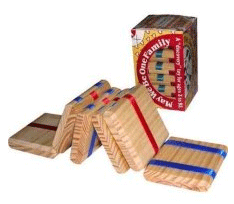
Mostly they were errant Legos and Barbie clothes, the detritus of a little girl’s life. But there was, I discovered, an old Jacob’s Ladder toy, which is simply slabs of wood connected by ribbons in a cunning way so that it can be configured into lots of cool shapes and do neat effects. It looks like this:


Image from Google Shopping

In the middle of my cleaning spree, I sat down and started to play with it again, idly, almost like seeing if I remembered how to ride a bicycle after many years of not riding. My hands moved the toy through its various forms; even though I didn’t have the instruction manual anymore, I still remembered, because I had played with the toy so often. All over again, though, I was rediscovering how to work the simple toy, remembering along the way how long I had toyed with it as a child.

Also Found: Spark of Creativity

Playing with this old favorite toy reminded me of childhood, but it also reminded me of a lot of favorite things I no longer had time for; after all, this toy had been buried in my room for God knows how long. What other stuff had been buried in the mess of my adult life? Fun video games, TV shows, things I haven’t allowed myself to indulge in because I’m so “busy” all the time.

Though it was a moment of idleness, a moment, perhaps, of returning too keenly to childhood, it provided a shock of realization: I used to play the piano a lot more than I do now, too. The piano was an old favorite toy much like the Jacob’s Ladder toy, and in the business of adult life, I had laid both aside.

Suddenly, I had a brain spark: didn’t I have a piece of music I had been trying to write for some time? Didn’t I have some free time–well, as soon as I finished cleaning–to go downstairs and use the digital keyboard?

Out of my reminiscences came a sudden, urgent drive to go and play the piano like I used to, treat it like an old favorite toy. So I did…and in so doing, I formed up the basis of a new piece, right on the spot. It’s not finished, it might not go anywhere, but at least I touched those musical keys for the first time in months! And I believe that what helped me to do so was allowing myself to remember how much fun I had playing the piano, allowing myself to fall back into that older mindset…and becoming freshly motivated to try it again.

Finding Your Own “Forgotten Favorite Toy”

If you’re currently in a creativity rut right now, you might want to try this. You might not have a physical favorite toy right where you can lay a hand on it, but think about playing with it. Or, think about a favorite childhood pastime or group of people who positively influenced you. Anything that conjures up a positive memory and puts you in an earlier mindset will work.

Now, think: what is so compelling about that memory? What makes it so happy? If it’s something you did back then that you could easily do now, why don’t you try it, just for a few minutes, and see what starts coming to mind. Who knows, you could end up like I did, one minute cleaning and the next writing a new piano solo!

Creature Types M:TG Should Try

Magic: the Gathering is literally riddled with creatures of all different types. Whether you like Horrors or Avatars, Angels or Demons, Vampires or Humans, Goblins, Beasts, or Wizards, you’re sure to find a creature type you like in Magic. (For instance, my favorite creature types are Angels, Walls, Treefolk, Dryads, and Clerics.)

But there are a few creature types for which I’ve seen little to no representation in Magic…and I’d kinda like to see them in print.

Forestwalk Plus: The “Deer” Creature Type

I love deer, and I’m not talking about venison; they are such peaceful and graceful creatures. Living deep within the forest as my family does, we see a lot of deer in the woods around the house–they seem to know it’s a safe place where they won’t be shot or hit by cars. But the most surprising thing about them is how well they can hide. I’ve often stared right at a deer in the middle of a group of trees, and not known it was there until it moved. (And yes, I was wearing my glasses at the time, LOL)

Thus, I came up with a conceptual mechanic called “Forestshade” to capture this ability for the “Deer” creature type (or any creature that can hide itself well). I believe this would set the Deer creatures apart from the rest of Green’s creatures.

Forestshade: If controller has a basic Forest in play, this creature has Hexproof and +0/+2.

Source for Sable Fawn art
Source for Soft-Footed Doe art
Source for Regal Stag art

The “Bounding” Mechanic: The “Rabbit” Creature Type

While there have been a few Rabbits (such as Zodiac Rabbit), there are not nearly enough bunnies in the game for my liking. All that cuteness in a little itty-bitty package? You could kill your opponent with cute overload! LOL

All joking aside, I have always liked rabbits for their speed and agility, as well as their cuteness. And, like the Deer, I sought to make M:TG Rabbits different enough from other similar Green creatures to warrant making a new creature type. So I created a mechanic called “bounding”, which I feel accurately captures how bunnies bounce around and evade capture like almost no other creature I’ve ever seen. (We had two pet bunnies when I was a kid, and one of them was an escape artist…’nuff said.)

Bounding: This creature is chosen to block, but evades the attack and is not damaged. Attack is considered blocked, but neither creature’s damage is dealt.

Source for Littlest Hare art
Source for Warren of Rabbits art

A Little Bit Like Slivers: The “Noble” Creature Type

I am aware that tribe-boosting “Lord” cards like Faerie Noble/Sprite Noble, Eladamri, Lord of Leaves, Kobold Overlord, and Lords of Atlantis and Lineage have been released before. But perhaps the concept of “royalty” could be taken in a new direction?

To give M:TG perhaps a little more medieval-fantasy flair, I thought about introducing a “Noble” creature type, plus several Noble sub-types. I think this could be a fun way to incorporate the political complexity of a traditional court within a game scenario. Something like the following, where each subtype boosts its own subtype and gets bonuses for a second subtype being played:

Source for Princess Adi art
Source for Titled Knight art

What’s Your Take?

Would you play any of these creature types or use any of these mechanics? Do they seem workable within the existing M:TG framework? Let me know in the comments!

All concept card images made with the help of Magic Set Editor. Great program if you like to create your own funny or concept cards!

Chocolate After Workouts and Other Self-Bribes

Motivating myself to work out has been a challenge every week, even though I’ve managed to stick to it for longer than I thought. (Come mid-June, I will have been doing Zumba for a year!)

But Thursday afternoons before 6:30 are still a tug-of-war in my mind–laziness and pain fighting against the twin desires to be healthier and fitter. Worries that “tonight’s the night I’m going to overdo it and really hate myself tomorrow” share brain space with “but I can’t miss tonight, I don’t want to break my two-month streak of perfect attendance!”

Luckily, I’ve found a brain trick that works to motivate me…and it has less to do with the workout than what I earn afterwards.

My Workout Self-Bribe: Spa Night + CHOCOLATE 😀

For every Thursday night that I attend Zumba, I reward myself with a “spa night” afterwards–a long, relaxing shower to unwind my muscles and pamper myself. Deep hair conditioning, exfoliating and moisturizing mini-facial…anything and everything I can do to make myself feel pretty and relaxed, I do for myself after my workout. And after I get out of the shower? One piece of chocolate of my choosing. (Most recently, my choice has been Dove’s peanut butter + chocolate combination…epic NOM NOM NOM)

The most important part of this motivation? If I don’t go to Zumba, I don’t get any of the rewards–no long soothing shower, no pampering, no relaxing water massage, and no chocolate. (And I’ve been surprisingly good about not sneaking a piece or two out of the bag after unsuccessful Thursdays or any other day of the week–it’s strictly for rewarding myself after a good workout.) The luxury does not have to be included; if I don’t Zumba, I get a fairly utilitarian shower on Friday morning instead of a Thursday evening pampering session.

Why Does This Work?

Because nothing in this plan involves negativity and punishment. I’m not punishing myself for not going to Zumba–it’s just that if I go, I do something extra-special for myself. I don’t starve myself on Fridays if I choose to spend Thursday night in bed resting my ankle, nor do I force myself to go to another workout later in the week that I won’t enjoy as much. It’s just positive reinforcement…and it has worked for me, as overly simple as it seems. Now I look forward to the workout not only because of the rewards afterwards, but because the moves are becoming easier and I’m seeing real changes in my body.

Trying The Self-Bribe Trick for Yourself

If you’re trying to stay motivated to do something, whether it’s working out, learning a new skill, eating right, etc., you can try this “self-bribe” positive reinforcement for yourself. All it takes is these 3 simple steps:

  1. Pick something that you would normally have to do in order to complete your chosen activity.
    • For me, that was showering after my workout, ’cause it’s kinda necessary.
    • If you’re trying to eat healthy, it might be cooking more meals at home.
    • If you’re trying to learn a new skill, it might be spending more time on instructional websites.
  2. For that necessary activity, add a touch of luxury to it as a reward.
    • Do like I did and turn the post-workout shower into a pampering spa experience, for instance.
    • If you’re cooking healthy, learn how to make a favorite dessert or treat, and make it once a week for every week you manage to eat healthy.
    • For every hour you spend learning a new skill, reward yourself with a 15-minute visit to favorite websites.
  3. If you don’t end up doing the thing you’re trying to stay motivated on, simply don’t include the luxury. You’d be surprised how well this works. 😛

Music as Therapy? YES!

Music is generally thought of as entertainment; for some, a career, for others a pastime or even just background noise. But music is more than this…it can be a creative activity is the most personal sense. It can help you recreate yourself when you have lost your soul’s song.

My Personal Experience with Therapeutic Music

For me, music has always been a lifeline back to sanity. In the afternoons when I got home from a particularly torturous day of middle school, for instance, I knew that solace awaited me atop the piano keys. The melodies I played could drown out, at least for a time, the ugly voices of the girls (and boys) who teased and physically abused me during those years. Indeed, from the memories of my pain, I could create music that was sorrowfully beautiful, and turn their shameful work into something amazing.

Music has been a longstanding companion for me, a lyrical form of therapy that cost nothing and healed me more than medicines ever could. But I’m happy to say that even non-musicians can benefit from music therapy; actually, the profession of being a “music therapist” is a legitimate job now, as one of my college friends can attest. Music can be the key to finally getting rid of your stress, in a creative way.

“Therapeutic” Music: Not Just “Easy Listening”

In my opinion, music doesn’t have to be “relaxing” or “soothing” to be therapeutic. I have gotten rid of a lot of anger while headbanging to Disturbed’s “Indestructible” or Slipknot’s “Before I Forget”, for instance. LOL

I often find that trying to listen to quieter music (which everyone else says is relaxing) actually makes me more agitated, because I have a head full of whirling thoughts that never shut up, and quieter music doesn’t drown those out as effectively. What works best for me is to “bang out the stress,” listening to music with a strong beat, captivating melody, or incredibly apt words for whatever I’m going through.

I’d say that different people relax in different ways, and whatever type of music you really enjoy, you should go with that as your “music therapy.” Soft music works for some, and then there’s people like me who relax with thumpin’ bass and rattling windows. 😛

Participating in Making Music Can Help Even More

Listening to music can be quite therapeutic, as I just noted…but if you try to make music of your own, you can activate creative thought processes as well as relax yourself.

That doesn’t mean that you have to pick up a musical instrument and learn how to play it beautifully. This can mean rocking out on Guitar Hero or Rock Band, fiddling with a music-making software program or Flash game, singing in your church choir or playing in your praise band, or even playing with a musical toy that belongs to your child (or perhaps your kid brother or sister). Anything that gets you involved in the physical process of making music can be therapy for you.

why does this work? Because when you’re focusing on making music, you’re not concentrating on your worries and problems, and you’re not as aware of your surroundings. You can kind of “lose” yourself in the process of it all, letting go of stress. Just don’t worry about the quality of the music you’re making–even if it’s got a whole bunch of wrong notes in it, it doesn’t matter, so long as you’re enjoying making the music.

Write a Couple Ditties of Your Own

If you’re feeling especially creative, you can even try your hand at writing some lyrics and melodies for yourself, almost a musical diary entry. Many of my songs fall into this category–most of my piano/vocal music, in fact. Lyrics just flow better when they’re about my life and various aspects of it, and no matter how personal I get, it seems others still identify with what I sing about.

This is another important part of musical therapy–using music to talk about what you’ve been through. Somehow, couching your past problems in a bit of melody seems to help “close the book” on that part of your life; you’re singing about it, so it’s not as painful anymore. (I’m pretty sure this kind of songwriting got me through middle and high school, though the products of such efforts might be unlistenable. LOL)

If you don’t trust your own songwriting skills, you can seek out a “songwriting buddy” and craft it together, which will work just as well. Who knows, maybe if you find enough people who can sing or play an instrument (and like your songs), you could end up making a band/singing group and have a new joy in your life!

Summary

Think of music as another form of communication. Not only can it help you relax and talk about the problems you’ve worked through, but it can help you remember better times, too…and all of that is therapeutic. It’s amazing what music can do, if you start interacting with it and making it personal!

Useful Cardstock Crafts

Cardstock isn’t just for decorative little trinkets that are easily crushed anymore. In fact, there are lots of cardstock crafts that actually provide a useful function.

I didn’t believe it for myself, however, until I started investigating. As a sometime crafter, I want crafts that are pretty but useful, because I already have a houseful of useless clutter. (Pack rat? Moi? 😛 )

Thus, when I ran across the following tutorials on cardstock crafting, which resulted in homemade items one could actually use and enjoy, I was pleasantly surprised, and I wanted to share these with you.

Around-The-House Objects

Drink Coasters

Not only can you use printed cardstock to decorate plain square tiles as coasters, but you can make coasters out of cardstock itself! (The just-cardstock coasters are a little flimsy, so perhaps you could make them a little more permanent by building up layers of cardstock together, or attaching the cardstock to a base of cork.)


StyleMePretty: Tile Coaster Tut

CreativeConceptsNYC: Cardstock Coaster Tut

Decorative (Yet Functional) Boxes

Literally tons of “cardstock box” tutorials are out there, so I selected three of the most unique and cute tuts I found. Who knew there were so many uses for random paper scraps and gift cards? You can make boxes to hold small items, as well as small gift boxes, and even a cute storage box for your favorite packets of tea!

No Image
Only Video

Etsy: Cardstock-Scrap Box Tut (video)

Craftypod: Old-Giftcard Box Tut

MelStampz: Teapot Box Tut
 

CreativityPrompt: Box of Drawers Tut

Other Useful Items

Besides coasters and boxes, you can also make big envelopes, and seed packets for storing seeds or giving them as gifts.


Alenka’s Printables: Seed Packet Tut
No Image
Only Template

About.com: 4.5″ x 6″ Blank Envelope Template

Special Event Supplies

If you don’t want to spend a lot of money on party supplies, especially for paper products, cardstock seems to be the way to go. These creative ideas for napkin rings, party hats, wedding favor bags, and wedding program fans are simple to make and money-saving as well!

No Image
Only Template

About.com: Blank Wedding Favor Bag Template
No Image
Only Template

About.com: Napkin Ring Template
No Image
Only Template

About.com: Party Hat Template

About.com: Wedding Program Fan Tut

Just For Fun

Sounds strange to be able to make toys and fun things out of cardstock, but you can! The following three tutorials show you how to make models, alphabet blocks, and even 3D glasses out of cardstock. (The cardstock modeling FAQ, in particular, shows you how to make models of buildings, planes, etc. out of cardstock for kids to decorate and play with…or for you to decorate and play with!)

No Image
Only Instructions

CardFAQ: Cardstock Modeling

About.com: 3D Glasses Tut
No Image
Only Instructions/Template

About.com: Alphabet Blocks Tut

And Last but Not Least…

Not only can you use cardstock for its own crafts, but you can use cardstock to aid you in other craft-making, like creating templates for tracing and stenciling.


CraftIdeas.info: Cardstock Templates

Summary

Cardstock has so many useful applications around your home, and for all sorts of special events. If you’ve never tried crafting with cardstock, try some of the templates and tutorials I’ve linked to–you may just surprise yourself!

Kitchen Creativity: 5-Minute Lazy Food Hacks

Generally, I hate cooking. I hate standing on a constantly-sore ankle in the kitchen, with hot vapors from a pot engulfing my face while I stir and stir till the world ends. I hate waiting over an hour for food to be done in the oven, or having to do series after series of repetitive steps (or just lots of steps in general) to cook one meal.

Basically, I’m impatient and kinda lazy when it comes to cooking. If I wasn’t already really hungry, I wouldn’t have walked into the kitchen to cook in the first place, amirite? 😛

I’m trying to get better at cooking, but it’s a slow process…so I decided to get creative, and tackle the problem of cooking cheaply with a little Robinesque innovation.

The following three food hacks came from two motivations: 1) I wanted to eat yummy food; 2) I wanted to be able to fix it without having to turn on the stove, because heat elements are scary. Thus, I give you the following food hacks. May they brighten your kitchen experience as they have mine!

5-Minute Soft Garlic Bread

Ingredients

  • 1 loaf of barbecue bread (stocky loaf with thick, soft slices)
  • Butter/margarine, amount adjusted for preference
  • Garlic powder (from the spice aisle)
  • 1 jar pizza sauce (trust me)

Instructions

  1. Spread each slice of barbecue bread with as little or as much butter as you wish. I tend to like a little bread with my butter. 😛
  2. Sprinkle on garlic powder to taste. Try going easy on it at first–you can always add more when it’s done.
  3. Pop up to 4 slices in the microwave at a time on a paper towel, for about 30-40 seconds on default settings.
  4. For each diner, pour a small amount of pizza sauce in a little bowl, and microwave it for about 10 seconds.
  5. Serve, either by itself for a light meal or with a larger meal as a side. Pizza sauce makes an excellent dipping sauce for this soft bread (getting hungry just thinking about it, LOL).

5-Minute Chicken Tacos

Ingredients (all amounts will vary with number of people being served)

  • Deli-sliced chicken
  • Taco shells (can be hard or soft as preferred)
  • Optional: Shredded cheese, preferably Mexican blend
  • Optional: Veggie toppings, hot sauces, salsa, and anything else you like to cram onto a taco 🙂

Instructions

  1. Lay out taco shells on microwavable plates, in groups of one to four per plate.
  2. Pull 8 deli slices of chicken out.
  3. Roll up the 8 slices into a tight roll, then use a knife to cut the roll into small sections. Think sushi-style.
  4. Layer 1-2 cut sections of chicken into each taco shell; you can roll up and cut more meat if you want more meat per taco.
  5. If you want cheese, sprinkle it on to taste.
  6. Pop each plateful of tacos into the microwave for 60 to 90 seconds on default settings.
  7. Once the tacos are done, add all the veggie toppings, hot sauces, salsa, etc., that your heart desires.
  8. Serve, and enjoy your nom. 😀

5-Minute Strawberry Shortcake

Ingredients

  • 1 plain pound cake or angel food cake
  • Whipped cream, preferably chilled
  • Strawberry jam or jelly

Basic Instructions

  1. Slice the cake into preferred portion sizes, and lay each one flat on a small plate.
  2. Spread jelly or jam all over one side of each slice (like you’re making a PB&J, but only with J).
  3. Spoon a dollop or two of whipped cream on top of each slice.
  4. Serve it before someone runs off with it. xD

For More Epic Results

  1. Instead of serving each slice individually after spooning whipped cream on top, stack the slices together in groups of 3 slices.
  2. Re-slice each stack into 3 or 4 fairly thick slices (so all the whipped cream, cake, and strawberry jelly/jam sticks together better).
  3. The stripey pieces that result should look kinda like a British ribbon sandwich at this point. If it doesn’t, that’s okay–it’ll still taste of awesome.)
  4. Serve (carefully), and listen for the oohs and aahs of amazement from your dining party.

The Novel-List (Another Brain Hack)

Another week, and another almost-week of stalling in my novel. I went without writing in it for a month, kept away by illness and real life issues, and just flat not feeling like “writing.” Meanwhile, I kept staring at my to-do list, which did admittedly get smaller and smaller as the week went on.

What was wrong with me? I wondered. How am I able to get all this real-life stuff accomplished, but can’t be bothered to open a simple file and edit anything?

THEN…then I took a look at my to-do list, and had an epiphany.

My To-Do List: Before


just a sample to-do list, but it illustrates my point

Everything else I had written out to do was specific–for instance, on “Monday”, it says to write a post about HTML5 and clean off bathroom countertops, and on Wednesday, it says to make notes on the Sunday School lesson for the week and mop the kitchen floor.

But for my novel? All it said was the vague instruction of “write 1,000 words”. No other clues, no real indication as to where the story was to go next…NOTHING.

I had gone to the trouble of writing in time to novel on my to-do list, but I had not made it a specific goal. Nor had I left myself any clues or seeds of ideas to build off of. Therefore, I was continually baffled as to what to do next, making it harder and harder to write.

So, instead of making a detailed entry in my everyday to-do list, I made out a whole new to-do list, just for my novel.

My Separate Novel-List


generic sample novel-list because the actual plot is under wraps 😛

This is an example of the specific to-do list I’m talking about. With this, you’re making an outline of your book before you write it, kind of like our teachers wanted us to write outlines before we wrote our papers in school (and we wrote the outlines after writing the paper, right? *wink*).

With my specific to-do list, I’ve mapped out exactly where the story is supposed to go, almost like a diary entry of each “day” in the novel. And I’ve already been able to go a little further ahead in my story, where I had been stuck for a month before. Even though I still may get stuck, and it still may be slow going, at least I’ll be going!

Summary

If you’re currently working on any creative project, and you know where you’d LIKE it to go but can’t seem to get inspiration, try a to-do list like this, mapping out the way for yourself. Seeing it all planned out visually, like an itinerary for your project, may just spur you on!

Simple yet Effective Art

Note: I am not and never will be a “great” artist, but I do like to mess around in MS Paint and see what kind of little visual creations I can come up with.

While playing around in Paint the other day, I started toying with shapes, colors, and random line shapes, just musing rather than trying to create a real picture. Along the way, I came up with 4 images that astounded me–they weren’t necessarily “great” art, but they were striking pictures nonetheless. It reminded me of logos for businesses, website headers, and other iconic pictures; the art was simple but effective.

The following simple tricks, like using various shades of one color and basic shapes, can sometimes make a bigger impact on your viewer than a complicated line drawing. Not to mention that it is MUCH easier to draw and color these shapes, especially with a laptop mouse. 😛 Read on to see examples of this kind of art!

Work with varying shades of the same color.

Sometimes, all you need is just one color, with various lighter and darker tones making up all the visual interest in the image. This sophisticated layered effect is created with just four squares of slightly different blues on a very deeply-hued background, which creates a soft picture perfect for some sort of logo or even just contemplative art.

Make your art look 3D with color shading.

With only four colors–bright yellow, black, and two shades of green–I created this simple image, which seems to be in 3D. The yellow “layer” of the picture pops up from the green “layer”, because of the line of darker green I put just below the zigzagging black edge. I seriously surprised myself with this picture…I had no idea the addition of the darker green could make the picture suddenly become dimensional!
This ribbon looks more realistic than not, with just a hint of darker lavender shading in strategic places. Curving shapes are a little harder to do than straight-sided shapes, but just add a little bit of shading at a time. (In this picture, I don’t think I got the shading QUITE right, but as with most of my art, I was afraid to try to do it over for fear I’d mess it all up…which is usually the result. LOL)

In both cases, all it comes down to is choosing a “believable” shadow shade and figuring out which “side” the light is coming from, and you’ve got it made!

Play with using the same shape in different sizes and colors.

By using various sizes and shapes of circles, as well as various colors, you can make a quirky and cool art piece. Layering shapes together in playful ways, experimenting with color combinations, and even putting in a bit of transparency here and there, can create an image you’d be glad to showcase as a logo, a print on a pillow, a piece of art in your bedroom–anything you can think of. This particular design would look nifty decorating a notebook or a pencil cup, I think. ^_^

The Big Secret? This Art Took Minutes

I kid you not; all this art took moments to make but doesn’t look it. Since I’m a very impatient artist, I needed art that didn’t take me hours and hours of sketching, erasing, drawing, coloring, erasing (and crumpling up of paper, eventually).

This kind of simple digital art can be easily used anywhere you want them to be, even in non-digital places–all you need is a printer and an appropriate medium for your project, and you’re set. Try it for yourself; open your simplest image-creation program, and start playing around… 🙂