Tag Archives: inspiration

Papercrafting Post #6: Parchment Craft/Pergamano

Today’s post features a papercrafting art that is both decorative and functional: parchment craft (or Pergamano). It is generally used for greeting cards and gift tags, but it’s also extendable to ornaments, picture frames, and even boxes!

How Do You Do It?

To craft with parchment paper, you can emboss or paint designs onto the paper, and/or cut it into interesting shapes. Parchment is thinner than regular paper, so it takes better to raised designs, like fancy lettering or detailed shapes, but you do have to be careful with it so you don’t accidentally tear it.

Tools You Need and Basic Techniques

  • Mapping pen (used generally with white ink) – for drawing out larger, bolder designs on the “rough” side of the parchment paper before you emboss them
  • White pencil – for tracing smaller, finer designs before you emboss them
  • Embossing tools – for raising designed lines on the paper. Press down/rub back and forth gently on the “rough” side of the parchment, and on the other side, your design will appear as a whiter area. Narrower embossing tools make sharper lines; wider tools make softer raised areas.
  • Scissors – for cutting and shaping the paper
  • Needle tools – for perforating parchment, lending a light and lacy look–great for borders and within embossed designs. Single-needle and multi-needle tools are available to create different shapes!
  • Felt pads – for cushioning your parchment so that you can emboss and perforate the paper without damaging the paper or the surface underneath.

Other Fun Techniques

  • Add color with markers, acrylic paints, colored pencils, crayons, and even watercolors. Doing this gives your parchment crafts a more modern look, since colors were not traditionally used for Pergamano until the 20th century.
  • Use the needle tools in concert with small scissors to create interesting borders for your designs. Perforating and then cutting selectively can give you lovely snowflake-like looks in a matter of minutes!

To Learn More:

ArtofParchmentCraft.com
Parchment Craft Magazine
Free Pergamano Patterns
CreativePapercrafts.com Pergamano page
The Pergamano Place

Christmas Glassics: Saturday with the Spark

Creative thinking and activity, ahoy! Today’s Glassics post features all the artsy posts I’ve done on Crooked Glasses since July 2011, from writing to papercrafting, music to drawing. You can also view my first Saturday with the Spark Glassics post for the creative posts I did before July.

Sparking Creativity

I’ve written a good bit about tapping into one’s own creativity. Using dreams to inspire yourself is one way; I’ve also used Play-Doh as an analogy for creativity (sounds funny, but it worked out well!). I want to encourage people to stop thinking they’re not good enough to be artists, allowing themselves to use things in their everyday lives to jump-start creative thinking.

Philosophies of Art

The big philosophical question I pondered this season was: “Is art for entertainment or for meaning?” This is one of the deepest-thinking posts I’ve written in this entire category so far, and I think it gets to the salient point of why we create art at all, as humans.

Writing

Knowing a good bit about the craft of writing (and doing my best to practice it and get better), I have blogged about practicing your writing skills every way you can, as well as inspiring yourself by finding a topic you love to write about. I also covered how to deal when writing feels like punishment, when it feels like your brain has locked up on you and won’t produce a single syllable more.

And, since I’m practicing my noveling craft (is that a word? Wellp, it is now), I’ve written a few articles as helpful advice for myself and other novelists. Wading through a tough/boring part of my book by experiencing what I’m trying to write has really helped me get back on the writing horse; my post about expanding the world inside my book made me remember to go back and add more details to my own works.

Crafts

Along with my thoughts on beautiful beaded jewelry designs, I began a series of papercrafting posts this season, as well: making greeting cards and gift tags, and learning the skills of ornare, quilling, and origami. I plan to expand this sub-category a good bit in the new year!

Visual Art

I’m not much of a visual artist, but I have written a few posts this time around about art. I did one that shows how to shade your artwork for a more 3-D look, and I also depicted my own versions of digital cut-and-paste art. (Might not be the best in the world, but it’s fun to do!)

Music

Since I’m a longtime pianist, composer, and singer, this category understandably exploded with posts on music this fall and winter. I wrote about how singing in choir saved my life, trying to write a “catchy fast song”, and musical exploration with just a keyboard. My great love for the key of C-sharp also peeped in this fall, as well as my affinity for making my own movie soundtracks (it’s not as laden with mad leet skills as it sounds, but it’s still quite fun). Lastly, I discussed my peculiar ability to find the musical note that matches someone’s personality, and even write songs about them.

Get Comfy, Read, and Be Inspired!

I hope these posts get you thinking about the types of creative work you’d like to do; I hope they also expose you to different creative thoughts and activities that you might like to explore more. They’ve certainly helped me explore the various reaches of my own creative thought, and even gotten me to try my hand at art techniques I never would have explored otherwise. 🙂 Enjoy!

Well, Have a Nap–Then Fire Your Cylinders!

[/shameless paraphrase of “End of the World” flash video]

Dreams as a Sleeping/More Creative Life

Dreams are powerful experiences, at least in my life. I often kid that I don’t read horror novels or watch scary movies because my nightmares are free (and forced on me). I’m sure Stephen King could have a field day with my subconscious’ meanderings; from horrible rites of death to gruesome imagery, my dreams often leave me terrified to go back to sleep, even at close to 30 years old. I could probably make money off these dreams if I wrote ’em down and made ’em into a book…but I’d probably go mad trying to write it all. LOL!

But as scary as my dreams can be sometimes, they also can be veritable reservoirs of creativity. During the night, your mind isn’t as constrained by what is “right” and “proper,” what is “beautiful” and “pleasing,” and sometimes you end up with powerful imagery and plotlines that are just crazy enough to work.

Creativity & Dreams through History

Many artists of every type have harvested their dreams for inspiration in their works. One of the more famous stories of a dream inspiring creativity is that of Samuel Taylor Coleridge, a poet of the Romantic era (1800s), who woke from an opium-induced dream and wrote one of his poetic masterworks, “Kubla Khan.”

We, too, can use dreams as a jumping-off point for our creativity (even without pharmaceutical help 😉 ); if we can allow ourselves to dream, we can allow ourselves to reach ideas we haven’t even TRIED to play with before.

Harvesting Creativity from Dreams

  1. First, you’ve got to have a really intense dream. Positive or negative, lovely or scary, whatever it is, usually the most intense dreams translate the best into waking creativity.
  2. When you wake, write down everything you remember from the crazy dream you experienced last night–don’t leave out any detail, as silly as it might seem!

    Don’t try to make sense of any of the images, or try to make it into a “sensible” story yet. If it happened in your dream, write it.

  3. Don’t let anything interrupt you, at all, till you’re finished. Coleridge, according to the popular story, answered the door in the middle of his poem, and when he returned to his desk, the dream had fully evaporated. “Kubla Khan” looks like a finished masterpiece, but in reality it was probably only a quarter complete.

    Whether this anecdote is true or not, dreams do tend to fade very quickly after waking. Don’t let this happen to you…capture as much of it as possible!

  4. Later in the day, go back and see what the meat of your dream is. Pick out imagery that really stood out to you; pick out characters that intrigued you, delighted you, even frightened you. Anything about the dream that really hit you, really made you FEEL and EXPERIENCE the dream, is worth thinking more about.
  5. Transform this raw material into any form of creativity you wish–a song, an instrument solo, a short story, a painting, a play, even a dance. Use those characters, that imagery, that feeling, whatever it was, to carry your idea forth in a way you may have never expected to do so.

Most Importantly, Have Fun!

Don’t worry about making this dream-creation “good” or “interesting to others”–primarily, enjoy your creative inspiration as your own, even if you weren’t aware that you were creating it! To embrace your creativity, your ability to MAKE cool stuff up, you first have to accept that you CAN do it…and your dreams give you the perfect license to do it.

Everyday Writing

What can you use writing for in your everyday life?

For many, writing is confined to their to-do lists, but there are many ways you can incorporate writing even if you don’t think of yourself as “creative.”

For one thing, look at the plethora of status updates and tweets that go around the Web on a regular basis. These bitsy life updates speak volumes about the people who make them, just as much as writing a long blog post would.

Today, I want to encourage you to write every day, even if you don’t think of yourself as a writer, even if words come with difficulty. Writing can be helpful, soothing, invigorating, and even cathartic. Try the following tips to incorporate a little bit of writing in your day:

Just a Word, a Sentence or Two

  • Leave a little positive note for yourself to discover in the morning. Just as you take time to write out or type up a to-do list, which can be more negative in tone, take a few minutes and make a happier-sounding note. Something like “smile, it’s almost Friday 🙂 ” or “don’t forget your awesomeness” can make you grin long enough to face your day with a little more happy.
  • If you hate writing (and reading) your to-do list, add jokes or hilarious phrasing. One of my permanent to-do lists is titled “THINGS I GOT TO PWN TODAY OMG LOL”, and it’s full of Internet and LOLCat references. (“I can haz chek in the bank?” XD) It makes me laugh every time I read it!

    It also casts my to-do list in a new light; each part of the list is something I have to pwn (defeat) rather than just drag myself through. I can pretend I’m a to-do list warrior!

  • Try a Twitter account, and post one short thought of yours, once every day. It can be a random philosophy you thought of, a question for other users, a grumble about something bothersome, or even just a statement about your day. The 140 character limit forgives those who don’t care to write a whole lot every day (one reason it’s called a “microblog”).

Step Up to a Paragraph

  • If you have a lot of worries running marathons in your head like I do, try writing them down in paragraph form. These five questions will help you shape your worry paragraph and get that worry out of your head at last:
    1. 1st sentence: What am I worried about?
    2. 2nd sentence: Why does it bug me so much?
    3. 3rd sentence: What is the worst-case scenario for this worry?
    4. 4th sentence: What is the best-case scenario for this worry?
    5. 5th sentence: What can I do to make the best-case scenario come about?

    Here is my example “worry paragraph:”

    I’m worried about my hard drive being unrecoverable. I fear losing 8 years of very hard work that isn’t backed up. At worst, I’ll have to restore data from my old laptop that died in June 2010, which means losing a year and a half of irreplaceable work and purchased digital content. At best, I will get all my data back. I can’t do anything personally to get my data back, but I can have it shipped to a data recovery company who can potentially take care of it.

    What this does is to quantify the worry. Instead of formless thoughts whirling about constantly, you can refer to this worry paragraph every time you find yourself thinking about it, and the paragraph details everything about the worry you need to know. Soon, you find comfort in what you yourself have written, knowing that the process need not be thought about anymore. (Mine’s already working for me!)

  • Along the same lines, if you’re sad and anxious, write a “5 reasons to smile” paragraph. All you have to do is find 5 answers to the question “How is my life going well today?” No matter how big or small the reason, if it makes you smile, it’s worth writing about.

    Here is my example “smile paragraph:”

    The headache I had yesterday is all gone (woot). So is the swelling on my ankle (yay!). I got all the gift wrap I need for under 12 bucks today, spending almost $20 less than I thought I was going to. I was able to fix the family laptop’s software problem. And I get to sing with my church choir today and tomorrow.

Try a Series of Paragraphs

  • Try an old-fashioned journal entry if you don’t want to post things on the Internet. Grab any size piece of paper and pen/pencil, and just start writing your thoughts down. Anything that’s on your mind, written any way you want to state it. Own the fact that you ARE writing! You can do this!

    Once you’ve written it, you can either read it over right away, hang it up somewhere prominent as inspiration, or file it away for later–just make sure to return to it within a week, and see how your writing affects you. You have to love your writing first before the passion for it seeps into its very substance, and to love it, you must experience doing it and reading it afterward.

  • Do you have a strong opinion about something? Write about it! Just like I write my opinions in my blog posts each week, you too can write a blog post or Facebook note about whatever you wish to.

    The following structure is something I go by to help me form my posts. It’s largely based on the five-paragraph essay style; you can take the girl out of English classes, but you can’t take the English-class training out of the girl. 😛

    1. Introduction/Hook: Make your topic sound interesting. Rhetorical questions about the topic (see where I used that in this very post? :D), or a personalized anecdote referencing the topic really makes me want to read about it.
    2. Background Info/Basic Concepts: For those who don’t know very much about the topic, give a little bit of basic information. This also gives you a chance to talk about the big concepts behind your opinion.
    3. Your Opinion: The meat of your blog post. Explain why you think what you think, in as plain language as possible.
    4. Others Who Agree or Disagree: Gather information from other bloggers or just other people about why they agree or disagree with your position; this gives your user a broader view of the topic than just your opinion. Quote the other people you’ve consulted, and link to them if possible within this paragraph.
    5. Sum It Up: Condense down your points into short sentences for a good summary. One sentence to describe the main point of each paragraph before your summary works very well.

Summary

Writing need not be intimidating. In fact, if you get a little bit of practice with it and accept your writing as it progresses, you can find yourself surprisingly expressive. Trying some or all of these various writing tips can give you the experience you need.

Start out small, maybe less than 140 characters at first; then, as you get more confident, try writing paragraphs, and then series of paragraphs. Who knows, you may be the next blogging sensation!

Papercrafting Post #5: Origami

Without Reading Rainbow back in the 80s and 90s, I would have never learned anything about this beautiful, sculptural Japanese paper art. Thanks to the Reading Rainbow episode The Paper Crane, I was intrigued, and since then I’ve tried my hand at it several times.

Starting Out with Origami

Trying some simpler origami crafts, even the ones meant for kids, may help you start with this papercraft if you’ve never tried anything like this before.

First, I’ll share with you my favorite simple origami form: the paper cup. I do this a lot at restaurants when I’m bored, using square paper napkins or whatever vaguely square paper is lying around. It’s also fun to do with wax paper–you get a cup you can actually use for a bit of water! (Forgive rudimentary images–this is what happens when your hard drive fails and you have no sophisticated image or photo software to work with. Microsoft Paint to the rescue, LOL!)

Origami Cup Instructions

1. Start with a square piece of paper. This is important, otherwise your cup will look deformed at the end! (speaking from experience… -_-)
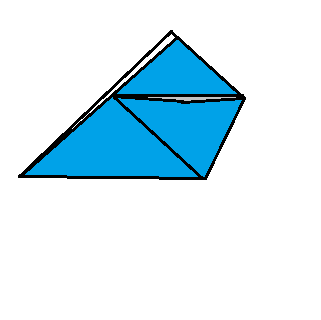
2. Fold the paper diagonally in half. You’ll end up with an isosceles triangle like the one to the left.
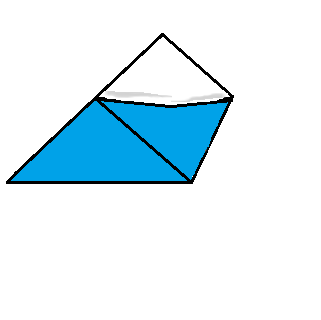
3. Take one of the narrow corners and fold it across the triangle so that the tip of it touches the other side of the triangle. It should lay straight across, not pointing down or up at an angle.
4. Take the top point of the triangle (only one of the sides, not both) and fold it down across the folded corner. Then tuck the newly folded flap into the little “pocket” formed by the folded corner.


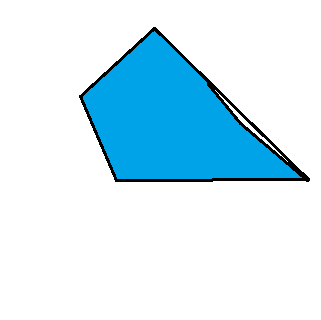
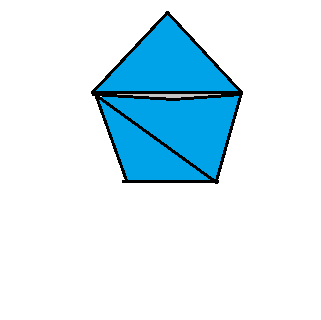
Flip your half-formed cup over and repeat steps 4, 5, and 6 on the other side, folding the other corner over, then folding the remaining top point down and tucking it into the second little “pocket”. (see following images on left)
You should have a finished little origami cup!

Other Instructions from Origami-Instructions.com

For More Advanced Learners: The Star Box

This festive, four-pointed folded box form is a form I have yet to master again–I used to make them all the time, but have lost my touch over the years. It’s a really fun craft (and useful for storing small trinkets, bobby pins, or anything else light and easily lost). Try it out if you’d like a more challenging origami form!

Instructions from EHow
Instructions from Origami-Make.com

Resources to Learn More about Origami

Origami @ Wikipedia
Origami-Resource-Center for all levels of crafters–easy and kids’ origami, novelty origami (with toilet paper!), and even Star Wars/Star Trek-themed projects!
Origami.com Diagrams for the more advanced paper-folders–detailed, almost scientific step-by-steps.

Papercrafting Post #4: Quilling

For a change of pace, this papercrafting post focuses on a purely decorative craft instead of the practical papercraft I’ve been discussing in earlier posts. But quilling is quite lovely and fun to do; it’s something you can easily add to gift tags or greeting cards, and it can be done alongside ornare for an even more crafted look.

What is Quilling?

Quilling is the art of rolling paper into beautiful shapes for decorative purposes. First a distraction for the wealthy, it is now a very approachable art form for all people. Coiling, pinching, and twirling thinly-cut pieces of paper yield delicate and ethereal miniature sculptures!

Quilling basics @ Wikipedia.org

What is It Used For?

Mostly, quilling takes a low-priced medium (paper) and uses it to embellish other items for a very high-style look. You can add all sorts of rolled-paper decorations to handmade greeting cards, wall art, decorative trinkets, and even furniture! (I could definitely see a glass-topped table with colorful or metallic quilled paper underneath the glass in small niches, able to be seen but not squished.)

Types of Paper to Use

Printer/computer paper can work while you’re trying to learn the craft, but you can also use lighter-weight paper like origami paper (and possibly even tissue paper for a wispier look, though I haven’t tried this). Any paper seems to work well–just cut it into thin strips first so that the coiling process will be easier.

If you want to practice and you have no thin-cut paper to hand, even a straw wrapper will suffice. Get rid of boredom while waiting for your food at a restaurant AND practice quilling at the same time!

How to Start Quilling with Just Fingers

  1. Taking one end of your cut piece of paper, roll it as tightly and roundly as you can (i.e., no folding it over and over itself) until you get to the other end of the paper.
  2. Slowly release the paper so that the coil expands a bit.
  3. Holding the coil with two or three fingers, affix the last end of the paper to the closest side of the coil so that it won’t come apart. A small drop of glue (something a bit stronger than white glue, but no superglue, please) should work.

You now have a beautiful little coil of paper! Once you have mastered this design, you can start to make other shapes that work off of the basic circular coil.

More Advanced Quilling Techniques and Tools

For excellent tutorials and more advanced quilling work, these two websites show more than I could possibly do, being a novice quiller myself. Try this out–have fun coiling, gluing, and twirling!

More Quilling Basics and Intermediate Techniques @ HandcraftersVillage.com
Advanced Techniques and Quilling Tool Advice @ Craftzine.com

What Do I Write About?

“It’s perfectly fine to try my hand at writing,” you might say, “but I have no idea what to write ABOUT.”

Subject matter is important when you’re writing, whether you’re writing creatively or informatively. But you cannot let yourself get hung up on subject matter and stop writing completely. If you stop writing because you feel you don’t know what to write next, you risk hindering your creativity permanently–first, you’re afraid you don’t know anything to write about and you stop, and next, you’re afraid to start up again because it’s been so long since you tried, and so on.

So, how can you decide what to write about? The following blog article delves into the various ways:

Write About Your Life

No one can tell all that there is to know about your life except you. You are the one who has had the first-person experiences you have. Whether they are funny anecdotes, sad memories, wild and crazy tales, or even just small, wistful moments, they are YOUR stories, and they ARE worth writing about.

Why are your personal stories worth writing about? Because when you share about your life, you are sharing a story that could inspire someone else to get through a similar situation he or she is going through. Humans are social creatures, after all, and we like to know that we’re not alone in whatever tough or strange situation we get into. That’s why social media is so big right now–it’s suddenly very easy to uplift each other by sharing about our own experiences. When you write about your life, whether you choose to make it a Facebook status, a Twitter message, a blog article, or an email to someone else, you are taking time to reach out to someone else and tell them “Hey, I went through this, too. I understand.”

Write About One of Your Passions

It’s darned near impossible to write about something if you could give a flying flip about the subject matter. If you want to write something to interest your audience, write about something that you love–your very passion for it will draw others in.

Take this blog as an example. I write about six subjects I love, all week, every week (giving myself time off on Sundays, of course), and I have passion for each one. Because I love each of the subjects I write about, I’ve taken time to become more knowledgeable about each one, and I can write about being thoroughly involved in each subject’s activities.

Writing about things I’m passionate about even entered my schoolwork once–I was giving a presentation in one of my graduate English classes, which was part of my huge final project. I was covering how girls fare in education, and at one point, I covered a sub-topic about girls and gaming, which is becoming much more popular as more girls feel “normal” playing video games. After the presentation was over, the professor and several students commented that most of my presentation was delivered in a rather flat way, but that they were really interested to hear about the “girls and gaming” segment because I looked so much more lively and so much more interested in what I was talking about. I ended up making the “gaming girls” segment into my major final project, and I had a whole lot more fun writing about that than I had had working on the other, larger-topic presentation.

Whatever your passion is, whatever you love doing, seeing, or being involved in, that can be a source for your writing. Don’t worry about it, thinking “But no one else will find this interesting”–remember, in this age of the Internet, there are bound to be people who will find your digital writing VERY interesting!

Write About A Subject that Gets No Attention and Needs It

This is how social activism and social projects get started. From well-established groups like MADD all the way down to growing projects like Freecycle, these projects all began with someone talking and writing about a subject that had gotten very little attention and needed it. Whatever subject or issue you firmly believe in, whatever has gotten your attention and keeps you awake at night, write about it. The very act of communicating about it can start the social ball rolling and fix the problem, raise awareness, or just help people come together and share their personal stories with each other.

This doesn’t have to be for just solving problems, either–this can be about happy events, such as a new group of local moms working together to help each other with kids, or a new chapter of a family-friendly social group starting up in your area. Whatever you need to advertise about, tell others about, your writing can be a powerful, personal voice for that topic.

Summary

Writing does not have to be frightening–in fact, writing can be incredibly freeing for your mental “voice,” your thoughts, feelings, and dreams. I know I can say a lot more through writing than I ever could by speaking–I’d stammer and chase too many topic rabbits, while my writing voice flows as smoothly as water. I hope these three tips about choosing a subject matter help you figure out where YOUR voice belongs…and I hope it inspires you to start or continue your written communication with the world.

When Writing Feels Like Punishment

Sometimes, even for the best writers, writing feels more difficult than it should be. For people who don’t enjoy writing, just the very thought of writing is punishment enough at times. You hit what feels like an impossible hurdle (criticism from someone else, self-criticism or self-censorship, etc.) in the process of writing, and you go airborne for a few seconds, struggling to get yourself back into the writing groove. But instead, you end up landing hard, with all the mental wind knocked out of you. After something like that, it’s hard to feel like ever writing again.

I’ve hit walls in my own writing plenty of times. Sometimes, it was while struggling to complete/excrete a term paper in college (“excrete” is what it feels like to try to compose a 10-page paper from scratch 2 nights before it’s due). Other times, it’s been in my own creative writing or personal writings–some days, it just doesn’t pay to open Microsoft Word, because all I do is sit there, type a bit, Backspace it all, type some more, highlight and hit Backspace again, etc. It’s not fun to feel like you just flat can’t write.

But, as with all obstacles, there are ways around this feeling. Here are the ways I’ve developed over the years to getting back on the writing horse and trying again:

If You’ve Produced Something Terrible, Don’t Erase It

The worst thing you can do, when you start thinking how much your writing resembles something in a communal toilet, is to flush it away. Cut and paste it into another file and save it for later, maybe, but don’t just Backspace a whole page (or delete a whole file) of your hard work.

Even if you don’t feel like dealing with it right then, saving it as a separate file for later will help you remember to go back to it when you have more mental energy, when you have more time, etc. If you delete it completely, you’re likely to completely forget about it, possibly losing a great diamond in the rough sands of your life.

This is what I do when I’ve come up with a blog post that I suddenly REALLY don’t want to post anymore. I don’t completely delete it, but I save it in a new file and start writing on a different post. (I’ve got one file saved as “rant rant rant,” where I went kinda batpoo crazy on a topic and decided it wasn’t right for that particular article. I don’t know what I’m going to use “rant rant rant” for, but at least it’s there, lying like a fabric remnant in a dressmaker’s closet, ready to be used whenever I’m ready to go back to it.

If Your Writing Is Just “Off” Today, Stop for Today

Some days, even if you love writing like I do, you just aren’t feeling the “writing bug.” When you start to type the same sentence 5 times and end up Backspacing it, or you just stare at a blank page or screen and feel like SOMETHING wants to come out, but you’re not sure what, you need to stop for the day. I’m not saying stop for a lifetime–no, no, never stop trying to write permanently–but just take a break from it for the rest of the day, whether that’s a few hours or almost a full day.

This would happen a lot to me during college, when I would struggle to write papers–I just wasn’t feeling up to being the super-critical English major that day and the subject matter just felt too difficult to tackle. So I’d save what I had been working on and would go read instead, or get out of my dorm room and walk around some, or call a good friend and talk about it. Taking time away from the heavy task I was working with helped me get more relaxed and feel like I could write anything again, instead of feeling like there was some gremlin sitting on my shoulder who was critiquing everything I wrote as I wrote it.

Talking to others, reading, doing a little Internet searching or surfing, etc., can also give you new ideas on how to put together your written thoughts. It may be that the random comment your friend made about the book you’re giving a report on jogs your thinking: “Yeah, that IS a weird detail that the author put in…wonder what it means?” Then, suddenly, you may have a totally new direction for your paper.

If You Don’t Know Much about Your Topic, Learn About It

Yes, I know, seems kind of elementary. But you wouldn’t believe the number of times I had to coax my middle school students into writing about something they didn’t know about. They kept whining, “But I don’t KNOW anything about this!” My answer was always, “Then find something out about it. We’re in the library for a purpose, after all.” 😛

No matter what you’re writing about, whether it be search engine optimization or the Post-Colonial period, fractal geometry or painters in Florence during the Renaissance, if you know little or nothing about the topic, then research is your best friend in the world. I’ve written about research as a great tool for bloggers who want to write new and interesting content, but it also works for college papers, creative writing, letters to the editor, workplace presentations–everything. There’s nothing worse for your career, for instance, than looking plain ignorant in front of your boss and coworkers because you didn’t do your research.

Now, your research does not have to be done on those irritating formatted index cards. (God, I HATED handwriting all my research on index cards in school! So annoying and time-consuming–it made research feel like a special place in hell reserved just for me.) Remember, your research is likely going to be more internet-based, so just doing a thorough search of Google (i.e., not just the first page) could help you. Check out every link that seems like it relates to your topic, make sure the site is reputable (not just a blog-ish site created by a content robot), and then copy-paste the URL into a file to refer back to later as you write. Scanning through the content can also provide you a bit of preliminary information as well.

You can always go to the library or talk to a knowledgeable friend or family member about your topic, as well. Taking time to learn more about your topic is not just for school projects, but for anything you encounter while trying to write about a particular subject that you don’t fully understand.

For instance, I don’t know very much about the Tea Party political movement in modern America, except to know that if I saw a Tea Party parade coming down the street, I would likely soil myself and run in the other direction. However, I can learn more about the movement by research, and thus be much more informed when I hear about “Tea Party candidates” in the news, etc. Then, I can write more informed blog posts, and the Internet always benefits from more informed writers rather than more passionate writers.

If You Hate Writing, Write How You Talk

Maybe just a sentence or two, about something you have a strong opinion of. Maybe a paragraph on your Facebook status, indicating exactly what you’re going through physically and emotionally while waiting for a medical test result to come back. If you hate written communication, start by writing how you talk–write out what you would normally talk about, and focus on subject matter that you really care about.

At this point, if you’re very uncomfortable with the writing process, don’t let fears of bad grammar, spelling, or sentence structure weigh you down. Just WRITE what is in your head, in your heart. And if there’s nothing more in your head or heart after a few sentences, you’re finished, and you can move on to the next topic you want to talk–pardon me, write–about. Write for the feel of the pen moving across paper, communicating your thoughts, or the feel of the keys yielding under your striking fingers. Write for the sheer pleasure of telling your world what you think about something you really care about.

Now, if you’re still just horribly stuck and feel like you just CAN’T write, I have a story for you:

I had a young student in one of my classes who was what we would call a “screw-off,” a class-clown type who was more interested in disrupting the class and ticking off other people. But by the way he spoke in class (when he wasn’t smarting off to me, and even when he was sometimes), I knew he was a smart kid. He just didn’t respect school, didn’t care about it, and writing for class was about #90003 on his list of things to achieve in life.

One day, we read a short story in class, and I asked the kids to write at least five sentences (a full paragraph) about what they had read. I told them to answer five questions, one in each sentence:

  1. Who is the character you like the most?
  2. Why do you like this character?
  3. Does the character act in an understandable way throughout the story?
  4. How does the story show this character’s motivation?
  5. Do you think the author likes this character?

With each question, I was asking the kids to dive below the surface story and come up with some deeper answers about the story’s construction, the author’s possible purpose, etc. I wanted them to connect with the story as critical readers rather than passive readers. But the young man in question was more interested in tearing up blank notebook paper into itty-bitty pieces to craft into spitballs.

“Why are you not doing your work?” I asked–I glanced at his paper and saw that he had written “I Don’t Know” as the answer to each of the questions.

“‘Cause I’m done,” he replied, with an attitude.

“Nope, you’re not done,” I said. “‘I don’t know’ is not an answer, because you read the story–you DO know something. You’re a smart kid, you know?” He huffed and brushed his half-made spitball aside.

“You heard the story,” I said, trying a different tack. “Which character did you like?”

“Didn’t like any of ’em,” he said, laying his head down on his arms and muffling his voice.

“You sure? There wasn’t one that you understood the most–you could relate to what they were going through?”

“Pssh,” he replied. “Not any of the good guys, anyway.”

That left one character. “You liked the bad guy?” I asked, keeping any judgmental emotion out of my voice so he would feel free to express his opinion.

“Yeah, he was all right,” the young boy said. “The good guys treated him like crap and he was just gettin’ back at ’em.”

Gently, I pushed the paper of questions under his elbow. “Sounds like you have answers to questions 1, 2, and 3,” I suggested.

“Huh?” He raised his head slightly, looking at me for the first time. “Naw, that’s just opinions. I ain’t got answers.”

“In literature class, opinions are answers, if you can show me how you formed your opinion,” I nudged. “Write down what you just told me, in complete sentences. You remember how we do complete sentences?”

“Yeah, yeah, yeah,” he replied, waving away the rest of my advice. I watched the pencil tip and then the eraser dance in mid-air as he erased furiously and then wrote down actual sentences. “There, is them answers?” he asked, showing me the paper.

“Yes,” I said, nodding–indeed, questions 1, 2, and 3 had answers. “Remember, question 1’s answer needs to be a complete sentence, though. Rephrase the question as a statement: ‘I liked [villain’s name]’ instead of just the character’s name by itself.”

“Oh, okay.” For being such a reluctant student, he knew enough about what to do–he took the paper back from me, erased, and wrote again.

“Good,” I said. For question 3, I was impressed by the depth and empathy of his response: “[villain’s name] was just trying to live his life, and the good guys busted in and acted like he was living wrong. They made him feel bad, so he got back at ’em. I woulda done the same thing if I was poor like him.”

“Now, how did you know that [villain’s name] was poor?” I asked him. Now that he had answered 3 of 5 questions, he seemed to have perked up a little, though he was still toying with a tiny ball of paper in his left hand.

“Well, it had all that stuff in it about his raggedy clothes and stuff,” he replied, as if it was obvious. It was obvious, but I wanted him to see that he had more answers than he thought.

“And who told you about the raggedy clothes?” I asked.

He thought, and then looked embarrassed. “Oh, yeah, the author put it in there.”

“You’re right, the author describes how torn and dirty his clothes are,” I affirmed. “Doesn’t that sound like an answer to question 4?”

He glanced back at the paper. “Motivation? I don’t even know what that means.”

I reminded myself to break down definitions of words more carefully in the future. “Motivation means ‘why you do something.’ If you do something like steal, like this boy did in the story, you have to have a reason why you did it–a motivation to do it. Why did he steal?”

“Because he was poor.”

“You’re right,” I said, nodding. “Being poor was his motivation to steal, because…why?”

“Because he ain’t had nothin’.”

“Good, you got right to it; he didn’t have anything and needed things to live on,” I said, subtly correcting his sentence as I went. “And the author shows us that through describing his clothes, not just coming right out and saying ‘this bad guy is poor.’ Write down what you just told me,” I said again, giving him back the paper.

This time, he did this with a bit more energy and a complete sentence just like the first three answers; it seemed he was getting the hang of it. “Want to try question 5 by yourself?” I asked–it, like question 3, required depth and empathy to respond. He nodded, and the pencil eraser danced again, a merry fox-trot pattern in pink rubber.

I looked at his response: “No, I don’t think he likes him much. Maybe he feels sorry for him, but he don’t like him. He’s still the bad guy in the story.”

The young boy had struck right to the heart of the issue: the author tells a story about good guys and bad guys, but the good guys have the flaw of being too prideful and scornful, and the bad guy is worthy of pity and compassion. I disagreed with the young boy–I thought the author actually liked the bad guy best of all–but I understood where he had gotten his answer. After all, the author still classified the villain as a villain, even if he meant him to be a pitiable character rather than a character worthy of hate.

“You’ve done very well,” I praised quietly. “Look at this–you wrote even more than 5 sentences! Good job!” I grinned at him. “And you said ‘you didn’t know.'”

“Well, I didn’t think I knew,” the boy replied, finally laughing, and I got up from my position at his desk and returned to managing the classroom as a whole, with his completed assignment finally in tow.

Now, while that story was pretty long, it shows how you have to sometimes draw the answers and the subject matter out of yourself, especially if you hate writing or feel uncomfortable with it. Sometimes, you have to play the teacher as well as the student, asking yourself the questions and generating your own responses.

Some good questions to ask yourself when you’re beginning to write:

  • Who else is an important part of this story?
  • What are the facts that someone else would need to know?
  • Where can I put in details about my experience (sensory details, emotional details)?
  • Why should I write about this?

Knowing your characters, facts, details, and purpose for writing is key to communicating through writing, as well as speaking. These four parts are the heart of writing. Remembering this can keep you from feeling like you have nothing to write, because you most certainly do!

If You Keep Failing, Keep Trying

I do my best to write something, ANYTHING, creative every day. These blog posts count, because I’m having to create the content usually from scratch. My novel counts, because it’s definitely fiction. Random bits of poetry I come up with while driving counts (but I don’t write it while driving, for obvious reasons). Even the stories I write just for my own enjoyment, my own LOLs, count. Anything I can do to keep the writing juices going, I do. Generating writing, whatever it is, no matter what quality it is, is key.

If you don’t write a lot, it can feel like everything you produce is junk for a while. And sometimes you may have a “junk day” or a “junk week.” Heck, last month was “junk month” for my novel–couldn’t seem to write anything for weeks that didn’t just bore me to death. But I did not give up on it completely; I did put the novel aside, once I realized that I was hitting a brick wall, and then I engaged in some research, some question-and-answer scenarios, as well as putting aside some scraps of writing that I came up with while having fits and starts.

Once I was over the period of time where it seemed nothing was forthcoming, I went back and revamped one of the scraps with some new details, and suddenly, I could write again! Now it was interesting again, and the story began to move once more. But I had to keep trying.

And all the while I was struggling to write my novel, I was cranking out blog posts six days a week–that likely helped keep everything oiled up and running, instead of locking all the machinery down just because one machine was broken temporarily. Even if one of your writing projects doesn’t take off, if the subject matter just doesn’t work for you or it’s too hard, don’t abandon your other projects. If you juggle several, like I do and have done all my life, then you’ve always got something to take your mind off the failure of one project, and if you succeed at another one, you might be just inspired enough to come back and kick your older, failed project into a better gear.

Summary

Whether you love or hate writing, whether it’s natural or totally alien to you, these tips should help you, as they have helped me through countless bumps in the process of my own writing. The big ideas here are to keep everything you write, knock off for the day if it’s just too much, do research if you find yourself in unfamiliar territory, ask yourself questions and generate answers if the going gets really tough, and never, EVER give up on writing completely. Once you focus on the act of writing as being a pleasant thing, you’ll find that it comes more easily.


Digital Cut-and-Paste Art

No Elmer’s School Glue or scissors required! Just a mouse and a simple art program on your computer can create some wild and fantastic artwork.

This instinct-based, haphazard-looking way of making art is not really new–think of Jackson Pollock’s artwork–but doing it digitally instead of with a paintbrush and palette is a little newer. No longer are we constrained by the tools we can buy or the paint colors we can find–you can create any color and use almost any type and texture of brush. You can even cut pieces out of your picture and put them somewhere else without hurting the canvas! Check out the process below:

The Process of Making a Cut-and-Paste Digital Artwork

(In the following demos, I’m using Microsoft Paint.)


Start with a blank white canvas, sized however you like.


For this art piece, I dye the background completely black. You can choose to dye the background any other solid color or make a pattern in the background if you wish, too.


I use “Calligraphy Brush 2”, at the widest width available, and choose the basic bright red available by default from the Paint palette. Then I paint rather randomly and haphazardly all over the canvas.


Then I choose the default yellow, again with the wide Calligraphy Brush 2, and paint randomly again, trying to cover different areas from the red, and a little less than the red.


Then I take Turquoise from the default palette and paint once again, still trying to cover different areas from the yellow and red streaks.


Now, I choose the “Select” tool, with a rectangular shape instead of the free-form shape, and cut out a small, nearly square shape from the piece. Then I move the cut-out piece just a little down and to the right, to reveal a white corner edge.

I follow the same procedure (except moving the cut piece down and to the left) with the second cut piece, below:


You can also resize one of your cutout pieces if you like–here, I’ve resized the bottom-left cutout piece to be much larger than its original size. It makes it almost pop out in 3-D, to my eye!

You could leave it like this if you like the white part of the picture; in my case, I want to recolor those white parts black again, to match the background.


This is a look I’m happy with, but you could also dye the background to match one of the other colors you’ve included in the picture. A shot of solid red, yellow or blue in this picture, for instance, would be striking!


This is my finished example. Yes, I know, it might look a little kiddy still, but I just wanted to show you the technique with as different a trio of colors as possible.

Other Examples of Color and Cut-and-Paste

If you like this haphazard abstract look but don’t want a ton of bright colors, you can also do something like these:


Here, I’ve used a gray background, with turquoise, pale blue, white, and purple sprays on top instead of the Calligraphy Brush. Then, I used the free-form selection tool to cut out and move some shapes to create sinuous and strange lines within the piece. At bottom right, I blew up one of the small shapes to a larger size.


In this piece, I used first a rose-pink Watercolor Brush across a sand-colored background, then added pale yellow Natural Pencil, then a creamy Calligraphy Brush on top. I didn’t cut anything out from this piece because it looked fine the way it was.

Doing Something More with Your Creations

If you have access to a more sophisticated graphics editing program, like Photoshop or Paint Shop Pro, you can do all kinds of fun stuff with these types of creations. (I used Photoshop Elements 8.0 for the following edits.)

Look at the two different looks I created out of my example piece, just by Motion Blurring it in two different directions:


Motion Blur going down from left to right brings out a lot of the blue lines and makes the red and yellow fade a little more. Reminds me of a ribbon dancer’s movements!


Motion Blur going up from left to right brings out a lot of little red and yellow streaks, almost like shooting stars.


I used the Liquefy filter to swirl these colors and sinuous shapes together. I know it doesn’t look like much right now, but this technique is all about seeing potential. This, for instance, could be useful as the beginnings of a website header (a little more blurring, cropping, and some text in a beautiful font and color, perhaps?).


I used the Paint Daubs filter, increased the width of the brush, and changed the brush to “Sparkle” to create this effect. The creamy swirls almost look like rippled water reflections on the bottom of a pool.

Summary

This kind of art requires us to be instinctual in our process. Choose the colors and shapes we like most in this moment, and just start going at the canvas until you have something beautiful. And if you don’t have something beautiful at the end, no worries about wasted paint or wasted canvas–you can just hit the “New” button and start again!

Engage with Your Story’s Events

Sometimes…*sigh* ideas just don’t come out of your pen (or flow from your fingertips into the computer keyboard) as easily as you might wish. Sometimes, you sit for hours trying to write; sometimes, you even bore yourself with the text you’re producing. Like the scene I’d been trying to write for the last six weeks in my novel: true, my computer’s been out of commission and I’m trying not to hog the family computer, but I found myself at a loss as to how to go on with the scene. It was stuck in dreary mundane details, and yet I felt I simply HAD to write those details in order to explain the scene properly.

I’m sure, as writers, we all face that type of difficulty–it’s not exactly writer’s block, but it’s something akin to hating what you’re producing and not understanding how to proceed. But how do we get around it?

…How about actually trying to DO the event you’re writing about?

Sounds novel (pardon the pun), and maybe a little strange. “You mean I should act out what I have the character doing?” No, not just acting it out–actually get up from what you’re writing and change your activity. If you’re writing a cooking scene, get up and whip something up in the kitchen, even if you’re only a master of the microwave. Being in the kitchen, preparing the food, smelling it cooking, can jog your senses and remind you of what’s really important in the scene. What scents arise from the food in your story? Are they pleasant or repulsive to your character? If they’re actively involved in cooking, how does the process of cooking feel to them (are they slaving over a hot stove, etc.)?

What about an action scene? Well, if you’re not afraid of knocking over priceless artifacts in your home, you can try out some of the kicks, punches, and dodges you’ve scripted for your character. See if that Chuck-Norris-esque roundhouse kick works for your character to do, or if it’s simply too awesome for your novice fighter to try at this point. And if you can’t do the motion for yourself, try watching some videos or asking knowledgeable friends. If you’re working with an unfamiliar weapon in your story, research is especially important, so you know the “proper” way the weapon is held, how it is used in combat, etc.

The point of engaging with your story’s events in a physical way is to pull yourself out of the mental rut you’ve gotten yourself into. If you’re this stuck on a story, something’s got to change, and actively trying out the event you’re writing could reveal just what it is about the event that is bothering you.

In my novel, for instance, the part of the story that dragged was a “packing up and leaving” scene; I tried tidying up my cluttered mess of a room to try to reproduce the event, and found that I was not writing about the FEELING of packing up–the feel of the items passing through my hands as I packed them, the heaviness of the bags in my hands and looped around my arms. The event felt dead to me because there was no physical sensation involved in the telling of the event. Once I added some sensory elements, the event of packing up came alive; it felt more involved than ever, and no longer was I so bored that I wanted to cry while reading the paragraph. It was a small change, but it helped get me over a hurdle!

Summary

Doing what you’re writing about can help you keep your interest in the story, as well as lend some real-life experience and sensory elements to your scene. While you might weird a few people out (especially if you try out that roundhouse kick in public), you’ll be doing yourself a favor if the act gets you out of sitting fruitlessly at your computer for hours!