Lots of polishing makes a better article! In this case, my introspective piece about the way we live our lives these days is much better off for having gone through the buffers. Read and tell me what you think!
Category Archives: Tuesday on the Soapbox
Anything from politics and current events to strange and beautiful life philosophies.
How to Agitate an Extrovert

Though these days I pass as an introvert in certain situations, I am at heart an extrovert, and have always been, even according to early childhood stories from Mom and Dad.
I enjoy being around people about 5,000 times more than I enjoy being alone with no one to contact (unless I’m very sick or very tired, and even then I still hate suffering alone). When something happens to me, I want to talk about it; I want to share my experiences, I want to hear what others have to say. I feel my most alive, my most vibrant, when I am part of a loud, boisterous conversation or group music/dance performance, where the emotional energy pings back and forth between us all at lightning speeds, and the more energy you give to the gloriously chaotic situation, the more you have.
But I realize my way of life is not the way everyone lives–because I love an introvert.
I certainly don’t begrudge introverts their chosen way of living. I just couldn’t survive living as my boyfriend does; I would literally go batpoo crazy being alone all the time, not speaking up as much, not being as active in social gatherings. It’s just not how my brain or emotions work, but I love him and so I try to understand as much as I can. However, there are some things he does that are classic “introvert” behaviors, which I’ve had the hardest time understanding.
This article is written as the “other side of the coin” to “How to piss off an introvert”. We extroverts are people, too, and sometimes introverted behaviors are agitating to us. (I wouldn’t go so far as to say they “piss me off,” but I definitely get worried!) Here are 3 of the most worrying introvert behaviors, PLUS a handy cheat sheet to figuring out the extrovert(s) in your life!
Worrisome Introvert Behavior #1: The Flat “Mugshot” Expression at Parties
It’s really hard to enjoy a party when you spot somebody else sitting off by themselves who looks like they would rather be enduring a root canal. I don’t know if this goes for all extroverts or if it’s just me, but seeing somebody with that expression immediately dampens my enjoyment. I’m a “fixer” and a “nurturer,” so my immediate instinct is to go over and see what’s wrong, because obviously something’s wrong if they’re sitting there unsmiling!
Before you start arguing with me in your head, I know the counter-argument already, because my boyfriend and I have gone back and forth (jokingly) about this many times. You’re “not mad,” and you “don’t hate everything and everyone at the party.” But it sure looks like it! You look like you could be on America’s Most Wanted with that face! How am I not supposed to worry and not assume that something’s wrong? And most of all, how can I leave you alone without worrying that you’re not enjoying yourself (which makes me feel like I’m ignoring your needs and being a really bad person)?

|
I think I can speak for all extroverts when I say that we do get confused (and subsequently worry) about this. I’m not sure if it’s because we wear our expressions so much more vividly or because we express so much more of our emotional state outwardly, but it bugs me when somebody (aHEM, boyfriend) keeps reassuring me that they’re fine, only to elect to sit alone and have that weird “not quite frown” on their faces. I end up thinking, “If you were really that happy to be here, wouldn’t you, I don’t know, LOOK LIKE IT?” |
Worrisome Introvert Behavior #2: The “Silent Treatment”
Imagine this scenario: you have been riding silently in the car with me for 45 minutes. I have tried every small-talk conversation tactic I know, talking about the most interesting things I can, asking questions, trying to draw you out so that I can communicate with you and enjoy your different perspective on things. But no matter what I do, you stare straight ahead, not replying or adding anything to the conversation, and yet insist, when questioned, that you’re not mad at me.
This happens with more people than just my boyfriend–many of the introverts I’ve met in my life have done this, and I end up confused and agitated because I don’t know what to do or say to reach them. One thing about extroverts: we show love through communication. If we don’t like you, we don’t talk to you. If I’m bothering to try to talk to you, it means I really want to get to know you, and I want to make the best impression possible. It doesn’t mean that I’m trying to talk your ear off or see how annoying I can be in 10 minutes. I just want human contact, and introverts are exotic, because y’all don’t talk a whole lot but you usually have something awesome to say when you do.

|
So when our best conversation pitches and jokes are met with silence, we literally don’t know what to do next. Is he/she angry? Have I said something offensive? We rack our brains through the stream of recent conversation, trying to find anything that might have been even passably annoying. Does he/she actually hate me and is just tolerating me? |
OK, OK, maybe not all of us extroverts are as paranoid about losing friends as I am, but you get the point. You sitting there in silence makes me feel like I’ve done something wrong, and I start getting desperate for ways to fix whatever I’ve done. (Which usually leads to more blathering as I hunt for something, ANYTHING to say to reconnect with them, and I end up bothering the heck out of them without meaning to.) This is extrovert torture supreme!
Worrisome Introvert Behavior #3: Spending Lots of Time Alone
Being alone, to an extrovert, is punishment, plain and simple. A solitary extrovert is like a device that ought to be able to connect to the Internet but can’t. How much can you do on an iPhone that can’t make calls and can’t get on the Internet, for instance? NOT MUCH! Same with extroverts; we literally don’t know what to do with ourselves without others around. We might be able to get a few things done around the house or attempt to read a book/watch a movie, but it’s just not as interesting without someone else there to talk to. (Internet or text communications only partly alleviate this; face-to-face communication time is the best.)
So, when an introvert (like my awesome boyfriend) says they want some time alone, it’s an instinctive shock. You mean you actually WANT to be alone? You mean I can’t spend time with you at ALL? Am I that draining that you have to get away from me?
You think I’m exaggerating, but for the first couple of years of our relationship, I battled against these feelings every time my “wub” said he needed alone time. I actually worked myself into a full-blown anxiety attack once, lying there alone in my bedroom, nauseated and dizzy, scared to death he was going to call any minute and break up with me because he wanted even MORE “alone time.” I didn’t yet understand that the request for alone time had nothing to do with me; it terrified me because I thought it held a lot more significance than it did.
Maybe not every extrovert is terrified of losing relationships, but we still worry. When we like people, we want to spend time with them. And introverts are usually amazing people who have vastly different perspectives on life. Y’all are fascinating and interesting–and then suddenly, you deprive us of your wonderful selves because you say you need “alone time.” Know what that translates to in extrovert-ese? “REJECTION.” Like I said, if extroverts don’t like you, we’ll avoid you. When you choose not to be around us, we may just interpret that as “you don’t like us.” The resulting emotional state we end up in resembles the dog pound scene from Lady and the Tramp:
How to Put Our Minds at Ease
The two ways of life I’ve described here, however, do not have to be diametrically opposed or hostile to each other. Here are the best ways to put our extrovert brains at ease:
- Take a little time to explain in words what you need from us as a friend or significant other. I recognize that introverts have different emotional needs, but extroverts won’t magically understand those needs without some communication. If something we’re doing is bugging you, we need to know.
- Suggest things we can do together that aren’t so mentally draining for you. If you hate going out to parties because they exhaust you, for instance, would there perhaps be a happy middle ground of “being social without being in public”, like hanging out and watching movies at home?
Summary/TL:DR
- Extroverts aren’t less mature than introverts; we simply relate to others differently.
- Extroverts are usually other-focused and thus concerned about others’ emotional welfare, especially in social situations. If you don’t look happy, we feel like bad friends/significant others for not ensuring that you’re having a good time.
- Extroverts use conversation as the primary way to show love and/or friendship. If you’re silent, our main means of showing you we care about you is shut down.
- Extroverts choose to spend time with those they love and appreciate. If you want alone time, it literally requires a mindset-shift for us to not read that as rejection.
- Extroverts just want to be friendly, and sometimes that gets misread as “annoying.” Just a little explanation, however, can stop us from blathering around trying to find out what’s wrong!
Redo: Virginity in the Modern World
Whew! Lots of rewriting and reformulating going on today! My post on virginity is about 3 times longer and hopefully makes a LOT more sense than it did (the previous version was…disjointed, shall we say). Now I think I’ve expressed all that I meant to say much better. Let me know (nicely) what you think, especially if something is unclear!
Morning and Night Hours (According to a Night Owl)
Most early birds don’t understand night owls, and vice versa–but the world’s schedules run more on early birds’ internal clocks. If you’re not up by 6:00 AM, you’re judged as “lazy,” and if you’re up past 10:00 or 11:00, you’re just plain “crazy.” Never mind that some folks just run on a different clock! 😛
So, to help y’all early birds understand the night and morning hours of a day from a night owl’s perspective, I’ve compiled this handy chart from my own personal experience. Read on, to find out how we night owls use time differently (and view mornings differently as a result)! (And fellow night owls, let me know how accurate this chart is–this is from my own personal experience :D)


*Note about 10:00 AM: I’ve noticed that if I try to sleep past 10:00 AM, I end up with horrible nightmares more often than not. Do any other night owls experience nightmares after a certain time in the day?
Redo: Respect Your Teachers
My post about public school education got a huge revamp, tidying up the arguments, making it easier to read, and adding more details concerning more recent developments in education. YAY!
The Curse of Unforgiveness
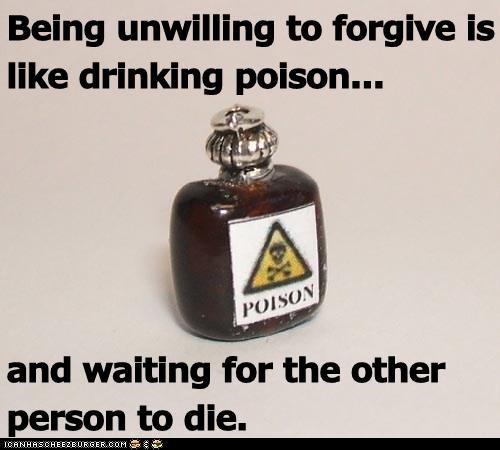 image source |
|
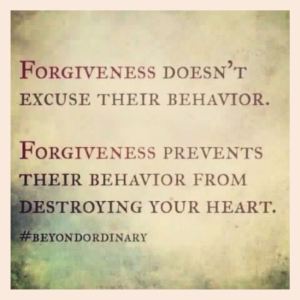 image source |
When we refuse to forgive someone, usually we think we’re punishing them in some way. “They don’t deserve my forgiveness!” we might think. “They hurt me, they betrayed me–they deserve for me to shun them the rest of my life!” And in those angry, bitter moments, our feelings seem completely righteous; we are hurt, so they deserve to hurt, too, and the best way we can think of to hurt them is to take our friendship and common courtesy away. |
Unforgiveness as a Personal, Long-Term Struggle
I struggle with unforgiveness myself, as a victim of severe school bullying from kindergarten through 9th grade. I often said I forgave the people who verbally and physically abused me, but I didn’t–I held the grudge for years, silently judging each former bully by their action, remaining angry with them long after they even forgot what they did to me. The fact that they forgot even stoked my anger more; I found myself thinking “How dare they forget, like it didn’t matter, when they HURT me?! They deserve to be hurt by my hatred!”
Unforgiveness as a Futile Exercise
But therein lies the problem, one that I wasn’t able to wrap my brain around until just the last few years. Who am I actually hurting when I refuse to forgive someone? I’m obviously not hurting the other person, if they can forget what they did. I’m obviously not teaching them a social lesson, when no one else remembers the hurt done to me. What good is it to refuse someone else forgiveness, when all it does is keep refreshing the hurt in my mind, and keep me angry? Anger causes stress, and stress is a KILLER, as I have discovered with my recent stress-related illnesses.
Unforgiveness feels right, feels like exactly the thing we ought to do, especially when our lives have been changed by someone else’s thoughtless words or actions. But it won’t help us in the long run–it will only dampen our own life enjoyment, and potentially even shorten our lives, with NO effect on the other person whatsoever.
I am the last person who needs to give advice on how to forgive, since I’m apparently awful at it, but I do recognize that it needs to happen–first because it’s the Christian thing to do, realizing I too am a sinner in need of forgiveness, and second because I am tired of living with the burden of my own rage and bitterness.
Redo: Pain Can Change Us
For today’s Tuesday post, I revisited and completely reworked an old health post about pain. Amazing how much rambling and slightly-off-topic writing I did on this blog back in the day! LOL
Makeup Box Spring Cleaning

As part of my (endless) organization/cleaning purge, I decided to tackle my makeup collection recently, with some very surprising results. (Bonus: tips for helping you spring-clean your own makeup collection are at the end of this article!)
I had thought my makeup collection was about as streamlined and simple as it could get, since I don’t wear much makeup these days anyway. But I noticed that there were a few products that I wasn’t using as much. So, I literally took the organizer that serves as my makeup storage and dumped it out on the bed to sort through it…and this is what happened next:
Products Before the Purge

Lip glosses (yes, yes, I know, one girl does not need so many! LOL)

Lipsticks (can you tell lip products are my favorite makeup yet?)

Face products (foundation powder, blush, bronzer)

Eye products (eyeshadow, liner)
The Purging Process
Once I had sorted each category, I took a long, hard look at each product. Was I using this? Was it still safe to use? Did it work like I wanted?
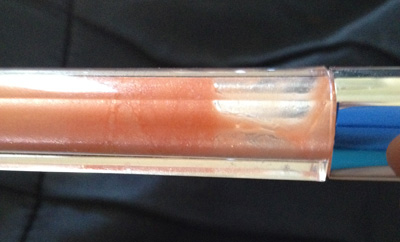
One thing I saw was that several of my lip glosses had begun to separate and change color slightly in the tube. Yuck! (The pictured lip gloss was bought in 2011–definitely wayyyyy too old to be using!)

This lip palette, for instance, was bought back in 2007, according to my note in Sharpie on the bottom of it. Yikes! (This is a really handy tip for keeping track of how old your makeup is–note the month and year on the bottom of it when you get it, and then you’ll know when it’s too old to use!)

Some of the products, like this mini-makeup kit, have been gifts–and gifts are especially hard for me to get rid of because I’m very sentimental. But in this case, this kit has been sitting in my box for at least the last 4 years…:/
I was REALLY tempted to quit in the middle of this purge, to just keep all of the makeup, but when I realized how old some of it was, I knew I couldn’t in good faith keep putting that on my face. Makeup definitely doesn’t last forever! So I set my mind to be ruthless about getting rid of the oldest products, the products I didn’t use, etc. (I don’t wear a lot of makeup, so I didn’t need all of them anyway.)
The Results
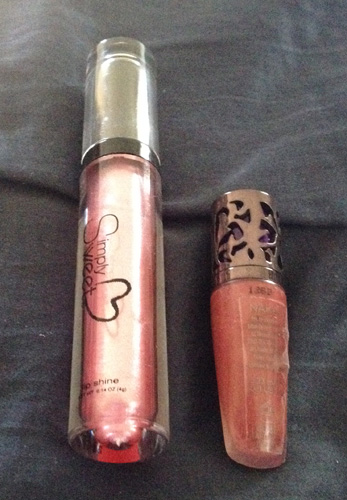
A MUCH-reduced gloss collection, taking out all the ones that were now too old to use…

And a little smaller lipstick collection to match 🙂

I pared down all the eyeshadow palettes to the one I really love and use the most…

…and I kept the one eyeliner I have (though I don’t break it out very often).

I took out the foundation powders that I haven’t used since I graduated college in 2007 (seriously!), but I swapped in a couple of the lip stains to see if I could use them as “cream blushes.” (Note: you can’t really blend them well enough to make them work, sadly.)

A couple of trusty tools round out my new, much lighter makeup collection.
What I Kept and What I Got Rid Of
Just to show you exactly how much I got rid of, here’s the “After” picture of my makeup organizer:

And here’s the basket of stuff that went away:
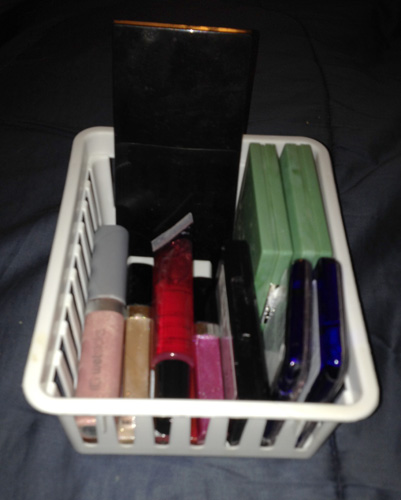
Yep, I got rid of about half my makeup collection in one fell swoop! Pretty amazing for this hoarder in rehab! LOL
To Purge Your Own Collection
- Mark each makeup piece with the date you first used it so you know when to throw it out. (This is SO helpful!) Refer to this article for when to throw away various makeup products.
- Check each product for changes in texture, smell, or application; if it looks “goopy,” smells weird, or doesn’t seem to have the same “oomph” that it used to, it’s probably gone bad.
- Be ruthless when deciding whether to purge an item. Are you REALLY going to use that product if you keep it, or are you keeping it to justify the expense of it? (I kept falling into this trap during the makeup purge, and I had to keep thinking, “Is this something I REALLY love and use?”)
Redo: Warmer Temps, Warmer Mood
Just in time for spring to roll around again, here’s a simple, beautifully restyled/reworded spring post from 2011! Enjoy the new pictures and more poetic descriptions… 🙂
Fat-Shaming is Pointless


The two images above explain exactly why fat-shaming is pointless. When people judge someone harshly based on their weight, insinuating that they’re lazy, disgusting, mentally slow/disturbed, etc., they are making all sorts of assumptions about them which have no basis in fact. The only thing fat-shamers are REALLY saying is “I don’t like how your body looks.”
I dealt with this a LOT during middle and high school, and I still get people occasionally who think that because of my size, I am something to pity or someone who needs “advice” on how to “live properly***.” I used to take people’s opinions of my body very seriously, because I thought they were telling me the truth about what I was–that I was disgusting and horrible and didn’t deserve to live.
But no more. Now my response to fat-shaming is: “WHO CARES?” Certainly not this big girl. If they don’t like my body, fine–it isn’t theirs to worry about.
***Note: Medical obesity IS a definable problem which keeps a person from being able to live normally because of body size. Recovery from obesity should be treated as seriously as any disease is treated, with the proper emotional support instead of just shaming the people who “ended up this way.” Why? Because there are usually multiple medical causes of obesity (thyroid problems, stress, hormonal imbalance, medicine reactions, lower body injury/instability, etc.). (And no, we don’t all sit on our couches going through boxes of Twinkies! If you think overeating is the sole cause of medical obesity, then please educate yourself.)
Medical obesity is not what I’m speaking of in this post; “fat-shaming” occurs mostly because a person’s body does not conform to current size standards of beauty, which are highly Photoshopped and thus unrealistic anyway.