Category Archives: Tuesday on the Soapbox

Anything from politics and current events to strange and beautiful life philosophies.

Why, Yes, That IS So True: Slices of Life in Animated GIF Form

If you’ve never been to That’s So True, you’re missing out on countless chances to LOL. Using animated GIFs of scenes from movies, TV shows, and Internet comics, submitters to the site tell their own funny stories–and believe me, there are quite a few gems to find!

Below are some of my selected favorites from That’s So True, simply reformatted for my blog. Enjoy!

I Identify with the Second GIF xD

when i’m cleaning
with music Icon
without it Icon

I Used to Live in Fear of These Moments…LOL

telling my parents something funny Icon
then they take it seriously Icon
and turn it into a life lesson Icon
and you just sit there like… Icon

True, Especially When It’s Too Hot to Move

What you think you’re gonna do during summer Icon
what you actually do Icon

Graduation at Various Levels of School

elementary school Icon
middle school Icon
high school Icon
college Icon

What always happens at Olive Garden

Super full from the all-you-can eat breadsticks and salad Icon
waitress comes with your entrée Icon

…This Face is Usually Accompanied With a Gasp and “…No!”

when your favorite character dies in a book Icon

This Happens to Me EVERY. TIME.

start to clean your room Icon
but then you find somthing you loved as a kid Icon
3 hours later Icon

Have I Ever Mentioned How Much I Hate Auto-Playing Sound? xD

Have a million tabs open on your computer Icon
mysterious music/ad starts playing Icon
scrambling to find source of sound Icon

Try the “White Slime” in NEW and IMPROVED Ammonia/Spoiled Flavor!

A few days ago, I got a few chicken tacos from my local Taco Bell, fixed like I always have them fixed–just chicken and cheese. (It’s been months since I’ve eaten the beef at Taco Bell because the quality has REALLY gone down, at least in my opinion–more about that later.) But the chicken has usually been a refuge for me.

I bit into the first of my tacos, only to realize that the chicken had an unusual sharp flavor, almost a cleaning-product flavor. Not only that, but it was oddly-textured. One more bite, and I realized there was another dimension to the bad taste–it tasted off, as if it had been kept past its expiration date.

As I peered into the depths of the taco shell, wondering if I’d gotten hold of some strange ingredient by mistake, a piece of “chicken” fell out…and it didn’t look the slightest bit like chicken. Instead, it looked like something that had been formed into the vague shape of chicken pieces. The color was nearly pure white–it almost looked like meat fat that had been reshaped.

I honestly don’t know what I got hold of that day, but all three of my tacos were like this–I tried bites out of each one, in the hope that maybe only one or two was affected. That wasn’t the case. Unfortunately, it was what I had spent my eating money on that day and I had long since left the store, so I had to try to salvage what I could of the meal. I ended up eating around the meat entirely and just throwing away the horrible “meat” product I had been served.

This disgusting taste, plus the slight nausea and dizziness I experienced about an hour and a half after eating what I could, convinced me that I had gotten hold of something terrible. And it looked and tasted a lot like what most people are describing as “white slime.”

What Exactly IS “White Slime?

The technical term is “mechanically separated chicken” (some pictures are available here). During mechanical separation, meat is basically sieved like flour (just under really high pressure) to get all the bones out, making it look a lot like meaty cake batter.

While the process sounds (and is) a little disgusting, in ways, it’s a more efficient way to get all the meat off an animal carcass, and it does reduce waste. And, after all, mechanically separated meat forms bologna and hot dogs, two things I’ve eaten in great quantities most of my life. In fact, this process has probably helped food prices over the years since it was introduced back in the late 1960s, according to the Wikipedia article.

So What’s the Big Deal?

There have been health concerns about MSM before, especially concerning connections between mechanically separated beef and mad cow disease. But, since outlawing beef from mechanical separation, this has been widely reduced. Unfortunately, keeping mad cow disease out of the meat does not stop other health concerns. The standout issue to me is that both mechanically separated chicken (“white slime”) and pork (“pink slime”) are treated with ammonia to kill bacteria before being packaged.

Knowing that ammonia is poisonous, and knowing that it’s used in a lot of industrial-strength cleaning supplies, this bothers me. Is ammonia what I was tasting in those tacos? Was the meat perhaps treated a little stronger with “bacteria-killing” solution to disguise the fact that it was a little past its expiration date, perhaps?

I worry that the addition of ammonia is actually making the meat product less nutritious and more poisonous. Whatever was in those tacos (whether it was simply spoiled meat, ammonia-treated meat, or a combination of the two), it did make me nauseated and dizzy afterwards, and I don’t usually react badly to any food. I don’t have the answers, but I do have some disturbing questions which need to be answered. Are we cutting corners too much just to make a profit, if slightly-spoiled or over-treated meat products are now being served?

The Wider Picture: General Fast-Food Quality

In the last few years, quality in fast-food cuisine has gone measurably down–I used to love Taco Bell’s ground beef, for instance, but ever since they got sued over it recently, the taste is no longer rich and slightly spicy, but kinda flat and over-reheated. Most people I talk to don’t seem to notice a difference, but then again, I get my tacos without lettuce, tomato, and sour cream, so the flavor of the meat itself is not overshadowed for me. I’m left wondering what exactly I’ve been eating all these years, to be honest.

It’s not just Taco Bell, though; foods at other fast-food restaurants that I used to love are no longer as good as what I remember, and I’m a very picky/sensitive eater, so I pick up on taste subtleties more often. The “cleaning flavor” has been sneaking into other types of food, too, and I’m wondering if the addition of ammonia is as necessary as people make it out to be.

Now, I know fast food is definitely not health food, but at least it’s supposed to taste like food, right? Even if what I got in those terrible tacos wasn’t “white slime,” I’d like to know what it was (or what it was supposed to be). The production of “white slime” and “pink slime,” while having existed for decades, seems to have taken a turn for the worse, and I’m afraid it’s mostly because of the bottom line.

Summary

More (and professional) research is needed to discover whether these strange tastes are a result of individual franchisees trying to stretch their dollar, or whether corporations are trying to cut corners to make a little more profit. But I really hope we all can get to the bottom of why cheap food production seems to be going a little too cheap. After all, when one cannot afford to eat anywhere but fast-food places, as is increasingly the case, that cheap and available food should still be edible!

For More Information

Mechanically-separated meat (MSM) article @ Wikipedia
Meat Product Chart @ ProPublica
Specified Risk Material article @ Wikipedia
Meat slurry article @ Wikipedia
Pink and White Slime: Videos @ Gothamist

Broken Toys, Broken Worlds: A Wish to Fix Them Both

A huge toybox sat in the 3-to-5-year-old Sunday school room, stuffed to the gills with an assortment of donated toys. Our church was small and funding for toys was rather low on the list, so a good number of the toys were either missing pieces or broken. Us kids were pretty rough on ’em.

Most of the kids in my Sunday school class gravitated toward the new and shiny toys, the freshly-donated toys whose stickers hadn’t worn off, whose colors were still bright and whose plastic pieces were unscratched. In typical childlike behavior, those were the toys that got played with the most; the ones missing pieces, the ones whose joints had fallen apart and whose screws poked out, were buried in the toy coffin–I mean, the toybox.

Mine were the only little hands to delve into that graveyard of toys and dig out the broken ones.

Every Sunday I found a new “project” to work on, every time our teacher was finished with the Bible lesson and let us play a little while. One Sunday it was a jointed doll whose leg had fallen off; I found the doll’s leg stuffed inside a jack-in-the-box, and reattached it by the end of Sunday School that day. Another Sunday it was a cardboard religious puzzle set, with one piece torn in half. With a few strips of tape on the back, I fixed the torn piece so that I could put the whole picture together again.

Being such a bringer of chaos as I was then (I could un-straighten a room in 5 seconds, given a free moment with an open toybox), this was inexplicable, that I should want to fix broken toys rather than play with shiny new ones. But I followed the same practice at home, fixing up the toys I accidentally broke in too-zealous play, even if they sometimes ended up in a wad of scotch tape or rubber bands. I just hated the sight of a broken toy–it made me horribly sad, even at a young age.

I don’t really know why I have always been drawn to broken toys, and drawn to fix them in particular. After all, I’m not much of a handywoman, nor do I own a set of tools. My fixes weren’t always the most professional-looking, either. (LOL) Maybe it’s because a broken toy feels like a visual representation of lost childhood, lost innocence, broken childlike trust. Something twists, in emotional pain, when I see a broken toy, and I long to fix it so that everything is “right” again. Seeing a fixed toy, seeing it work like it’s supposed to again, always made me irrepressibly happy–I’d usually jump around and do some kind of happydance when everything was “back to normal” again.

Fixing the Broken World: Too Idealistic, or Someday Possible?

These days, I wish the world could be fixed with such simple implements as tape, rubber bands, and glue. It makes me just as sad to see others arrayed against each other in violence and hatred, leaving broken humans in their wake. Since I was a child, I’ve often thought of playing my music and reading my writing to the world, to help put back together what has been shattered so often. People have told me that my writing and music brings peace to them, and it certainly has brought that to me over the years as I created it.

It would be wonderful if the same art that has lifted me up and kept me going could someday keep others going, too; it wouldn’t be just an ego boost, but a true life’s purpose for me. Who knows, maybe the idle dream of making everybody feel better through my writing and music is too childlike, best left with the Barbies and Legos. But perhaps I’m still in the business of fixing broken toys–maybe I’m just aiming for slightly bigger toys, now.

Fantastic Places (That Don’t Really Exist)

Oh, if only these places and vistas really existed…I would definitely have to visit each one! Sometimes the sheer beauty of a place is inspiration enough, and these would be worth the travel time.


Image source: DesktopNexus.com


Image source: mi9.com


Image source: OnlyHDWallpapers.com


Image source: SolarFlareStudios.com

(For each of these images, click to get access to a much larger version, or you can go to the sourced website to retrieve it in a big enough size for your computer.)

The Difference Encouragement Makes

Can you believe it’s been over a year since I started Zumba? I sure can’t. I didn’t think I’d ever find an exercise program I’d go back to twice, let alone keep attending for thirteen months. And yet, I have. What an odyssey to get even this far! And how much I have changed, physically and emotionally!

Before: Fearful, Uncertain, and Doubting

When I started Zumba back in June 2011, I was uncertain and afraid. I worried I’d be judged by my classmates, feared that the instructor would be a drill sergeant, and was scared that I wouldn’t be physically capable of doing any of the exercises. But most of all, I worried that this would be yet another notch on the “failed-exercise-attempt” post.

After all, all my other attempts at doing exercise over the years had failed. Back in middle school, I was too busy being victimized and bullied about my weight to really understand/do exercise; in high school, I avoided gym class like the plague for that very reason. And by college, my knees and ankles had taken so much of a beating that exercise was painful and frightening. Even after college, when I knew I needed to get fit and wanted to try, all the types I tried were lonely and boring (as I have written about before in October of last year and January of this year).

Why The Fear and Doubt Receded

But surprisingly, this attempt succeeded almost from the beginning, and has continued to succeed. Why? I believe it’s because of all the positive encouragement I received.

For one thing, my fellow Zumba class members are all cool people, most of them just like me, trying to get healthier instead of trying to show off perfected moves. I don’t feel intimidated by anyone else, and I don’t feel like they’re judging me, either. Instead, I feel that I’m in a class of my peers, peers who offer compliments to each other and support when needed.

Secondly, the instructor from whom I began taking Zumba classes truly took time to teach the moves rather than just expecting us to follow along. I never felt utterly lost the way I used to feel in other exercise classes. And the best thing? She offered positive reinforcement and urged us all to just “keep our feet moving,” not to worry about doing the moves perfectly. Instead of demanding we follow exactly as she demonstrated, she encouraged us to do only what our bodies were capable of, so that we would not hurt ourselves.

For me, a lifelong self-destructive perfectionist, that was a blessed relief to let go of that worry. She helped me see that I COULD do the exercises, and never let me discourage myself out of coming back to class. “You may not do these moves exactly the way I do,” she said once, “but if you’re moving at all, you’re going to help yourself feel better over time.” She was right.

The Result of Encouragement: Positive Change

Because of the encouragement I found in both my classmates and my instructor, I now believe in myself a lot more, and I’m beginning to have fun, too. It is possible to have fun doing full-throttle, sweat-inducing exercise–I never believed that before. Slowly, exercise has gained positive associations in my mind: where before it was always associated with shame, pain, and lack of ability, now it is associated with camaraderie, fun new challenges, and the thrill of being able to do more and more.

I think the lack of proper encouragement holds many people back from exercise these days. Either they try to do it all by themselves and end up feeling lonely and bored, or they try to exercise in a place that does not offer social encouragement and support. As I told my Zumba instructor, “I had to change mentally before any change could take place physically”–and I believe that. I had to feel that exercise was a positive experience worth having before I could convince myself to stay with it. Encouragement filled that gap for me.

Some Encouragement for You

I hope, if you’re reading this article and are trying to get in shape, that you will look up positive, encouraging people who know a lot about fitness and health to help you on your own fitness odyssey. Having people who can guide you as you try to get healthy makes such a positive difference. I didn’t think it would, until I experienced it for myself.

But I also hope, if you’re reading this article and know someone who’s trying to get in shape, that you will reach out to them and become a buddy to them, helping in any way you can. Heck, even if you see someone else at the gym who’s struggling along, I hope you’ll reach out and be kind to them. Positive encouragement from you could mean the difference between them coming back or them leaving and never returning. You never know!

A Butterfly Landing on My Car

It was just after 2:00 pm, which meant that the interior of my car was more like the surface of the sun as I sat in traffic, waiting for one of Shelby’s many stoplights to deign to let me pass. But this particular stoplight seemingly had a grudge against me today. Literal minutes were ticking by, it was hot as all get out, and I had somewhere to be. The discontented stream of grumbling in my head was quickly building to a fever pitch.

And then, I saw it: a butterfly, its wings patterned in brilliant blue and silky black, flitting among the cars gathered at the stoplight. It hovered and darted among hoods and roofs shimmering like metal carapaces, flying as if it were searching for something to light on. After a few more seconds, it came closer, and finally lit on my windshield, right in my line of sight.

I expected it to take off again right away, but instead, it was almost preternaturally still, except for its little antennae waving about as if trying to get my attention. How delicate its wings were, fragile and almost translucent…I studied it for a moment or two more, wondering how it was staying so still, and why.

The light up ahead finally turned green at last, but it seemed the butterfly knew to lift off the windshield even before I lifted my foot from the brake; I watched it hover just above the glass, as if it was trying to keep my attention. All too soon, though, I had to advance forward, leaving the butterfly behind, hopefully avoiding the tide of traffic behind me.

Driving on through the intersection, blessedly moving at last, I wasn’t quite so grumbly anymore. The butterfly’s moments of stillness, as it balanced daintily on the windshield, had reminded me that sometimes it was okay to be still, when moving too fast could endanger you. Maybe I didn’t need to worry about rushing ahead to make up time; maybe I would be better off not to drive as if the gas pedal were an enemy to stomp into the ground.

Now, I know that butterflies in the late spring are not uncommon, certainly, but allowing myself to be still a moment and ponder such a tiny, delicate creature was uncommon for me. I’m not known for being still, or quiet, or content…and yet, in those very few moments, I was perfectly content being all of those things, merely looking at a butterfly. How much calmer would I be, if I allowed myself more of those moments? …Come to think of it, how much calmer would we all be?

I like to think that sometimes God uses the littlest of creatures to remind us of huge essential truths, like the importance of just being still. What do you think?

AquaZumba: A Different Sort of Exercise Challenge

Since I’ve been doing regular Zumba and holding up pretty well for a little over a year now, I’ve been wondering if my body could handle doing two exercise classes a week instead of just one. I wasn’t sure what other type of exercise I could add, however.

As it happened, my regular Zumba instructor mentioned about a month back that she was going to teach a water form of Zumba called AquaZumba, and she wanted to know what interest there would be in such a class. I raised my hand; about six years ago, my doctor suggested water aerobics to me as a way of building back strength in my damaged joints, but I hadn’t followed up on it. So, remembering my doctor’s old advice, I decided I would give it a shot. The happy result is the subject of today’s blog post.

The Experience

I showed up for class last Monday afternoon, in the outdoor pool area at my local YMCA (also where I take regular Zumba on Thursday nights). There ended up being about 20 people there for the class, and our instructor advised us to make sure we were standing in water at least chest-high so that we could get good resistance on our arms as well as the rest of us. The middle section of the pool, where the depth slowly increases, was accordingly filled out with class members arranged by height.

Our instructor demonstrated the various moves outside the water, so we could all see and know what to do. At first, I didn’t think it would be nearly as challenging as regular Zumba, but within the first couple of songs, I realized that the water resistance was certainly not negligible. Not that the resistance was hard to work through–it was just more resistance to movement than I expected. You don’t realize how much water will hold you still or keep you back from moving, but it will!

As we worked through each song, I realized that because of the water resistance, AquaZumba is necessarily a slower-tempo workout. You’re not doing as much high-intensity cardio (though you do get an elevated heart rate); instead, you’re doing more muscle toning. I could feel, as we did each set of the slower but more graceful moves through the water, that my arms and legs were getting a good workout, as well as my core muscles (which I didn’t expect at all). It wasn’t arduous, though–the water made the movements more fun since I wasn’t having to focus so hard on not falling over (LOL).

For a solid hour, the water seemed to boil with our movements as the 20 of us moved like a party of synchronized swimmers (except without the spangly costumes). (I don’t see how the instructor stood it, doing her moves on land (and in full sun) as she did!) I noticed that pretty much the whole class kept up with the exercises well, and by the end of the workout, we all seemed pleasantly tired, not flat-out exhausted.

I left feeling good about the whole experience. The instructor was encouraging and compassionate as always, and the class members were forgiving of each other as well as of themselves. Not to mention that the heaviness in my limbs was a sign that I’d had a much stronger workout (and yet a less joint-stressing workout) than I expected.

The Results

I was less sore and exhausted after AquaZumba than I usually am after regular Zumba, but I was still feeling the workout–at about midnight, I realized I’d worked my arms WAY more than I realized. Still, I wasn’t overtired, and felt energetic enough through the week to meet my regular Zumba class and my other obligations as well. I also noticed that my ankles and knees felt more supported during the workout, which meant lots less pain during and after the workout. I was worried that my completely flat feet on a slanted pool floor might cause me a mischief, but that didn’t seem to come into play at all.

Time will tell, however if my core muscles were as engaged as they felt during the workout, but I literally felt “smaller” around the middle when I left the pool that evening. Those slow twists and turns do more for the obliques and abs than I thought!

Wondering if You Should Try It?

In my opinion, if you enjoy swimming or enjoy just being in the water, AquaZumba could very well be a good fit for your exercise program. And, if you can do regular Zumba, you can definitely do AquaZumba. However, if you’ve never tried regular Zumba because you think it would be too fast or difficult, this might be more your speed.

Check online or around your local gyms (or even local parks) to see whether a class may be offered in your area. Who knows, you might find yourself becoming an AquaZumba swan by the end of the summer!

Eating Healthy IS Expensive

Many people will disagree with the title of this post. In fact, there are several knowledgeable sources which say that healthy food isn’t more expensive than unhealthy food at all (see articles from LATimes, HuffingtonPost, and MSNBC).

But, for every article that asserts that eating healthy is a cheaper or equal-cost alternative to unhealthy food, it seems there is an article that asserts exactly the opposite (see articles from StraightHealth and MedicineNet). It seems that no one can really agree on this issue, not even the experts–which makes for a tough decision for those of us who aren’t health gurus, but don’t like the idea of being 800 pounds due to fast-food living.

So, while trying to find out, once and for all, if going completely healthy is even worth it for me, I came to a disappointing conclusion: there is no straight answer from official sources. There is, however, my own personal experience, which is in itself possibly a clearer answer to the problem. I find that healthy food IS expensive when considered against unhealthy food, unfortunately, and in ways that are likely not accounted for by many of the recent studies done on this topic.

Healthy Food: More Expensive in Many Ways

When I say “healthy food is expensive”, I’m not just talking about what it costs at the grocery store. It’s also more expensive in terms of gas, prep time, and convenience. Let me give you a few examples:

Healthy Food Goes Bad Faster = More Money Spent Every Time You Shop

Healthy food, in general, goes bad faster than unhealthy food. Example: fresh veggies, which you apparently have to eat within 2 days of buying or you have moldy veggies. Even the frozen kind seem to go bad faster, or get freezer-burned way too easily. When I tried to go healthy in 2007, I quickly found that I was throwing out more “healthy” food than I was eating–for instance, the carrots in water that I bought on Tuesday morning were expired by Friday, and I hadn’t even opened them yet. It was frustrating!

In this way, healthier food is quite unlike the preservative-laden boxed meals and food packets. Those things seem to last forever, and are often cheaper because they don’t have the “organic” or “natural” food label, which always seems to add about 2 bucks to the purchase price of most fresh food. When it comes to the likelihood of wasting food, it’s no wonder some people choose to load their bodies with preservatives rather than buy “fresh” food that ends up not being eaten at all.

Healthy Food Doesn’t Keep You Full = More Trips to the Store Per Week

As stated, to keep the “freshest” and “best” healthy food on hand, you have to drive to the grocery store several times a week because everything goes bad faster. But you’re also going to use up what you buy much faster because healthy foods, especially fruits and veggies, do not keep you full very long. (Sure, fiber keeps you full, but when it tastes like you’re eating a wad of Silly String, it’s not that appetizing to eat platefuls of it.) I’ve noticed that when trying to eat low-calorie options, I always end up hungry an hour after eating, even if I try to include protein and fiber, and I invariably snack on junk food to cover the difference.

What this means for the average eater: you use more gas and more money to fix more food that doesn’t feed you for very long. Not exactly cost-efficient in this economy, is it?

Healthy Food Needs More Prep Time = More Inconvenient

Usually, healthy food takes longer to cook (like green beans that take 20 minutes simmering on the stove just to be edible). Frozen healthy food must be thawed, which also takes more time than unhealthy food. By contrast, in 20 minutes, I could have a pizza delivered and be eating it already. Which am I logically going to choose, from a convenience and time standpoint?

I admit, we as a society are so conditioned to being able to walk into the kitchen and immediately eat whatever is easiest to fix, and unfortunately for us, the foods that are easiest to fix are the unhealthiest for us. But while some of this is a personal choice not to spend time preparing food, some of us simply do not have the time or the culinary skill necessary to fix more than microwave meals. I’d rather not set the kitchen on fire trying to cook “healthy,” you know?

Healthy Food Has Weaker Flavors = More Unhealthy Flavoring Agents Used

To make healthy food taste good to modern desensitized palates like mine, you have to have more ingredients on hand, such as spices, oils, other food items, etc., than you generally do for unhealthy food. I personally find that fruits and vegetables just do not have the strong sweet or salty flavors that I like, or they have unwanted bitter/grassy flavors, so I end up loading them up with unhealthy additives (ranch dressing, table sugar, and the like) and canceling out their health benefits.

I’m pretty sure I’m not the only person to drown their salads and vegetables in flavoring agents, and it makes the whole exercise of “eating healthy” feel futile. Why bother trying (and failing) to eat a plate of grass (pardon me, salad) with ranch dressing on it, when I could have chosen something that tasted good on its own, even if it was less healthy? In the end, you spend money on “healthy” food and don’t even eat half of it, only to experience an unhealthy food craving later. And, inevitably, you lapse right back into old ways, spending even more money to get the food you REALLY wanted in the first place.

My Conclusion: It IS Expensive

In terms of time spent cooking, convenience/availability, gas for shopping trips, sheer tastiness, and buying “organic/natural” foods, healthier food is much more expensive than unhealthy food. It seems not to fit our modern lifestyles, and in this age of fitting two lifetimes’ worth of activity into half a lifetime, we are more likely to skimp on food to stretch a dollar or two, or save a few minutes. Plus, as many health experts say, we as a culture are now addicted to those strong food flavors that come from processed foods, and we are also addicted to how quickly those very tasty foods can be fixed.

And yet, to hear the same health experts talk, we should all be eating as if we are rich enough to afford the pricier healthy food, as well as having leisure time enough to prepare it (and taste buds that apparently can’t taste anything bitter). Meanwhile, all the food that is cheap, easy to fix, and a delight to the tongue wreaks havoc on all of us that simply can’t afford to eat any other way.

Footnote: How This Food Problem Might Be Sabotaging Health

While the total blame for the “obesity epidemic” has usually been laid across the shoulders of every individual who is obese, I believe some of the blame lies in our culture and the commercialization of food products, especially healthy food products. Being obese is no longer just about individuals making “unhealthy food choices,” not when the “healthy” foods are time-sucking, gas-wasting, tasteless options. Who wants to eat ONE bowl of grassy-tasting greens that cost 12 bucks and is already starting to go brown, when for that same 12 bucks you could feed a family of 4 at McDonalds?

I’m personally obese myself, and have been since I was 11 years old. I would love to change that, but from a diet standpoint, many issues stand in the way of that: I hate the way most healthy food tastes, I hate its impact on my purse and gas tank, and I hate that it takes 2 or 3 times longer to prepare it. Why in the WORLD would I inflict such suffering and privation on myself, when better-tasting, cheaper, and quicker options exist? This is likely the same battle, the same thought process, that goes through the minds of many people today, and it has a definite impact on diet.

Now, when healthy food tastes as good as the unhealthy stuff, is cheaper than unhealthy food, and is quicker to fix…THEN we might see the “obesity epidemic” start to go away. Until then, most of us who are big or who are addicted to unhealthy foods are going to struggle with their diets just as I have, with half the battle decided before food even hits their plates.

“Derp:” It’s Not Just a Facial Expression Anymore!

You might have seen this strange word on the Internet, perhaps not known what it was…yet it always occurs in the funniest or strangest circumstances. What is a “derp?”

“Official” Internet Definitions

According to UrbanDictionary.com, a derp can be many things, such as a silly facial expression, incomprehensible speech, or an idiotic moment. I, however, find definitions #3 and #5 to be most applicable to my experience of “derp”:

  • #3: A literary or spoken phrase that combines elements of “WTF” and “cool story bro”. Laced with condescension “derp” is a common form of web-based libel that is almost didactic; however not quite as it is generally a sardonic gesticulation rather than moralistic chastisement. The spoken sense of the world itself conveys an intrinsic feeling of disappointment with a subtle hint of disgust and an overtone of rebuke.
  • #5: A word uttered when one screws up. origin: Matt Stone and Trey Parker in BASEketball. Used as an interjection.

Additionally, according to KnowYourMeme, derps arose from pure stupidity and remains that way today (see the exhibit of “derp” faces, with eyes pointed in different directions and a strange smile). KnowYourMeme also gives important background information as to the origins of the “derp.” Many more of these stupidity examples and distorted speech/facial expressions can be found on Derp.com.

However, I have come up with my own definition of the derp, from my own life:

DERP: n. a silly, almost instinctive mistake; a brain fart; a moment of abject ignorance.

DERP: v. making a silly, almost instinctive mistake; having a brain fart; acting ignorant.

Derivatives: derpy, derping

Pictorial Examples of This Definition

All images from Derp.com

I am quite capable of acting like this–saying stuff that doesn’t make sense, making crazy facial expressions, etc.–and have proven that wondrous ability on several occasions (much to my dismay). Sometimes, I have no idea why I derp, and that is one of the inherent qualities of the derp: it happens, and it happens to everyone at random times!

Derps I Have Done and Seen

  • Self-Derp: I carefully saved 10 picture sources (web addresses) for a future blog post. Later that night, I apparently went on a file-deleting spree and got rid of the entire file.
  • Self-Derp: I knew that I needed to stop for gas, but I drove 2 miles past the gas station I meant to go to anyway.
  • Self-Derp: Upon stepping up to the pulpit microphone to introduce another person at church, I stumbled over pronouncing their name, the title of the song they were doing, and the word “the”, all in one sentence.
  • Driver-Derp: In an unfamiliar city, I got into a traffic lane that I thought would continue on, only to look ahead and see that it ended in 500 feet. Fastest lane-change-back I’ve ever done!
  • Driver-Derp: A person I was driving behind in Charlotte traffic switched lanes precisely four times, from far left to middle left, from middle left to far left, from far left to far right (not kidding), and then back to middle right. Not sure what that was about, as there were no other cars to pass on the road.
  • Pet-Derp: Maggie, my boyfriend’s family cat, ran into the kitchen, started doing a big back stretch, then abruptly faceplanted and skittered a couple of feet like she was after a bug or mouse. Afterwards, she did an “I completely meant to do that” paw-washing.
  • Pet-Derp: Reesie, my boyfriend’s family dachshund, tried at least 50 times to get up on the armchair, jumping and jumping. When she finally succeeded, her first action was to slide back off, then try to jump back on again, for no apparent reason.

Derps in Entertainment: Why Are They So Funny?

From misspoken words to wardrobe malfunctions and other bloopers, derps appear on TV funny reels more often than anywhere else. Heck, there are even whole shows dedicated to the derp (America’s Funniest Home Videos, anyone?).

And, as I’ve referred to before, nowadays there are zillions of websites about derpy moments, either photographed or retold in words. Submitters to The Cheezburger Network and Spartz make tons of contributions to the derp culture every day, from funny cat captions to iPhone autocorrects and everything in between. And we eat it up, because it reflects our lives and our own derpiness. (If that isn’t a word, I’m making it one now–that’s not a derp in itself. LOL)

Derps are funny, random moments in life that are occasionally captured in a picture or memorialized in a video (and usually hastily put up on the Internet, LOL). They are reminders that we’re human and we make randomly funny/strange mistakes. They are also reminders that none of us is safe from derping; in fact, the most enjoyment comes from seeing that the richest, kindest, most put-together or most famous among us can still derp, too!

Have a Funny Derp?

Have a derp story to match the ones I’ve already told in this article? Got a funny derp picture to share? Tell me in the comments!

If You Can’t Park It, Don’t Buy It!

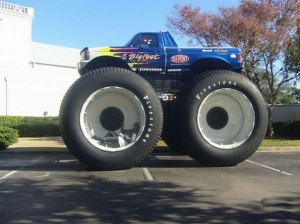
More and more, I’ve seen people driving cars, SUVs and trucks like the following:


Source

Source

(Okay, okay, maybe that second pic is a little exaggerated. But to me, a driver of a very small car, these bigger vehicles kinda do look like monster trucks on the road. 😛 )

Most of the time, I coexist with these bigger cars on the road pretty well; in fact, I admire the people who seem to be able to wiggle through traffic in these tanklike creations. But what gets me about big cars and trucks is that the people who drive them…don’t seem to be able to park them very well.

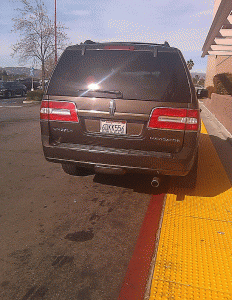
Exhibits A through D:


Source

Source

Source

Source

Though I didn’t take any of these pictures, I’ve seen examples of these kinds of parking everywhere I go. It’s almost as if the people who park larger cars/trucks in this way want others to notice them so badly that they have to take up all this room in the parking lot (or in fire lanes…or wherever they decide to stop their vehicle…LOL). Not only is this annoying for others who might have been able to park there otherwise, but it also comes off as selfish and insensitive.

Solution: Parking Test/Parking Classes

But wait! This is not just the regular “whine about bad parking” blog post. I actually have a solution!

My idea for solving the parking issue: before you leave the dealership with a new car, you should be given a parking test as part of the test drive, just like your driver’s license test. Dealerships have tons of parking spaces, after all, and you’re going to be test-driving the car anyway to make sure you can handle it on the road. Why not just make sure you’re buying something you can park effectively? Driving a new car is always weird because you’re not used to the size, and that definitely goes for parking, too…it would be worth a shot!

And, if your chosen car proves to be harder to drive than you thought, perhaps “parking classes” could be offered by private instructors or even the DMV. Driver’s ed fades fast in the memory, after all–who remembers how to parallel park, right? (That’s why a lot of cars now come with “Park Assist” technology and stuff like that…LOL)

…Okay, okay, the above advice is a little tongue-in-cheek, I admit…but think about it. Couldn’t we all benefit from a parking class sometimes, especially in those lots where the spaces are about THIS MUCH too small to just whoop in there willy-nilly? I know I could, even with an itty-bitty car like mine. Maybe if we all brushed up on our parking the way we brush up on our driving for license tests, we wouldn’t have all these parking fails that so frustrate us.

…But then again, that just might put the fail-picture websites out of business entirely. xD