All posts by Robin

I'm a woman in my early thirties living in North Carolina, USA, and I have a lot of varied interests; I love creative writing, music composition, web design, surfing the Internet, thinking out loud, and gaming. And yes, my glasses are crooked. :)

Top 5 Regrets, Homemade Porsche, NC’s Natural Waterslide, and Paper.Li

Top 5 Regrets of the Dying
What people regret the most when faced with their own mortality.. I agree with the “worked too hard” and “not staying in touch with friends” bits… sad, but an important read.

The Homemade Porsche
Somebody went out, got materials, did a whole bunch of precision cutting and painting, and made themselves a Porsche. No, I’m not kidding. Click, and LOL with me at this epic win.

Sliding Rock, NC
A natural rock waterslide! Had no idea this was in NC!

Paper.Li
Make your own online newspaper using feeds from various sources around the Internet. A lot of people use this in conjunction with Twitter, and Crooked Glasses has been featured in a couple!

When Life-Gain Becomes a Weapon

I have made much reference to my favored playstyle of life-gain in Magic: the Gathering (see my articles on life-gain as defense and life-gain as many things, including win condition). But usually, decks that are completely devoted to life-gain strategies are generally regarded as lacking in competitive strength.

This could be said most especially of my Artifact Life-Gain deck, affectionately nicknamed “Timex” because of its ability to “take a lickin’ and keep on tickin'”, as the old Timex slogan went. The decklist appears below:


My Timex decklist on EssentialMagic.com

Now, up till a few weeks ago, this deck was mainly life-gain artifacts, artifacts that made other artifacts cost less, things that retrieved artifacts from the graveyard, and a couple of high-defense creatures. These all made this deck a very efficient and fun life-gain engine, but little else. Most times, opponents either had to concede because I was gaining life too fast for them to smash me down, or I simply ran them out of cards (thanks to Elixir of Immortality’s ability to put my graveyard back into my deck). Then, I found a card that gave Timex some teeth.


Card image courtesy of Gatherer

This is a Transforming card, one of Magic’s newest mechanics. At the beginning of any game, this card is simply “Chalice of Life,” a 3-cost artifact that gains one life when you tap it. Simple, basic Artifact Life-Gain, just like the rest of my deck–seems fairly straightforward, right?

But it’s the transforming text that changes the game entirely if I tap it when I am at 30 life or more–it gains me one last life, then flips over, revealing “Chalice of Death,” which makes a target player lose 5 life every time it is tapped. From then on, the opponent has 4 turns to smash me down before I drain their starting life total completely, 5 points at a time.

How This Plays

Since I’m usually way more than 10 life up from my starting life total, because this deck has the capability to gain 10 or more life per turn, Chalice of Life is almost assured to transform at some point. When it does, the life-gain engine becomes a little meaner; the addition of the loss-of-life game mechanic takes this formerly timid deck and gives it threat and power.

From my play-testing, I’ve found that Timex is still just as resilient and flexible as ever, but with a weapon like this on the table, it can go on the offense as well. Suddenly, I’m no longer just hiding behind my high life total, but using its high number to power Chalice of Death. And with all the cards that retrieve artifacts from my graveyard (Sanctum Gargoyle, Hanna, Ship’s Navigator, and Rootwater Diver), just getting rid of the Chalice won’t save my opponent for very long.

The opponent’s challenge, then, is to find a way to take down my higher life total before Chalice of Death takes theirs down. Sure, a very aggressive deck might be able to do it…but will it be quick enough to offset a 5-point life loss every turn?

Your Opinion?

What do you think about this twist on life-gain? What types of strategies might get around this deck’s main combos, and which ones might fall most easily? Tell me in the comments!

The Heart of Christianity: Simple Belief

Hebrews 11:6
6 And without faith it is impossible to please him, for whoever would draw near to God must believe that he exists and that he rewards those who seek him.

Here, in this one verse, lies a huge stumbling block for most people who have difficulty with Christianity (or, indeed, with any faith practice). The writer of Hebrews is emphasizing the role of faith in our lives all throughout chapter 11; he cites example after ancient example of times when people believed in God and saw miracles performed. But here in verse 6, he reminds us that if we don’t believe He exists, the process of faith breaks down completely.

There are many in the world today who insist that God is not real, because they do not see His blessings and they do not see evidence of Him. These days, we want to prove everything completely by science and disregard faith, and yet by faith, amazing, unexplainable, otherwise impossible things have been done, as the writer of Hebrews says, because God willed it so.

I have always enjoyed the study of science, myself, but I have also enjoyed how every branch of science seems to be painting a huge mural of God’s works, brushstroke by tiny brushstroke. The wonder of DNA itself, a single code that describes all creatures’ genetic makeup, has always put me in mind of a single Creator. The scientists who look deeply into space trying to “see” remnants of the Big Bang always manage to find an all-over tint of microwave radiation, encircling the known universe like an embrace–perhaps, a divine embrace.

I see God’s works described by scientific research and studies, but then again, I am already a believer. If people don’t believe in God and keep insisting He’s not there, then, in my mind, it is no wonder they aren’t seeing His works in their lives. Our minds can be blinded by pride or even ignorance–even if we witness God’s works, we might not understand them for what they are because of that.

But, if we can allow ourselves to be as open-minded as possible and begin to seek God in everyday life, it’s amazing where He shows up. I’ve seen Him at work on the highway, when I was sure I was going to be witness to (or victim of) an accident; I’ve seen Him heal where doctors had absolutely given up hope of recovery. It simply takes the belief that God is great (that He exists) and that He is good (He rewards those who seek Him humbly)…and then, perhaps, we may be witness to miracles in our own time.

Eating Healthy IS Expensive

Many people will disagree with the title of this post. In fact, there are several knowledgeable sources which say that healthy food isn’t more expensive than unhealthy food at all (see articles from LATimes, HuffingtonPost, and MSNBC).

But, for every article that asserts that eating healthy is a cheaper or equal-cost alternative to unhealthy food, it seems there is an article that asserts exactly the opposite (see articles from StraightHealth and MedicineNet). It seems that no one can really agree on this issue, not even the experts–which makes for a tough decision for those of us who aren’t health gurus, but don’t like the idea of being 800 pounds due to fast-food living.

So, while trying to find out, once and for all, if going completely healthy is even worth it for me, I came to a disappointing conclusion: there is no straight answer from official sources. There is, however, my own personal experience, which is in itself possibly a clearer answer to the problem. I find that healthy food IS expensive when considered against unhealthy food, unfortunately, and in ways that are likely not accounted for by many of the recent studies done on this topic.

Healthy Food: More Expensive in Many Ways

When I say “healthy food is expensive”, I’m not just talking about what it costs at the grocery store. It’s also more expensive in terms of gas, prep time, and convenience. Let me give you a few examples:

Healthy Food Goes Bad Faster = More Money Spent Every Time You Shop

Healthy food, in general, goes bad faster than unhealthy food. Example: fresh veggies, which you apparently have to eat within 2 days of buying or you have moldy veggies. Even the frozen kind seem to go bad faster, or get freezer-burned way too easily. When I tried to go healthy in 2007, I quickly found that I was throwing out more “healthy” food than I was eating–for instance, the carrots in water that I bought on Tuesday morning were expired by Friday, and I hadn’t even opened them yet. It was frustrating!

In this way, healthier food is quite unlike the preservative-laden boxed meals and food packets. Those things seem to last forever, and are often cheaper because they don’t have the “organic” or “natural” food label, which always seems to add about 2 bucks to the purchase price of most fresh food. When it comes to the likelihood of wasting food, it’s no wonder some people choose to load their bodies with preservatives rather than buy “fresh” food that ends up not being eaten at all.

Healthy Food Doesn’t Keep You Full = More Trips to the Store Per Week

As stated, to keep the “freshest” and “best” healthy food on hand, you have to drive to the grocery store several times a week because everything goes bad faster. But you’re also going to use up what you buy much faster because healthy foods, especially fruits and veggies, do not keep you full very long. (Sure, fiber keeps you full, but when it tastes like you’re eating a wad of Silly String, it’s not that appetizing to eat platefuls of it.) I’ve noticed that when trying to eat low-calorie options, I always end up hungry an hour after eating, even if I try to include protein and fiber, and I invariably snack on junk food to cover the difference.

What this means for the average eater: you use more gas and more money to fix more food that doesn’t feed you for very long. Not exactly cost-efficient in this economy, is it?

Healthy Food Needs More Prep Time = More Inconvenient

Usually, healthy food takes longer to cook (like green beans that take 20 minutes simmering on the stove just to be edible). Frozen healthy food must be thawed, which also takes more time than unhealthy food. By contrast, in 20 minutes, I could have a pizza delivered and be eating it already. Which am I logically going to choose, from a convenience and time standpoint?

I admit, we as a society are so conditioned to being able to walk into the kitchen and immediately eat whatever is easiest to fix, and unfortunately for us, the foods that are easiest to fix are the unhealthiest for us. But while some of this is a personal choice not to spend time preparing food, some of us simply do not have the time or the culinary skill necessary to fix more than microwave meals. I’d rather not set the kitchen on fire trying to cook “healthy,” you know?

Healthy Food Has Weaker Flavors = More Unhealthy Flavoring Agents Used

To make healthy food taste good to modern desensitized palates like mine, you have to have more ingredients on hand, such as spices, oils, other food items, etc., than you generally do for unhealthy food. I personally find that fruits and vegetables just do not have the strong sweet or salty flavors that I like, or they have unwanted bitter/grassy flavors, so I end up loading them up with unhealthy additives (ranch dressing, table sugar, and the like) and canceling out their health benefits.

I’m pretty sure I’m not the only person to drown their salads and vegetables in flavoring agents, and it makes the whole exercise of “eating healthy” feel futile. Why bother trying (and failing) to eat a plate of grass (pardon me, salad) with ranch dressing on it, when I could have chosen something that tasted good on its own, even if it was less healthy? In the end, you spend money on “healthy” food and don’t even eat half of it, only to experience an unhealthy food craving later. And, inevitably, you lapse right back into old ways, spending even more money to get the food you REALLY wanted in the first place.

My Conclusion: It IS Expensive

In terms of time spent cooking, convenience/availability, gas for shopping trips, sheer tastiness, and buying “organic/natural” foods, healthier food is much more expensive than unhealthy food. It seems not to fit our modern lifestyles, and in this age of fitting two lifetimes’ worth of activity into half a lifetime, we are more likely to skimp on food to stretch a dollar or two, or save a few minutes. Plus, as many health experts say, we as a culture are now addicted to those strong food flavors that come from processed foods, and we are also addicted to how quickly those very tasty foods can be fixed.

And yet, to hear the same health experts talk, we should all be eating as if we are rich enough to afford the pricier healthy food, as well as having leisure time enough to prepare it (and taste buds that apparently can’t taste anything bitter). Meanwhile, all the food that is cheap, easy to fix, and a delight to the tongue wreaks havoc on all of us that simply can’t afford to eat any other way.

Footnote: How This Food Problem Might Be Sabotaging Health

While the total blame for the “obesity epidemic” has usually been laid across the shoulders of every individual who is obese, I believe some of the blame lies in our culture and the commercialization of food products, especially healthy food products. Being obese is no longer just about individuals making “unhealthy food choices,” not when the “healthy” foods are time-sucking, gas-wasting, tasteless options. Who wants to eat ONE bowl of grassy-tasting greens that cost 12 bucks and is already starting to go brown, when for that same 12 bucks you could feed a family of 4 at McDonalds?

I’m personally obese myself, and have been since I was 11 years old. I would love to change that, but from a diet standpoint, many issues stand in the way of that: I hate the way most healthy food tastes, I hate its impact on my purse and gas tank, and I hate that it takes 2 or 3 times longer to prepare it. Why in the WORLD would I inflict such suffering and privation on myself, when better-tasting, cheaper, and quicker options exist? This is likely the same battle, the same thought process, that goes through the minds of many people today, and it has a definite impact on diet.

Now, when healthy food tastes as good as the unhealthy stuff, is cheaper than unhealthy food, and is quicker to fix…THEN we might see the “obesity epidemic” start to go away. Until then, most of us who are big or who are addicted to unhealthy foods are going to struggle with their diets just as I have, with half the battle decided before food even hits their plates.

Are Gradients Passe?

While doing a search about various web design topics (for this very column), I came across an interesting phenomenon, regarding gradients and their use in web graphic design.

There were tons of articles about proper and beautiful gradient usage online, of which the following five are but a chip off the iceberg. From just reading these articles, one would gather that using simple gradients in one’s site design is still on-trend.

InspirationTi.me: Gradients
WebDesignLedger.com: 55 Inspiring Examples of Gradients in Web Design
SixRevisions: 25 Great Examples of Using Gradient Effects in Web Designs
1stWebDesigner: Beautiful Gradient Effects on Web Design
TheDesignMag: 28 Excellent Examples of Using Gradient Effects in Web Design

But there’s an important caveat here: these articles are from a few years ago, and some of their sources have changed their styles, as I noticed when I began to click through the various lists of examples. Actually, a lot of their sources have changed their styles, to be honest.

This raises a question: are gradients passe? Are they no longer “in vogue” on the Internet, but instead going the way of the animated GIF and overly-enlarged RSS icon? Have we and our users become too accustomed to them?

The Verdict: Not Quite

As I toured the various example sites and saw how they had changed their designs since these articles were written, I came to a conclusion. Gradients are perhaps not as hot as they used to be in web design; the simple “one color blending into another color in a simple linear fashion” seems to have gone more or less extinct.

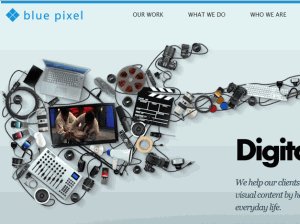
But the technique of using gradients is still visible in today’s web designs, just slightly updated. The current style now seems to favor a much more subtle and complex gradient, involving more than two colors blended together, or such a slight change from one color to another that it’s merely a 3-D look rather than an official “gradient.” Some examples, below:


PlayInTraffik

Features:

  • More than two colors blended together (orange, gold, red, gray)
  • Not just a one-directional gradient–it’s an overall effect
  • Gradient includes soft shapes in the background
  • Gradient effect extends onto logo of site (top left)

Features:

  • Very, very soft and subtle gradient–hardly there at all
  • Acts as background shading for the content, rather than a huge, obvious color shift
  • Works with shades of the same color rather than two different colors

BluePixel

Newism

Features:

  • Not just a plain, smooth gradient–has streaks in it
  • More than two shades of color (range of purples)
  • Background streaks mirror logo’s angles
  • Radial gradient (bottom center) as well as linear (top left to bottom right)

Making Gradients New Again

Though the days of making simple and smooth gradients may be behind us, you can still use them for newer effects. Here are some tips for modernizing your own gradient look:

Use more than two colors, or strange two-color combinations. You might find a surprisingly lovely emerald-green shade hidden between a deep gold and muted teal shade, like this example at left.
Try subtle background patterns along with a soft gradient to give even the background of your page a little more visual interest, like this miniature sample at right.
Mess with the texture of your gradient; don’t be afraid to have sharper transitions of color, like the modern “streaked” design example at left.

What’s Your Angle on Gradients?

What do you think of using gradients in webdesign? Is it a past fad, a graphic design necessity, or a design style that hasn’t been thoroughly explored yet? Let me know in the comments!

Old Favorite Toy: Like a Wayback Machine for Your Mind

Isn’t it awesome how playing with a found favorite toy can put you right back into the mindset you had when you last played with it? It’s like a cheap time machine, a warp back to a simpler time–something like the Wayback Machine does for the Internet.

In some cases, however, reminiscing over old favorite toys can bring you back into contact with other forgotten pastimes, too…like I found out a couple of weeks ago.

Found: One Jacob’s Ladder Toy

Recently, the cleaning bug struck me while I was wading through the junk piles in my room, and in a fit of productivity, I actually managed to get some things sorted and put away (gasp!!). But, in the process of this archaelogical-scale “dig” in my room, I discovered a few pieces of my childhood, buried in the rubble.

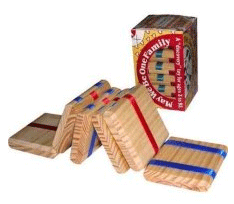
Mostly they were errant Legos and Barbie clothes, the detritus of a little girl’s life. But there was, I discovered, an old Jacob’s Ladder toy, which is simply slabs of wood connected by ribbons in a cunning way so that it can be configured into lots of cool shapes and do neat effects. It looks like this:


Image from Google Shopping

In the middle of my cleaning spree, I sat down and started to play with it again, idly, almost like seeing if I remembered how to ride a bicycle after many years of not riding. My hands moved the toy through its various forms; even though I didn’t have the instruction manual anymore, I still remembered, because I had played with the toy so often. All over again, though, I was rediscovering how to work the simple toy, remembering along the way how long I had toyed with it as a child.

Also Found: Spark of Creativity

Playing with this old favorite toy reminded me of childhood, but it also reminded me of a lot of favorite things I no longer had time for; after all, this toy had been buried in my room for God knows how long. What other stuff had been buried in the mess of my adult life? Fun video games, TV shows, things I haven’t allowed myself to indulge in because I’m so “busy” all the time.

Though it was a moment of idleness, a moment, perhaps, of returning too keenly to childhood, it provided a shock of realization: I used to play the piano a lot more than I do now, too. The piano was an old favorite toy much like the Jacob’s Ladder toy, and in the business of adult life, I had laid both aside.

Suddenly, I had a brain spark: didn’t I have a piece of music I had been trying to write for some time? Didn’t I have some free time–well, as soon as I finished cleaning–to go downstairs and use the digital keyboard?

Out of my reminiscences came a sudden, urgent drive to go and play the piano like I used to, treat it like an old favorite toy. So I did…and in so doing, I formed up the basis of a new piece, right on the spot. It’s not finished, it might not go anywhere, but at least I touched those musical keys for the first time in months! And I believe that what helped me to do so was allowing myself to remember how much fun I had playing the piano, allowing myself to fall back into that older mindset…and becoming freshly motivated to try it again.

Finding Your Own “Forgotten Favorite Toy”

If you’re currently in a creativity rut right now, you might want to try this. You might not have a physical favorite toy right where you can lay a hand on it, but think about playing with it. Or, think about a favorite childhood pastime or group of people who positively influenced you. Anything that conjures up a positive memory and puts you in an earlier mindset will work.

Now, think: what is so compelling about that memory? What makes it so happy? If it’s something you did back then that you could easily do now, why don’t you try it, just for a few minutes, and see what starts coming to mind. Who knows, you could end up like I did, one minute cleaning and the next writing a new piano solo!

Good and Bad Procrastination, Unexplainable Photos, Writing Things Out, and MyFridgeFood

Procrastination: The Good and the Bad
Wait, there’s good and bad procrastination? HMMM! (unfortunately, I do the bad kind more than the good kind. LOL)

50 Unexplainable Black & White Photos
No, I don’t think I want to know how this mattress got stained with what I can only hope is dark gray paint, or why these family members look so proud of it.

When Pen Beats Phone: A Case for Writing Things Out
VERY interesting article…maybe we shouldn’t go all digital just yet!

MyFridgeFood.com
Hungry and don’t want to leave the house? Shop your fridge! Never say “There’s nothing to eat in my house” again!

Proposing a Perfect New Clix Power Color: Pink!

HeroClix has introduced a couple of new colors to characters’ dials over the years. Time was, the Light Green power color didn’t exist; Earthbound, Quake, Combat Reflexes, and Exploit Weakness simply weren’t printed abilities. Even the Silver and Brown/Gold powers didn’t exist all the time either, and who could imagine a HeroClix game without Hypersonic Speed, Impervious, Leadership, or Telekinesis?

But despite the range of power colors in Clix, there’s one color they don’t have yet, and that’s Pink.

Are You Kidding Me? PINK in Clix?

I fully admit, as a concept, this is hard to take seriously. HeroClix, almost completely male-dominated by definition, having a PINK power color? Ridiculous!

…And yet, it could flesh out some abilities that as yet are only handled by special powers and traits. It could end up simplifying a good bit of rulings, too–the addition of a new color leads to better shorthand references for such abilities. Should we care that pink has such a feminine association, if it will end up being an asset to the metagame?

Personally, I think adding a new color, whatever it ends up being, could help shore up some missing strategies in Clix, and potentially breathe new life into the sets. After all, there are some very funny (but very effective) strategies that pink could represent.

Potential Pink Powers

For each power slot, I’ve come up with two possibilities for what pink could represent on the dial. (Also, forgive the low-quality illustrations–I had to make up a blank Clix dial myself in Paint, and I am certainly no technical artist… xD)

Pink on Movement

  • Sashay: (for grounded characters only) This character may move by opposing characters without stopping. Any opposing characters who come into adjacency in this way cannot attack this character next turn.

    Why: Walking in high heels is only done for the effect on other people, not comfort. xD

  • Perfume Cloud: (for flying characters only) Wherever this character moves on the board, leave up to four “perfume” tokens in their exact path, which fade at the beginning of the controller’s next turn. Friendly characters who are in or enter these marked squares receive a +1 to attack; opposing characters who are in or enter these squares receive a -1 to attack. This is not treated as Hindering Terrain.

    Why: Because reactions to perfume are either “Ooh, girl, I like that perfume!” or “Ugh, what are you wearing?!”

Pink on Attack

  • Distraction: If this character makes a successful attack roll on an opposing character, no damage is dealt. Instead, the attacked opposing character is not allowed to attack this character next turn. (Successful attacks do not have to be able to deal damage in order for Distraction to go off, such as in the case of hitting an Invulnerability character with a 2-damage character.)

    Why: Low-cut shirt. That’s all I’m saying. LOL

  • Super Slap: If the first attack by this character is successful, reduce the target’s defense by -1 and make a second attack immediately afterward. The target’s defense goes back to normal after this action resolves.

    Why: Because no girl slaps another girl just once. There’s always a backhand-slap after the first one. πŸ˜›

Pink on Defense

  • Presentation: Place an action token on this character to modify defense by +2.

    Why: ‘Cause makeup, hairstyles, and nice clothes really do make a difference, and they boost your (social) defense, at least. And it does require action on one’s part to affect this transformation. πŸ™‚

  • Rebuff: When an attack made on this character is unsuccessful, modify the attacking character’s stats by -1 until the end of your next turn.

    Why: When a girl gets hit on and tells the guy “no,” it usually leaves him feeling pretty low.

Pink on Damage

  • Rumor: When this character makes a successful attack against an opposing character, after damage is resolved deal 1 unavoidable damage to another opposing character with at least one shared keyword. The character given the unavoidable damage does not need to be within line of sight or line of fire.

    Why: Rumors fly faster than Hypersonic Speed and always damage the target, no matter how tough the person is.

  • Pep Talk: Place an action token on this character to modify 1 adjacent friendly character’s stats (values of movement, attack, defense, damage, and range) by +1 for this turn. This effect fades at the beginning of your next turn.

    Why: Boosting another person’s confidence is key to keeping friendships!

Thoughts on the Pink Power?

Despite the slightly tongue-in-cheek nature of this post, What do you think about these abilities? Do you think HeroClix is ready for pink on its stats? Could these abilities really work in-game? Tell me in the comments! πŸ™‚

God Sees Our Suffering and Avenges It

Jeremiah 51:60-62
60 Jeremiah had written on a scroll about all the disasters that would come upon Babylon–all that had been recorded concerning Babylon. 61 He said to Seraiah, β€œWhen you get to Babylon, see that you read all these words aloud. 62 Then say, β€˜LORD, you have said you will destroy this place, so that neither people nor animals will live in it; it will be desolate forever.’

Dire words, for a dire prophecy; in Jeremiah 50:2-51:58, Jeremiah had foretold all the terrible things that would happen to Babylon because of its treachery towards and conquest of Israel, and here, he has that all written on a scroll, to read to the people of Babylon. According to Jeremiah’s writings, God would avenge His people’s suffering and strike down the nation that had dared to think so highly of its own powers. Even the land itself would be uninhabitable, according to this short passage quoted here.

God seems wrathful, even fearsome in the referenced passage, but it is a protective wrath; even as human parents defend their children, so God defends His children, the children of Israel. It is not an out-of-control rage that God is in; He knows precisely what must be done to right the balance of power and pull all the people back into line. He is just, righteous, and yes, a little frightening in that righteousness, but this is a punishment for Babylon that is fitting (and has been a long time coming). Babylon had worshipped other gods, had attacked and enslaved Israel, and generally lived in all sorts of sin; God would make an example of the city and its people.

What we forget, these days, is that God’s still in the business of making miracles and righting wrongs, even if it seems to take so long and so much suffering happens in the meantime. God sees our suffering, whatever form it takes, and if we are faithful to Him, we will see that suffering avenged with the same kind of just and fitting punishment. It may not always happen on the grand, epic scale of Babylon falling, but it will happen. (And if we’re personally involved in the business of attacking and hurting others, and thinking too highly of ourselves, this passage and the referenced prophecy should make us worried!)

“Derp:” It’s Not Just a Facial Expression Anymore!

You might have seen this strange word on the Internet, perhaps not known what it was…yet it always occurs in the funniest or strangest circumstances. What is a “derp?”

“Official” Internet Definitions

According to UrbanDictionary.com, a derp can be many things, such as a silly facial expression, incomprehensible speech, or an idiotic moment. I, however, find definitions #3 and #5 to be most applicable to my experience of “derp”:

  • #3: A literary or spoken phrase that combines elements of “WTF” and “cool story bro”. Laced with condescension “derp” is a common form of web-based libel that is almost didactic; however not quite as it is generally a sardonic gesticulation rather than moralistic chastisement. The spoken sense of the world itself conveys an intrinsic feeling of disappointment with a subtle hint of disgust and an overtone of rebuke.
  • #5: A word uttered when one screws up. origin: Matt Stone and Trey Parker in BASEketball. Used as an interjection.

Additionally, according to KnowYourMeme, derps arose from pure stupidity and remains that way today (see the exhibit of “derp” faces, with eyes pointed in different directions and a strange smile). KnowYourMeme also gives important background information as to the origins of the “derp.” Many more of these stupidity examples and distorted speech/facial expressions can be found on Derp.com.

However, I have come up with my own definition of the derp, from my own life:

DERP: n. a silly, almost instinctive mistake; a brain fart; a moment of abject ignorance.

DERP: v. making a silly, almost instinctive mistake; having a brain fart; acting ignorant.

Derivatives: derpy, derping

Pictorial Examples of This Definition

All images from Derp.com

I am quite capable of acting like this–saying stuff that doesn’t make sense, making crazy facial expressions, etc.–and have proven that wondrous ability on several occasions (much to my dismay). Sometimes, I have no idea why I derp, and that is one of the inherent qualities of the derp: it happens, and it happens to everyone at random times!

Derps I Have Done and Seen

  • Self-Derp: I carefully saved 10 picture sources (web addresses) for a future blog post. Later that night, I apparently went on a file-deleting spree and got rid of the entire file.
  • Self-Derp: I knew that I needed to stop for gas, but I drove 2 miles past the gas station I meant to go to anyway.
  • Self-Derp: Upon stepping up to the pulpit microphone to introduce another person at church, I stumbled over pronouncing their name, the title of the song they were doing, and the word “the”, all in one sentence.
  • Driver-Derp: In an unfamiliar city, I got into a traffic lane that I thought would continue on, only to look ahead and see that it ended in 500 feet. Fastest lane-change-back I’ve ever done!
  • Driver-Derp: A person I was driving behind in Charlotte traffic switched lanes precisely four times, from far left to middle left, from middle left to far left, from far left to far right (not kidding), and then back to middle right. Not sure what that was about, as there were no other cars to pass on the road.
  • Pet-Derp: Maggie, my boyfriend’s family cat, ran into the kitchen, started doing a big back stretch, then abruptly faceplanted and skittered a couple of feet like she was after a bug or mouse. Afterwards, she did an “I completely meant to do that” paw-washing.
  • Pet-Derp: Reesie, my boyfriend’s family dachshund, tried at least 50 times to get up on the armchair, jumping and jumping. When she finally succeeded, her first action was to slide back off, then try to jump back on again, for no apparent reason.

Derps in Entertainment: Why Are They So Funny?

From misspoken words to wardrobe malfunctions and other bloopers, derps appear on TV funny reels more often than anywhere else. Heck, there are even whole shows dedicated to the derp (America’s Funniest Home Videos, anyone?).

And, as I’ve referred to before, nowadays there are zillions of websites about derpy moments, either photographed or retold in words. Submitters to The Cheezburger Network and Spartz make tons of contributions to the derp culture every day, from funny cat captions to iPhone autocorrects and everything in between. And we eat it up, because it reflects our lives and our own derpiness. (If that isn’t a word, I’m making it one now–that’s not a derp in itself. LOL)

Derps are funny, random moments in life that are occasionally captured in a picture or memorialized in a video (and usually hastily put up on the Internet, LOL). They are reminders that we’re human and we make randomly funny/strange mistakes. They are also reminders that none of us is safe from derping; in fact, the most enjoyment comes from seeing that the richest, kindest, most put-together or most famous among us can still derp, too!

Have a Funny Derp?

Have a derp story to match the ones I’ve already told in this article? Got a funny derp picture to share? Tell me in the comments!