All posts by Robin

I'm a woman in my early thirties living in North Carolina, USA, and I have a lot of varied interests; I love creative writing, music composition, web design, surfing the Internet, thinking out loud, and gaming. And yes, my glasses are crooked. :)

Destressing, Pattern Maker, Dinosaur Theory, and I Can’t Find My Phone

destressing

Thought-Provoking: There comes a time in our lives when…
I needed this reminder to let go of my unnecessary worries.

Pattern Maker
Yeah, it’s a kids’ game, but you’d be surprised at the club jams you can come up with on this pattern player. Think of it as a free beat maker!

How Did The Dinosaurs Die?
A cartoon theory of why the dinosaurs died. Poor things…

I Can’t Find My Phone
Can’t find your phone? Don’t have anyone nearby to call it for you? Input your phone number into this online tool to have it give your phone a call!

Stress Test: Being the Healer

stresstestbeingthehealer
Players of MMOs, like World of Warcraft and City of Heroes, know the value of a “healer”–the character who heals damage in a team, so that the team’s big bruisers and snipers stay alive long enough to do their job. Healers are always in demand, whether a group is advertising for a priest or for an Empath; they know they will need someone backing them up with supportive, team-oriented powers.

But not everyone is cut out to play a Healer. If you like to deal lots of damage and kick a bunch of butt, the Healer class is not for you. If you don’t like playing with other people, and prefer to go your own way, the Healer class is also not for you. Creating and playing a Healer is about being defensive and supportive, being team-oriented, and most of all, maintaining that team as long as you can. It can be a lot of hard work, but I like to think of it as a “stress test.” If you can handle being a Healer, you can handle just about anything the game throws at you.

Throughout this article, I’ve used actual screenshots from a session of playing Lyssadia, my Empathy/Energy Blast Defender. Empath Defenders are one of the most common builds for Healers in City of Heroes, and Energy Blast typically knocks enemies back so that they are stunned for a few seconds, so her attacks still work to support the team.

Healers have to care. A LOT.

No longer can you just run ahead of your team, heedless of everything the other players are doing, and shoot or slash the living daylights out of everything. If you’re a healer, you need to care about what your team is doing, because without you to back them up, they can easily get wiped out in the middle of a big enemy spawn.

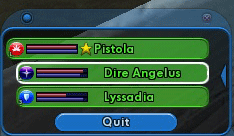
You also need to care about the welfare of each of your teammates mid-battle. Your particular MMORPG, like City of Heroes, may allow you to have a sort of “Team Window” where you can monitor each member’s health and other vital stats.


This little window is a godsend for healers. Out to the side, you can see all the little icons representing many of the buffs each character has on them–this helps me figure out who needs which buff, who needs healing, etc. I just look for the bright green icons to know whether I’ve buffed somebody recently, and I can easily watch their red Health and blue Endurance bars, too.

Believe me, as a person who’s played just about every Archetype available in City of Heroes/Villains, damage-dealing characters do depend on their healer teammates to be the “net,” to catch them if they fall! Caring healer players can literally be the saviors of their teams during huge battles.

Healers have to be responsible.

Caring also entails responsibility. You have to be paying attention to where the team is going, not wandering off randomly by yourself because you accidentally closed your Map (*raises hand* Guilty). You also need to scan the battlefield at all times, not just focus on the particular enemy or ally in front of you. This helps you stay alert to rapidly-changing battle events.

For example, here’s what happens when you focus too long on one particular thing as a Healer:

I’ve selected one of my teammates’ names in the Team Window at left, denoted by the white box around the name, and have just healed him close to full health. My own health bar isn’t looking so great, though, because in healing my teammate, I’ve come a little too close to the battle front.
See all those red numbers above Lyssadia’s golden halo? That means somebody’s damaging her. The red and blue bars just above the halo show her health and endurance–her blue endurance bar is nearly full, but her red health bar is almost half gone. I have to get her out of the line of fire fast!

Healers have to be careful not to make themselves targets; that’s one reason I say to keep moving and keep watching your screen. Otherwise, you can end up with one very dead Healer…


(This is what happens when I’ve gotten a little overzealous shooting stuff and forgotten to heal myself. Poor Lyssadia. Learn from my fail.)

Healers have to FOLLOW the team, not lead.

Healers actually work best at bringing up the rear–many healers have secondary attacks that they can fire off to prevent a few straggling baddies from stabbing the group in the back, and you can also monitor your teammates more carefully if you are behind them rather than in front of them. As the healer, don’t be the first to fling an attack or explore ahead of your group, because this is a good way to get your Empath character killed.


(Through the confusion of colors, you can see the two names in green in this screenshot–those are my two teammates up ahead of me. Since I’m behind them, I can visually monitor what is going on, and I can click-and-heal them if I need to.)

Several of my healers can fly, so usually I will hover above the fracas, healing, buffing, and offering a bit of cover fire when needed. This elevated position helps a Healer see more of the battlefield, and it can keep you in range of allies who would otherwise be out of range of targeted heals and buffs. Whether you choose to fight from the air or ground, however, it’s important to stay in a central position in the team–if you’re too far forward or too far back, you might not be close enough to a teammate to help them.

Here’s Lyssadia in flight, going “pewpewpew” at the Auto Turret in her sights. My teammates were still in sight in the larger version of this screenshot, so I could take a few shots, then heal or buff if necessary.

Healers have to heal/buff first and fight second.

Even though most healers on City of Heroes are ranged attackers as well, they really work best if you focus on buffing everyone and healing everyone first, and only attacking if absolutely necessary. It can be very tempting to start fighting along with your teammates if you start taking damage yourself, but stay the course–if you can keep your teammates alive by a few well-timed heals and buffs thrown their way, then you won’t have to worry very much about taking damage!


(In this shot, I’ve targeted onto one of my teammates, marked by the green box around his character, and am sending an application of Fortitude his way, which will increase his Damage Resistance to just about every type of damage for 1 minute.)

Healers have to focus.

Eating, watching TV, or doing anything else while trying to play a healer will not work. Even if you can type quickly, sometimes even chatting with your teammates takes too much attention away from the job at hand. Since much of the team depends on you to keep them in fighting shape, you have to maintain a focus that you don’t necessarily have to have when you’re playing a damage-dealing character.

It can be a bit stressful, especially if you’re trying to keep up with a team whose members don’t talk about what they’re going to do before they do it. But if you’ve got a good team going, with lots of communication, it’s relatively easy to stay focused.


(I’m staying a bit further back from the fray in this shot, because there are still several high-level enemies alive, but my teammates are generally mopping ’em up okay. I just need to be alert in case a teammate gets caught unawares by an enemy shot. This time, I’m not making Lyssadia fly into the fight just to get shot!)

Summary

Playing a healer does require a bit more work, but it is a very rewarding type of character to play if you enjoy being needed. It’s a team-oriented mindset that can make battle less boring and more involved…for certain, it is a VERY different kind of challenge. If you’ve never played a Healer before, give it a shot!

The Law Hasn’t Changed–It Has Been Fulfilled

thelawhasntchanged
Matthew 5:17-18
17 Do not think that I came to destroy the Law or the Prophets; I did not come to destroy but to fulfill; 18 For assuredly, I say to you, till heaven and earth pass away, one jot or one tittle will by no means pass from the law till all is fulfilled.

In these two verses, Jesus reminds his disciples and the crowds gathered around that He is not preaching against the Old Testament (the first five books–“The Law”–and all the prophets’ books). Rather, He is showing them what the Old Testament foretold, and illustrating exactly how to live it. He is the fulfillment of the prophecies about the Messiah, and He is also a great teacher and leader; He is helping His disciples and listeners to better apply the Law to their lives rather than just mouth the words and keep breaking the Commandments.

Verse 18 assures us that until the end of times, nothing in the Law will be changed; God’s Law is what it has been and will be what it is. We need not even embellish the Law with a “jot” or a “tittle,” because God has it all covered. If we try to twist God’s words with some clever interpretations, we will only deceive ourselves. Jesus does not represent a shift away from the Law, but the final installment. He shows us that we cannot save ourselves with righteousness gained from the Law, but the Law is still God’s guideline for living a holy life.

(A side note: Much of Matthew 5 concerns the Pharisees and their rigid adherence to the Law, which actually didn’t respect the spirit in which the Law was written. Jesus takes issue with that. In the selected verses, He emphasizes that He isn’t trying to change the Law, but to uphold its spirit–which showed God’s caring for His people’s safety.)

Love Transforms Us

lovetransformsus
The “love” of which I speak in this article can be romantic love, the love of friendship, or the love of God, but its power does not get diluted in the slightest by its different denominations. Love is a powerful force is in our lives, and I have personally witnessed and experienced what a profound effect it can have on us–I believe love can change us when everyone and everything else cannot.

(This post, admittedly, is my attempt to speak of what I don’t quite grasp yet, so it might be a little out there. But it’s been a rare uplifting topic on my mind for a few weeks, so I decided to write about it.)

Romantic Love: A Motivator for Personal Change

For years, I hated myself. Absolutely, definitively, hated myself. Imperfection was the big concern for me–I wasn’t mistake-free, of course, and I got picked on in school for every mistake I made, mostly because I made such a big deal about it. I even began to self-mutilate because of my perfectionism, ranging from beating my own head with my fist to biting the first phalange of my right index finger. I wanted to be perfect, and when I couldn’t be, I had to punish myself. Disturbed logic as it was, it made sense to me in the moment. I didn’t consider myself worthy of love because of my imperfection.

Though I am not completely free of self-mutilation today, I do it a lot less frequently (and with less vigor) than I used to. That, I can credit almost completely to the supportive, healing love my longtime boyfriend has offered me. He doesn’t yell at me or deride me when I begin to bite my finger (as is my wont when life is generally not going my way). He instead sits with me and talks to me, literally “talking me down” from hurting myself any worse. He’s told me several times that seeing me hurt myself frightens him and makes him sad, and that he would rather that I hurt him than hurt myself. (Of course, I would never hurt anybody else–that’s one reason I turn my anger on myself rather than hit somebody who might deserve a good punch in the face. XD)

Over the years we have been together, I have watched my need to self-mutilate shrink to an occasional thing rather than an everyday thing, and I find myself sharing my little successes with him, telling him that it’s been four days since I last bit, or maybe even a week and a half since I last bit. One day at a time? Indeed. It is a daily process, but his support and his love make it possible for me to let the dark crescents of bite marks on my fingers heal, and for me to stop needing to inflict more. This healing relationship has helped me to transform, in a way I never imagined I could be any different.

The Love of God: An Amazing Changing Force

In the mid-2000s, I knew a lady in her early thirties who was a friend of a friend’s family. She stayed with them a few weeks at a time, when she was between houses and between jobs; I soon grew to understand why she was often between houses and between jobs, since her drug use and drinking were a major part of her life, as well as abusive men who stole from her and tried to control her. She spoke often of being so strung out she didn’t know where she was, and on late nights my friend and I would hear her begin to cry, only to fall asleep in the middle of her tears. I didn’t really know what to say to her, how to talk to her so that maybe I could help her–it seemed like she was already an old woman in a young woman’s body, with medical problems and addictions that thinned her brown hair and shrunk her face so much that she looked like a faded portrait of herself.

She moved out of my friend’s house for the last time in 2007, and we lost contact with her afterwards. I worried that she was in prison or in a homeless shelter somewhere; I hoped maybe she had found a place to live somewhere else, away from all the bad memories. The last place I expected to see her again was my church in March of 2011, coming down the aisle to talk to the preacher about moving her membership there.

As I stood in the choir loft that morning, singing the verses of the invitation hymn that called anyone who wanted a few moments to pray at the altar to come down, I saw a trim but healthy-looking woman stand up from one of the back pews and walk down the center aisle toward the front of the church. Her hair, wavy and thick, was highlighted, warm blonde atop light brown, and she wore a smile and a glow that spoke of being whole at long last; she wore a simple blouse and skirt, looking put-together and professional. I did not know her, I was sure–and yet, as she clasped hands with the minister and began to speak to him quietly, I felt that somehow, I did know her. It was not until she turned and glanced at me, and her eyes brightened with recognition, that it finally clicked; she was the friend of a friend’s family from so long ago. She was so utterly changed, inside and out, that the memory I had of her didn’t match at all.

After church services were over, I came down from the choir loft and went to speak to her. There was a radiance about her that almost made me disbelieve she was the same woman I had known before–gone was the frail old-young woman who was sometimes too strung out to answer the door, and in her place was a woman with a new grace and stability. I didn’t get to speak to her long, but I walked away knowing that the love of God had transformed yet another soul, one I never would have guessed could have been reached. The completeness I sensed was so touching and poignant that I found myself weeping. Just as God had transformed my life through the love of a good man, so had He done hers through time and spiritual rediscovery.

I Don’t Know How It Works, But I’m Glad It Does!

I don’t know exactly how these transformations take place. All I know is that it’s hard for me to look back at the way I was before I met my boyfriend and feel the self-hatred thrumming through my memories, because I am quite different now. Yes, the hate does come back on occasion, when I’ve missed a turn on the road for the fifth time, or when I just can’t solve that last puzzle that will make a website work. But it’s a lot less often now. The love God brought into my life changed that for me, just as He changed the woman I once knew from helpless and broken to complete and joyful. Love, in all its forms, can indeed transform us as no other force can on earth.

The Difficulty of Pricing Design Services

pricingdesignservices
Doing web design as a career and not just as an (expensive) hobby is something I’ve been tumbling about in my mind for quite some time now. Instead of watching money go down the drain every month for hosting, and every year for my domain name, why can’t I use my skills to monetize my sites?

But it’s a harder decision than that. There are, as I’ve unfortunately found out, many roadblocks to making a success of yourself in web design, not the least of which is the knowledge required to do it. But for those who wish to pursue it as a career, there’s one final hurdle to jump: how to price your design/development services?

Today’s article focuses on the 4 most important concerns any would-be designer/developer needs to figure out before jumping into a career:

#1: People need economical services, not exorbitant prices.

As much as you might think you’ve trimmed costs, somebody will always want the price lower. These days, most people can’t afford to pay a web designer/developer much money unless they are part of a corporation. You have to find the balance in pricing between “selling yourself too short” and “never getting any clients.”

I found this very difficult when I was trying to price my designing abilities. I generally overshot what most people wanted to pay for maintenance services, and undershot the original layout and development price. Finally, I took to writing it all out: what I valued my coding skills at, what I valued my graphic design work at, etc. I came up with a list of prices I could live with:

HTML/PHP Coding (Page Coding Structure)

  • Each Page of Content: $10.00
  • Main Page Layout Coding: $12.00

Graphic Design of Page (Visual Layout)

  • Each large image (layout pieces): $20.00
  • Each small image (icons, buttons): $10.00
  • Full layout (1 page, with images and appropriate coding): $35.00

Layout Mockups

  • Each mockup beyond the first: $7.00

Are these prices exorbitant or economical? To be honest, I’m not sure. But I have strong reasoning behind each of my prices. Given that it takes me about 30-45 minutes to put together a fully-debugged page of anything, and 45 minutes to an hour to make small images of any good quality, I reasoned that 10 bucks covered that time investment that I put into creating a quality product. I then scaled up the prices on large images, full layouts, etc., using these price baselines.

You’ll need to determine what your own prices will be for yourself, taking into account how much money you need to make and how low on prices you’re willing to go. Since I want to help individuals and maybe a few small start-up businesses, I wanted to make sure my prices would be accessible; your price reasoning and money goals may be different.

2. How much work do you want to put in?

When people say “I need a web designer,” they sometimes mean that they need a little HTML-driven personal site, and sometimes they mean that they need a huge database-driven multi-user site. You have to determine for yourself what kind of work you want to put in. If working for the “big guys” fires your engines, then by all means go for it! Just remember that it will be a LOT more work than likely any of your personal web design projects have been.

You also have to take your lifestyle and current available time into consideration. If you want big-money projects, but web design is only a side business for you, you will likely run into trouble trying to keep up your time commitments. Web design is one of those things that you can dip your toe into or dive in completely and still be okay; however, you have to take on the jobs that are sized for your time allotment.

For me, personally, I am not experienced enough yet in design to where I’m comfortable pitching my skills to corporations and the like; likely, they would not even look twice at somebody like me who’s completely self-taught in this field. I’m more comfortable working with individuals who need personal sites and perhaps small business sites because I simply don’t have the knowledge yet to do large-scale sites. Neither do I have the time allotment in my schedule as of yet to completely devote myself to a web design career–I have many different interests and am enjoying pursuing them all. Thus, smaller projects work better for me overall.

3. Do you do design, development, or both?

This is one of the huge stumbling blocks I found when first trying to decide on pricing my designs. Did I want to do just layouts, icons, and buttons, or did I want to do just HTML and PHP coding? Or, instead, did I want to offer both types of design services?

For people who do one or the other very well, you may be better off to go ahead and specialize in either the graphic design side or the coding side of web design/development. If you have wonderful visual design skills, then you might have a great career in web graphic design awaiting you. Conversely, if you’re a “code ninja” and can make sites that function beautifully with scripts and databases, you can easily specialize in web development with no problem.

Now, if you’re a designer like me with some skills in both web design and development, you’ll likely want to offer both design and development services, so as not to shut out clients. I don’t do awesome digital illustration, nor do I write my own super-sleek web applications, but I can write HTML/CSS and design a page. These skills are still marketable, regardless of the methods.

4. Don’t sell yourself short—make a contract!

When trying to figure out how to price design services, don’t let anything slide by for free. Some unscrupulous customers may want you to do more than you first bargained for, such as saying “Well, I thought icons and buttons would just come with the layout design–can you go ahead and make me some?”, or “Hey, can you add about 5 more pages? I just realized I need more pages about these other topics.”

That’s why I suggest making a contract beforehand, so that both you and the client know exactly what needs to be done and how much money it will cost. Getting the contract in unalterable writing, either on paper or in a PDF file, keeps anyone from falsifying the contract terms later. That way, if the client wants you to do something extra that’s not on the contract, you can simply refer to the document and say, “I’ll be glad to do this for you, but we’ll need to add this to the contract and re-total up the price.” Clients changing what they want done is okay–it’s just that you need to be compensated for extra time and effort investment.

5. Paid by the hour or by the project? I think it depends on the situation.

There’s a big debate in the web design world about whether you should be paid according to the number of hours you’ve worked on a project, or whether you should be paid according to the size of the project you did. I thought that I was solidly on the side of “by the project,” until I started trying to price services myself. Now, I think it depends on the type of work you’re doing.

For One-Time-Only Projects, Get Paid by the Project

If you’re doing a one-time-only design/development project–say, if a client wants a layout and coding to go with it–then I’d likely choose to get paid by the project. Since you’re not going to be doing ongoing maintenance, and assuming you’re going to complete the work in as quick a time as possible, asking for payment based on the number of images you made and the pages of code you created seems to be a better fit than asking to be paid based on hours you worked.

For Ongoing Projects, Get Paid by the Hour

However, for continuous maintenance job on a website, I’d personally get paid by the hour. Since you’re likely doing daily to weekly maintenance, you need to be compensated for that time you spend each day or each week. It’s not really a “project” in and of itself–it’s keeping up the quality of the project by checking in on it and making sure things are still current.

This is, however, a personal decision that each web designer has to make for himself or herself. These are simply my reasons for choosing which type of payment style works best for me.

Summary

If you want to do web design/development as a career, you need to consider methods of payment, client relations, type of work done, and contracts. This all goes into how you want to price your design services. I hope this article has helped jump-start your own thinking, and given you some food for thought!

Awake in the Middle of the Night? Write!

awakeinthemiddle
Insomnia. It’s a frustrating feeling to be so tired and not be able to sleep–or to be so bored that you can’t even bear trying to close your eyes. Couple that with the feeling that you’re the only person awake or alive in the whole world, and insomnia can be very lonely, too, even with the electronic companions of computer and TV.

Generally, we’re usually awake in the middle of the night because of worries or something weighing heavily on our minds, unless it’s a physical symptom of an underlying condition. For me, my mind tends to start whirling as soon as I try to find a comfortable position on the bed–I suddenly recall all the minutiae of my day, at a breakneck pace. Very, very aggravating.

A New Approach: Using Insomniac Time as Writing Time

Instead of taking a pill or just tossing and turning for several hours, I’ve taken to writing during sleepless nights. Sometimes the coolest and most beautiful stuff comes out of my brain when I’m absolutely worn out from the day. Maybe it’s just because I’m too tired to self-censor anymore, but I write more freely and creatively, somehow. I also seem to be able to express more emotion and capture scenes better.

How can you harness this same wakeful time to get down some of your best ideas (or most random thoughts)? Try these tips that have helped me:

Use whatever medium you like to write out your thoughts.

I prefer to type because I type so much faster than handwriting, and my brain is usually going a zillion miles an hour. (Handwriting infuriates me now because it’s SO SLOW!) Some people, however, enjoy the sense of pen on paper–it slows their thoughts down enough so that they can capture what they’re really worried about or really thinking about. You may even want to arrange words graphically, like a collage (either digitally or actually writing out the words in artistic form on paper). Choose whatever method is most comfortable for you.

Start out writing formlessly.

You don’t have to write perfectly. Just write your thoughts without worries about punctuation, idea continuity, or grammatical sense. Some people have suggested that when you find yourself stuck, you should write a nonsense word over and over (like “potatobug”), just to keep yourself writing. I, however, don’t subscribe to the idea that you have to keep writing the whole time, writing nonsense words if you can’t think of anything else. (I produce enough nonsense that I don’t need ready-made nonsense to write down. LOL)

If writing nonsense words similarly annoys you, try focusing your writing on a particular topic, like why you’re mad about that guy cutting you off in traffic today (and why you’re still thinking about it in the middle of the night, etc.).

When you’ve run out of things to say about one topic, switch to something else.

This is not only a way to keep writing, but a great way to get at issues that are bugging you or that you’ve had on your mind for a while. One night, while doing this writing activity, I randomly discovered that I was still upset about what a friend had written on my Facebook wall months before. She had said something pretty innocuous, but I took it the wrong way and stewed about it long after I should have given it up. I set about resolving it the next day, and it was all good in the end. If I hadn’t written about it, who knows how long I would have hidden that grudge from myself?

Keep writing till you’re too tired or don’t have anything left to say.

Whichever of these comes first, follow the impulse and put aside computer or pen for the night. I usually get tired before I’m done writing, but some nights I get on such a roll I can’t stop! Those nights, I finish up my idea and collapse into bed, feeling like I’ve run a mental marathon. 😀

IMPORTANT! Keep That Writing!!

Now, once you finish writing, don’t throw your paper/digital file away–keep it and look at it again in the morning. you might have a winner of an idea hiding in there! (This actually happened to me; I wrote something down, looked at it in the morning, and thought “You know, that’d be a great poem.” Thus, a new poem was born out of utter randomness.)

Summary:

Being awake in the middle of the night doesn’t have to be a lonely, unproductive time. Writing about what you’re feeling, even if you think you’re not a good writer, even if you don’t like to write a lot, can really help you sweep your brain clear of mental clutter so that you can sleep. And who knows, you might find an awesome creative idea along the way. You never know what you’ll find hiding between your synapses!

Kids’ Inventions, Eyeball, How to Write a College Paper, and Birth Year Info

kidsinventions
7 Things You Didn’t Know Were Invented By Kids
If you ever tinkered around making stuff as a kid (and got made fun of for it), take heart–you’re in good company!

Eyeball (game)
Match up angles, find centers of circles, all without aid of anything except your vision. How close can you get to the right answer?

How to write a paper for college/university (funny)
Yep, this was pretty much my process exactly–especially the checking email part! LOL!!

What Happened in My Birth Year?
Find out what happened in your birth year, in a funny Flash animation style!

Competitive Magic is for Plagiarists

competitivemagicplagiarists
I might be kicking a hornet’s nest with this post, but I feel this ought to be said. Competitive Magic: the Gathering, the kind played in tournaments, is usually a bunch of players copying and winning with strategies that someone else thought up, commonly called “netdecking.” When you go to tournaments, you can just about expect to see the same 5 decks over and over again. And it really makes me angry, to be honest.

Netdecking: Plagiarism by Another Name

Considering my background in English literature and composition, the idea of stealing an idea from someone else and claiming personal winnings from it is anathema. Where I come from, that kind of thing gets you kicked out of college, not 1st place in a Magic tournament. Any idiot can steal a term paper off the Internet, or copy from Wikipedia and the like; it doesn’t necessarily mean that they themselves have gotten any wiser from the copying. The same goes for Magic decks–just because you can copy a deck doesn’t mean you’re suddenly a star player.

I view each of my Magic decks as an original work of art. Maybe it’s not an optimized game-winning machine, but I thought of it and it’s mine–it represents my creativity and my thoughts. Running someone else’s deck feels wrong somehow, as if I’m trying to take credit for the work they did in putting the original concept together. I would rather lose with a deck I created than win with something I didn’t have the slightest hand in shaping.

Yet most tournament players these days win with decks they pulled off the internet, just like the player next to them did. Instead of introducing new ideas to the Magic: the Gathering community, they’re content to just take a “deck that wins” and profit from it. How does that express individuality and creativity? How does that prove anybody’s smarts? IT DOESN’T!

This is why I get angry when I’m in a tournament full of nothing but copycat decks. I resent it when my playing skill and deckcrafting ability is judged to be of poorer quality because my lovingly crafted strategy didn’t win against a netdeck. And I hate it when these punks act so smug about winning with their netdecks, as if their win proves they’re somehow “smarter” than I am, when all they did was search Google for a few minutes. I feel like shouting, “Go home and build your own blasted deck instead of copying from everyone else, and then we’ll see who wins!”

Why This HAS TO STOP

I’d like to have fun again in Magic. And right now, the competitive tournament mentality is absolutely WRECKING the Casual Magic scene that I used to enjoy so much. Most people just bring in their netdecks now for CASUAL games, instead of working on deck ideas they actually thought of and want to test out. And you just can’t test a new deck against a netdeck that’s designed to win in 5 turns or less–it’s not even a contest, just a foregone conclusion.

Maybe for everyone else, “fun” equals “beating the crap out of someone’s copied Tier 1 deck with your copied Tier 1 deck,” but it’s not fun for me, and it’s not fun for most of the Casual Magic players I’ve talked to, either. Competitive Magic definitely has its place, but I don’t want it in my living room, and I don’t want it in my casual games. Just for once, can we all just build our OWN strategies and actually have FUN?

Don’t Fear to Talk about God

dontfeartotalk
Romans 1:16
16 I am not ashamed of the gospel, because it is the power of God for the salvation of everyone who believes: first for the Jew, then for the Gentile.

Here we see Paul discussing his approach to the gospel, which he says is “the power of God for the salvation of everyone…for the Jew, then for the Gentile”–meaning people who’ve studied a whole lot about the Law, people who don’t know anything about it, and everyone in between. He boldly proclaims he’s not afraid of talking about the gospel, because he believes it’s important for everyone to hear.

Unfortunately, these days it’s pretty hard to talk about religion/faith in public with this much boldness. Religion, like politics, is a hot-button topic which seems best saved for single-family dinner tables and not public gatherings; no matter what you believe, somebody’s going to get offended by it, it seems.  Everyone gets a little antsy when religious beliefs come up in conversation, especially when there are opposing views present, or if one person starts to accuse another of not believing as strongly as they should.  Disagreements about beliefs can start fights and even break up friendships.

Personally, I often just keep my mouth shut just for safety’s sake when it comes to discussions of faith. It’s not that my faith is weak–I just don’t want to offend anyone, and I don’t want to be lumped in with the belligerent “Bible-thumpers” who never listen to anyone but themselves. Sometimes, I find myself about to share my experience of God with someone, and it sticks to my tongue instead.

But those who don’t know anything about God have got to hear about Him from somebody.  Paul’s words in this verse also remind us that there is a way to share the gospel without being overbearing about it. Simply sharing our own personal experiences with God’s grace and power, and not necessarily preaching about what is “right” and “wrong” in God’s eyes, can be more moving and touching to another person who has never known that peace that passes all understanding. We can best show God’s unconditional love by offering it to others, telling them of His forgiveness and grace, as Paul advises.  If anyone is a mender of broken souls and a healer of spiritual hurts, it is God, and people need to know that. We serve God best when we share from our own hearts, courageously and compassionately.

Depression: Not Dirty Laundry

depressionnotdirtylaundry
Depression isn’t something our society talks about very much. I don’t mean our “global” society–certainly in the celebrity world, we’ve heard quite a bit about depression over the last few decades. But in our individual societies, our towns, cities, apartment buildings, family units, groups of friends, we do not discuss depression very much. When it strikes our friends, or even our own family members, we are often the very last to know that there was even a problem to begin with.

It’s sad that depression just doesn’t get talked about, not even with family. It’s somehow a shameful thing, or something we are “meant” to endure alone, not something to share…somehow, it’s almost too painful and personal to share. On the rare occasions when I have brought up the subject of depression, most people brush it aside–they either don’t want to talk about it (“I don’t like discussing somebody’s emotional dirty laundry”) or they disregard it as a real illness (“Well, if they’d go back to church/get a job/get out of their relationship/get in a relationship, they’d get out of it”).

In this article, I seek to dispel some common misconceptions as well as offer some definitions of what depression does to a person.

Depression is not just being “sad.”

What most non-depression sufferers do not understand is that depression is not just “feeling sad,” but feeling NOTHING, as Allie Brosh of Hyperbole and a Half describes in her two posts on surviving her own depression. Things you used to love, you could care less about now. Life itself seems pointless, and enjoyment seems beyond the scope of your mind.

For instance, when I suffered my last major attack of depression in 2008-2009, I watched as all my creative processes slipped away into the mist–first, my web designing, then my poetry, then my musical composing, and finally my singing. I didn’t just feel sad; I felt as if nothing was enjoyable anymore, and I suddenly had no mental energy left to do anything anymore.

Depression is not mere laziness or “being emo.”

It angers me when somebody implies that depressed people are just “being lazy.” Laziness isn’t even part of it–you WANT to get up, you WANT to do things, but the minute you try to climb out of the bed, the horrible nothingness crushes in on you again, leaving you breathless, absolutely unable to fight the slow encroachment of despair. Suddenly, everything takes so much darn effort; just going to the store and facing the stares of people is unbearable, and just the thought of trying to talk to somebody becomes a terror-inducing idea.

As for being “emo,” the emo and goth cultures simply romanticize depression as sadness, and make a fantasy out of suicide; I dealt with the grisly realities of depression and suicide when I drove down the road every day after teaching and thought about driving straight into a telephone pole, just to end the monotony that my life had become. That wasn’t normal for me–I was nonviolent and shuddered to think about death, and yet I was nearly overcome with the need to escape my life.

Depression eats your identity and your life.

Each time I suffered depression, especially the last time, I felt hollowed out…and yet, to all the rest of my friends and family, I was normal. They could not see what I felt inside, and since I felt unable to talk to anybody about it (including God–it was like I had forgotten how to pray!), I endured most of it alone. Having lost the ability to feel and think as normal, having lost the will to be creative, my inner self seemed like just a shell of my previous personality, and I simply kept up the facade to keep others from asking questions and giving me advice I couldn’t even begin to follow.

My life’s normal rhythms, too, seemed lost in a void. During the last attack of depression, I often came home from student teaching, thunked my books and papers on the desk, stripped off my shoes, and landed in the bed almost fully clothed, to sleep for nearly 6 hours. Then I’d be up in the middle of the night frantically trying to grade papers and crying too much for me to even focus on the task. Again, nobody else saw this; I tried to hide this change in routine even from myself. Depression overrode who I was for those endless months, leaving me with little energy, lots of irritability and impatience, and an overwhelming combination of boredom and sorrow.

Depression manifests in different forms.

My experience of depression is not uncommon, but there can be other symptoms. Other depressed and formerly depressed people reported loss of interest in hygiene, hoarding trash items, not going out in public anymore, and avoiding social contact, as well as trying to self-medicate with drugs and alcohol. Some depressed people don’t think about suicide all the time, but it can happen with any manifestation.

For non-sufferers, realize that this illness changes a person, and the depressed person needs your compassion and understanding. Depression attacks every part of you, body, mind, and soul, but sometimes the attacks are a little more visible than other times. People who seem wonderfully well-adjusted in public may lock themselves away at night and weep about formless problems that make no sense.

Depression can be fixed.

The thing that really helps with depression are good friends and family who keep asking after you, who keep trying to contact you regardless. They can help you remember what’s good about life, as my friends and family did for me.

I was incredibly lucky to not only have a supportive immediate family, but a wonderful boyfriend who stood by me, loving me regardless of the changes in my personality during that time. That, plus a timely divine intervention, saved me. (I literally was sitting on the end of my bed staring at the stacks and stacks of papers I had to grade, the stacks and stacks of assignments I had to complete for my graduate school courses, and I found myself thinking, “I might as well kill myself–I’ll never get them all done.” Then, a little thought I couldn’t identify as mine popped into my head: “Why do you want to kill yourself over pieces of paper?” Up until then, I thought the “still, small voice of God” was just a poetic metaphor. I have since experienced it as a real phenomenon, and it snapped me out of my desperation just enough to begin to heal.)

For other depressed people, antidepressants work wonders and keep them stable long enough for them to recreate a life for themselves. I was desperately trying to avoid having to “take a pill every day for the rest of my life to stay happy,” and for now, I’ve managed it, but that doesn’t mean I won’t need one in the future. Depression can sometimes recur in cycles, but it is manageable if you get help (or have great friends and family who help you get help).

A Few Final Thoughts

One reason I decided to write this post is because I read an eye-opening book called The Noonday Demon, which is all about depression, its effects on people, its history and social knowledge, etc. Reading about others’ experiences with depression has helped me recognize more symptoms within myself and others. Though it’s a jarring, poignant read, I believe this book is very useful in learning how to empathize with depression survivors.

By sharing my personal experiences of depression, I hope I’ve taken away some of the “dirty laundry” characterization of the illness. I was able to climb out of my depression without the use of antidepressants, thankfully, but there are an unfortunate number of people who cannot climb out without them. Depression comes in all shapes and sizes, all severities, and affects anyone. It strikes sometimes out of nowhere. And surviving it does not mean you’re any stronger than someone who is still suffering–it just means you’re lucky.