All posts by Robin

I'm a woman in my early thirties living in North Carolina, USA, and I have a lot of varied interests; I love creative writing, music composition, web design, surfing the Internet, thinking out loud, and gaming. And yes, my glasses are crooked. :)

Religion Vs. True Belief, Beautiful Bedrooms, Why Does Paper Beat Rock?, and Warning Sign Generator

Homosexuality is a Sin…but What About These Other Biblical Rules?
Very thought-provoking and insightful look at the Bible and the fine-line difference between religion and genuine belief. For those who do not believe, it seems an open-and-shut case. For believers, this poses a very serious question about how closely we actually cleave to the Bible in our worship.

Modern Bedroom Ideas (w/ photos)
Modern and interesting bedroom designs. A bed in the middle of a pool room, soft lighting created by strategic placement of wall panels, and other such creativity abounds.

Why Does Paper Beat Rock?
Why Paper’s victory over Rock in “Rock Paper Scissors” doesn’t make sense. (Hilariously detailed and eloquently argued, I might add!)

Warning Sign Generator
Make your own funny warning signs! Perfectly printable for all your bedroom, fridge door, and dorm room needs. 😛

We Love Katamari

This crazily fun game for the Playstation 2, released in 2005, has to be one of the most relaxing games I’ve ever played. But don’t let it fool you–the humor and fun in the game is only the surface of a game that actually requires more thought and strategy.

Basic Gameplay

You play as Prince Katamari Damacy, the son of the King of the Cosmos, and in this game (a sequel to earlier Katamari games), the King has gotten a little tipsy (okay, a LOT tipsy) and has accidentally destroyed all the planets in the universe except for Earth. In a panic, the King sends his son Katamari to Earth to collect lots of junk to make new planets out of. (To think of all the universes the King could make with the junk in my room…!)

The Prince is given a rather strange-looking, lumpy ball (also called a “katamari”), which “picks up” anything lighter than itself, and you are asked to roll the ball around and pick up items, making the katamari larger and larger. This process is called “rolling up” stuff. You use the two control sticks on the Playstation controller to roll the katamari around–the left stick controls the Prince’s left hand, and the right stick controls the right hand. (There’s a wonderful tutorial level which shows you more of the fine control skills–it’s a fun little mini-game in itself!)

Once you’ve gotten into the game, you explore several different areas of a park-like setting, where many people are hanging out waiting for the Prince to help them with a task. There’s a harried mother who wants her son’s room cleaned up, a schoolteacher who needs to get all her students home safely, a florist who wants a beautiful, large bouquet of flowers gathered, a camper who wants a big bundle of firewood for his campfire, and even a bird and elephant who want to see just how big a katamari can get. Each person you talk to gives you a different level to play on, and each person’s level requires a little bit different strategy and mindset to conquer.

As you play each level, new challenges appear. Some of the people you talked to before offer you new levels or new types of challenges later in the game. Example: the young sumo wrestler in training, who asks you to help him get big enough to fight first a relatively small opponent, then a medium-sized opponent, then a large opponent. Keep talking to everyone, even the people whose levels you’ve already done–you might find yourself breaking your old record, or completing an entirely new challenge!

What I Love about the Game

We Love Katamari is a fun, approachable game, suitable for children but challenging for all ages, with the different goals you must reach to complete different levels. It’s relaxing and hilarious (if you get the katamari big enough on the bird-and-elephant level especially…you start rolling up islands and giant buildings!). Though one would think the process of rolling up all these different items would get boring after a while, it never does–I’ve been playing it since 2007 and still love starting the game over and trying it all again.

The game is very easy in its controls, which frees up a lot of brainpower for thinking through the levels. In the levels where time is of the essence, for instance, you have to focus on getting just the essentials, not trying to roll up everything in sight. Other levels, like the campfire level where you have to make sure you’re rolling up something every few seconds so the campfire doesn’t go out, are very challenging. (Don’t let your campfire bundle fall into the water…just saying, it’s the only way to utterly fail at We Love Katamari.) There are still some levels I haven’t conquered completely–I may have completed them, but I want to complete them better. We Love Katamari is ultimately a game about bettering yourself, discovering novel ways to complete a task, and of course, laughing at all the junk you’re collecting along the way.

To Find Out More

We Love Katamari on Wikipedia
GameSpot.com’s We Love Katamari section

When It’s Time to Kneel Before God

1 Chronicles 21:11-17
11 So Gad went to David and said to him, “This is what the Lord says: ‘Take your choice: 12 three years of famine, three months of being swept away before your enemies, with their swords overtaking you, or three days of the sword of the Lord–days of plague in the in the land, with the angel of the Lord ravaging every part of Israel.’ Now then, decide how I should answer the one who sent me.”

13 David said to Gad, “I am in deep distress. Let me fall into the hands of the Lord, for his mercy is very great; but do not let me fall into the hands of men.” 14 So the Lord sent a plague on Israel, and seventy thousand men of Israel fell dead. 15 And God sent an angel to destroy Jerusalem. But as the angel was doing so, the Lord saw it and was grieved because of the calamity, and said to the angel who was destroying the people, “Enough! Withdraw your hand.” The angel of the Lord was then standing at the threshing floor of Araunah the Jebusite.

16 David looked up and saw the angel of the Lord standing between heaven and earth, with a drawn sword in his hand extended over Jerusalem. Then David and the elders, clothed in sackcloth, fell face down. 17 David said to God, “Was it not I who ordered the fighting men to be counted? I am the one who has sinned and done wrong. These are but sheep. What have they done? O Lord my God, let your hand fall upon me and my family, but do not let this plague remain on your people.”

In the verses before this passage, David had ordered that a census be taken of Israel, so he could ascertain how many fighting men he had available. God was displeased with this–David’s reign had already been marked with a lot of righteous fighting in which he had called upon God for strength. But now, it seemed, David was more willing to rely on a massive human force than the eternal mass of God’s strength. God then tells Gad, the current prophet, to pass on to David the message of three options for punishment.

Upon hearing the punishments, David immediately opts for the punishment that will affect him and his people the least amount of days (and himself the least of all)–three days of plague and destruction. He even says “don’t let me fall into the hands of men;” that threatened three months of being used to wipe the desert floor sounds the most horrible to him. The famine sure isn’t good, but David thinks three days of destruction and widespread plague is more bearable than being beaten by his human enemies. He doesn’t even stop to think about the nation he’s leading, or the people who depend on him for safety and security.

God does as David has selected, and punishes Israel for straying from His will, sending an angel to mete out the punishment. But God is not happy or joyful about this–His attitude is like that of a parent who knows he must punish his child (so that the child will learn boundaries), but hates the act of doing so. God grieves at the sight of so much destruction and death among His people, and finally orders the angel to stop.

By this time, David has been witness to all this, as have his council elders. They are all dressed in the clothes of mourning (sackcloth), and they prostrate themselves before God, to show humility. Then David says, most eloquently, that he will take on the punishment of Israel, since he was the one who ordered the census of able fighting men, and he was the one who deliberately led his people into dangerous spiritual territory. He admits his guilt before God.

In times of suffering, we often blame God or question God’s existence; we wonder “Why are you doing this to me, God?” Before we claim that God doesn’t exist because we are suffering and our prayers are not being answered, and before we blame God and curse at God for what He’s doing to us, we need to examine our hearts and our lives. Are we doing things that are pleasing to God? Are we acting in love, forgiveness, and patience towards others, even those who are not Christians? Are we relying on Him for guidance and strength, not relying on our own wits?

God punishes in the Old Testament a lot more often than the New Testament, but He’s still a just God. He isn’t going to let us get away with living a life that doesn’t follow His teachings, especially if we’re claiming to be saved the whole time. When our lives become more struggle than anything, we may not need to blame God first; we may need to look within and see if there is something in our lives that is not in line with His will. David learned during those terrible three days that he had to come before God humbly and accept his own guilt. Sometimes, we need to do the same.

I-N-C-O-N-V-E-N-I-E-N-C-E

I spelled this word out in my blog title because I have seen it misspelled so often it makes me laugh. “Inconvieniece,” “incoinvenice,” and even “enconvance”…and no, sadly, I’m not kidding. As a former English teacher, these spelling mistakes (on the outsides of otherwise professional businesses, mind you!) grate on my nerves like nails on a chalkboard. It’s an inconvenience to have to decode these handwritten signs! 😛

C-H-I-L-D-H-O-O-D, “childhood”

I’ve generally been an instinctive good speller, all through my life–writing words correctly came more naturally to me, possibly because of all the reading I did, and possibly because my parents used a large vocabulary around me at young ages. Unlike math, which remains a frightening overgrown jungle, spelling was laughably easy, at least on paper. I could clearly see the word in front of me, and if it was spelled wrong, it LOOKED wrong on the page–it looked ugly, ill-formed, and I eagerly sought to change it with my trusty eraser.

(Side note: Spelling out loud is quite another animal entirely from spelling in writing; the ephemeral nature of the spoken voice meant that I could not “see” what I was spelling and could not “see” where to pick up from if I paused in the middle of a word. Once I paused, it was like I was going to have to start back over if I was to complete the word successfully. Thus, the embarrassment of spelling “tied” as “tide” in the first grade spelling bee. Even though I KNEW as it came out of my mouth it was wrong, wrong, wrong, I couldn’t keep my traitorous tongue from spitting out the wrong sequence of letters because I had stopped in the middle of the word. GRR. Even 19 years later, GRR.)

But even people like me are not immune to misspelling words in print. Just now, I typed “misppelling” instead of “misspelling” and had to go back. Why? Because my little finger got trigger-happy on the P key. Keyboards make it a lot faster and easier to communicate, but you have to be a precision instrument in order to spell correctly 100% of the time. Let’s just say I’m very good at hitting the Backspace key at lightning speed to correct myself. Just like “tied” and “tide” (darnit, I did it again–I reversed the words!), I can feel when I’m spelling a word wrong or if I’ve hit a key too many times, unless I’m too wrapped up in WHAT I’m writing about to be bothered with it.

Can You Spell “I-N-T-E-R-N-E-T?” Oh, It’s Spelled Three Different Ways?

Difficulties with spelling are everywhere, due to many factors, such as the Internet, chatspeak and textspeak, lower emphasis on reading for pleasure in our society, and even less emphasis on spelling in schools. I actually had a parent come into my classroom one day asking me why her daughter’s spelling tests were pulling her grades down–“why does it matter so much?” she asked. I almost choked on my response trying not to laugh in her face. Of COURSE spelling matters; how am I going to know what your daughter’s turning in for assignments if I have no idea what language she’s writing in?

Some spelling mistakes even change the entire meaning of the word. Misspelling “from” as “form” is rather innocuous, but if you’re in a hurry and rearrange the letters of “this” into a popular four-letter curse, you’ll likely be in trouble with your boss. I know we’re all rushing around these days, but if we can’t even be bothered to make sure we’re communicating correctly, why even bother communicating at all?

What got to me the worst during teaching was that most of the spelling mistakes my students made could have been caught (and were indeed caught) when they read their papers through a second time. I took to having my students read their papers aloud before they turned them in, just to let them share their ideas with the class if they wanted to…and if I had a dollar for every time I heard them stop reading, pick up their pencil, and madly erase and rewrite, I wouldn’t be bothering looking for a job right now. XD I probably saved students a good bit of points off their papers for spelling mistakes by doing that, and I also saved myself a few headaches correcting them. It proves that they knew the correct spelling, but were hurrying through the paper and didn’t check it beforehand.

Making Our Communication Better

Adults can benefit from even just a scanning read-through of their communications, too. The number of emails I’ve gotten with “thier” in place of “their,” “your” in place of “you’re”, and “freind” instead of “friend” are amazing, and Internet websites (even the more reputable ones) are getting worse about those kinds of mistakes, too. Spellcheck won’t catch everything, either–it might catch “freind” and “thier,” but it won’t bother with “your” and “you’re.”

How can we get back to communicating clearly? This is, after all, a big problem–if we’re communicating with people who speak another language, feeding misspelled words into a translator will spit out garbage. Heck, some other native speakers might have a problem with reading what you’ve written, if it’s got enough mistakes in it. Below are some tips for spelling even in today’s Internet-driven world:

Steps to Spelling Better

  1. If in doubt, look up the word on Dictionary.com. Better to search and be sure of the spelling than unsure and wrong, especially if you’re writing to a boss or other authority figure.
  2. Sound the word out. To go back to the word “inconvenience” for a moment: the word is pronounced “ihn-kahn-VEE-nee-ence” (or “ihn-kahn-VEEN-yince” if you’re in the South like me). If it was spelled “inconvieniece,” it would be pronounced “ihn-KAHN-vee-neese.” Sound out what you have spelled and see if it reads the same way–if it doesn’t, you likely have a misspelling on your hands.
  3. Practice using the word you have trouble spelling as often as you can in emails, text messages, and written communication. It might be awkward at first, but if you get used to how it feels to type and write the word, you’ll misspell it less often. (This really, really works–I had to use this trick with the word “socioeconomic” because I kept trying to put in a few too many “o’s.”)
  4. Before you send anything out, read it aloud. Just like it worked for my middle-schoolers, it works for me–I catch all kinds of errors when I read my work out loud, like poor wording and too-long sentences. Spelling mistakes often jump out just as easily, and you can then take the time to look up any words which you’re not sure are spelled right.

Summary

If we don’t learn how to spell and practice the art of it, our writing will be dismissed, possibly even laughed at, and we might not be taken as seriously in the workplace. Our writing is how we communicate with others, and if it’s done poorly, we wno’t be udnrestode by enyun at ale. (See how bungled “won’t be understood by anyone at all” can become? …Ugh, that deliberate misspelling was painful to type. Yuck. :P)

But that is why spelling is important, and that’s what I told the mother of one of my students: “If you want your daughter to be able to write clearly when she graduates, you’ll work with her on her spelling. Otherwise, she’ll look unprofessional and uneducated her entire life, no matter how good her credentials are.” We have to keep that in mind for ourselves and our children. We wouldn’t walk into an interview or a fancy restaurant in wrinkled stained clothes; neither should we submit a resume (or an email) full of errors.

Dress Your Page

I’m probably the last person who needs to write a blog article equating web design with fashion design, since my own fashion style isn’t exactly “runway” quality. I choose quality looks over trends any day. Who cares if something is “so last season,” if it fits and it looks good? I’m usually not “up” on new trends and don’t care to be.

But I do something similar with my web designs. I like “classic” web-design looks, but for me, “classic” means sometimes reverting back to tables instead of divided layers, and sometimes doing really small graphics in order to help the page load faster. As with my fashion sense, my web-design sense likes simple and fitting designs rather than designing to fit the latest trends.

The two fields are really quite similar, but web design is often seen as something too technical to understand, too detail-oriented and encrypted with strange code. This blog post seeks to show even the newest web designer how to truly “dress your page” as if you were dressing yourself.

The Role of Color in a Web Page

Color on a page, just like color in your outfit, draws attention or deflects it away. A black business suit paired with a white shirt underneath looks clean and trustworthy on both sexes; change that white shirt to a red shirt and you’ve instantly got a different vibe, of ambition and boldness. Wearing a brightly-colored shirt with a neutral-colored pair of slacks draws attention to your upper half and to your face, while wearing the neutral color on top and bright color on the bottom draws attention to your lower half instead.

In general, bright colors attract users’ attention, and muted colors fade into the background; you can use this to your advantage in a web page. Bright colors are best for accentuating new features on your site, such as a new article, a new page, or new functionality. They also infuse freshness into your site, like a fresh change of clothes.

But bright colors can also look too “young” and frivolous for a web page that needs a stable and solid look. Just like brown, deep green, navy, burgundy, black, ivory, and white lend solidarity to your look (and to doctors’ and lawyers’ offices), they can make your page look sufficiently important, sufficiently knowledgeable.

Using color on your site is partly about knowing where color needs to be placed, and which colors to use. If you have a personal site that needs to speak of your personality and your love of life, a selection of two or three bright colors, combined with one or two neutrals, might be just the spice and excitement the page needs. And if you have a business site that needs to maintain its professionalism, for instance, you can use a brighter version of one of the main colors to draw attention to new information without making the page look too colorful to be taken seriously.

Does Texture Matter? Surprisingly, Yes

Just like cotton, silk, and leather feel differently to the wearer, texture also appears on web pages, but not in a tactile sense. But don’t underestimate the subtle power of textures in a webpage.

For example: Ever visited a web site that only had solid blocks of color as its design? No patterns in the background, no patterns in the header or footer–just solid blocks of color? It might have looked neat, but it likely felt a little…bland. No visual interest existed except the play between colors. (Okay, okay, I admit it, my designs are like this more often than not. What can I say, it’s a “safe” way to design.)

Sadly, visually boring sites don’t get visited often because they seem like they’re old news; there’s nothing to set them apart from other sites, nothing to keep users returning. That’s what I struggle with in most of my sites, all in the pursuit of making a design that looks uncluttered and easy to read.

Then there’s the opposite problem: the “pattern overload.” Not only is there a tiling background pattern on the page that’s all zigzaggy, but there’s a pinstripe pattern on the header, and a crosshatched pattern behind the navigation. Add in some curlicues on the Links page and some polka dots on the footer and you have a very confused page. This is visually overwhelming to the user, and it makes it hard to enjoy the content when your eyes are swimming in patterns.

When you have a visually confusing page, users don’t even get to focus on the content because of your design, and it may turn them off from revisiting your page later. Having an interesting page is great, but does absolutely everything have to be sparkly or moving text?

So, how can we as designers use texture well? Do as the fashion designers do–put your most interesting pattern on your smallest feature. Ladies carrying snakeskin purses or wearing plaid shoes is a classic way to introduce pattern, because it’s just a “POP” of pattern rather than an oversized coat or dress screaming its pattern to the skies. Likewise, web designers can use pattern to draw attention to new features, to grace just the tops or sides of their pages, or to float lightly in the background, adding visual interest without overwhelming the content.

Also, if you’re nervous (like me) about using texture in your web page, just do a tone-on-tone pattern based on the background color of your page. Something I could do easily with Crooked Glasses’ background is to do a thin, diagonal pinstripe pattern with a lighter blue-green and a darker blue-green, alternated back and forth. It would be simple, possibly too subtle for most users to pick up on, but it would be just a little hint of pattern. It’s all about experimenting–if you don’t like the effect after all, there’s no harm in trying again!

Bejewel Your Page with Icons

As I’ve mentioned in a previous post, icons are great, but they can easily overwhelm a page, just like too much jewelry can literally and visually overwhelm a person wearing it. Too many bangles, rings, necklaces, earrings, ankle bracelets, belts, chains, and toe rings, and you end up looking like you robbed a jewelry store but forgot a bag to carry your loot in. Similarly, web pages with too many icons on them look busy and hard to read–who wants to hover over each of those icons trying to figure out what to click on?

One way web designers can display icons is to be selective about which icons they display. If you’ve got a link to every single social profile you’ve ever owned, that’s great, but you may not want to display them all on the main page. Such a list might be better if it was sorted into various categories and listed on a separate page instead. If you absolutely need to display some on the front page, have just a small, “most-important” icon list there, and then link to another page with more of them.

Also, you can arrange icons into a graphic shape (triangle, circle, diamond, or star pattern, for instance), and display them that way. (You could either make them all into one image and use an image map to do the links, or you could position them all using CSS–I much prefer the image map, though, since it’s static and won’t change with the different padding and margin “interpretations” between browsers. Looking at you, IE and Firefox. XD)

Whatever you do, be sure that at the end of your design process, your icons decorate but don’t over-decorate your page. You want your users to make sense of them, after all. And you might even remove an icon before you publish your page, just like moms used to teach their daughters to take off one item of jewelry before leaving the house.

Styling Your Webpage’s “Hair” — The Header

The header of a page is the first thing to load, and it’s the first impression of our site that users get. Yet, users don’t spend much time looking at the header while they’re on our site–they’re focusing more often on the content. It’s the same way with hairstyles–our hair makes an instant, initial impression on someone, and then that impression fades into the background as the person gets to know us better.

Hairstylists and web designers both spend a lot of time on making their creations give off a positive statement, and yet not too strong a statement that it is distracting. They also both work to make their designs memorable (though I’m not sure those crazy beehive ‘do’s should be that memorable). We as designers should work to make our headers just like good hairstyles–framing our content (the “face” of our site) rather than getting in the way.

To do this, we make headers that clearly state our site name and subject matter, but do it in a cool way (either through images or text). Whatever else your header has to offer (navigation, affiliate buttons, announcements, etc.), make that clear, as well, but don’t crowd it with information. Leave most of the information to your content area and sidebar(s) instead, and keep your header styled but not over-styled. Too many colors and too much text in your header is like too much hairspray and too many hairpins–it ends up being a mess atop what could be great content if people could get past the top of the page!

Fitting Your Footer Into Great Styles

Footers, like shoes, come in all sizes, all colors, all styles…and all heights. Some shoes are laughable because of the height of the heel; some websites’ footers are laughable because they seem to want to cram all the site’s information into a 300-pixel-tall space across the bottom of the page.

Now, I don’t have a footer fetish, but I like to see a well-designed end to a web page. I used to never pay attention to it, and I still style mine very simply, but I like to see what other people do with the footers on their web pages. A page without anything concrete at the bottom of the page to “anchor” it to its site feels a little naked, or unprotected–not even a “Back to Top” link? Sad!

Now, if it looks like an encyclopedia entry is included in the footer, it looks way too complicated for most users to mess with. If, instead, there is some author info and maybe a few pictures (or info feeds from other sites), it looks tidy while still being informative. If you can, try to avoid large blocks of text in your footer, and instead do a bulleted list or just provide a few links to pertinent information. Other content, like icons, thumbnails of relevant pictures, social media connections, or even comment boxes can be great in a footer.

Also, if a footer is jammed with colors and patterns that have nothing to do with the rest of the site, I’m often confused–“wait, what site am I visiting again?” You don’t want to confuse your users with a footer that doesn’t seem to match, even if all you’re putting in it is a couple of links. You want to make sure your footer blends in with the rest of the design.

A fashion example would be wearing red shoes with blue jeans, a green shirt, and a gold bracelet or watch–the shoes don’t match anything else in the outfit, so it looks strange. Instead, if you echoed the gold color of the jewelry in your shoe color, it looks a lot more cohesive. Echoing one of the colors of your site in the footer or one of the patterns from another part of the design pulls it all together without making the header and footer complete copies of each other.

Summary

Styling your web pages is not as difficult as some guides make it out to be–in fact, much of our graphic design skills are skills we practice every day when we stand in front of the closet piecing together an outfit. While it’s nice to stay informed on trends, really simple guidelines are about all you need to make a page look like a supermodel clothed in CSS.

Engage with Your Story’s Events

Sometimes…*sigh* ideas just don’t come out of your pen (or flow from your fingertips into the computer keyboard) as easily as you might wish. Sometimes, you sit for hours trying to write; sometimes, you even bore yourself with the text you’re producing. Like the scene I’d been trying to write for the last six weeks in my novel: true, my computer’s been out of commission and I’m trying not to hog the family computer, but I found myself at a loss as to how to go on with the scene. It was stuck in dreary mundane details, and yet I felt I simply HAD to write those details in order to explain the scene properly.

I’m sure, as writers, we all face that type of difficulty–it’s not exactly writer’s block, but it’s something akin to hating what you’re producing and not understanding how to proceed. But how do we get around it?

…How about actually trying to DO the event you’re writing about?

Sounds novel (pardon the pun), and maybe a little strange. “You mean I should act out what I have the character doing?” No, not just acting it out–actually get up from what you’re writing and change your activity. If you’re writing a cooking scene, get up and whip something up in the kitchen, even if you’re only a master of the microwave. Being in the kitchen, preparing the food, smelling it cooking, can jog your senses and remind you of what’s really important in the scene. What scents arise from the food in your story? Are they pleasant or repulsive to your character? If they’re actively involved in cooking, how does the process of cooking feel to them (are they slaving over a hot stove, etc.)?

What about an action scene? Well, if you’re not afraid of knocking over priceless artifacts in your home, you can try out some of the kicks, punches, and dodges you’ve scripted for your character. See if that Chuck-Norris-esque roundhouse kick works for your character to do, or if it’s simply too awesome for your novice fighter to try at this point. And if you can’t do the motion for yourself, try watching some videos or asking knowledgeable friends. If you’re working with an unfamiliar weapon in your story, research is especially important, so you know the “proper” way the weapon is held, how it is used in combat, etc.

The point of engaging with your story’s events in a physical way is to pull yourself out of the mental rut you’ve gotten yourself into. If you’re this stuck on a story, something’s got to change, and actively trying out the event you’re writing could reveal just what it is about the event that is bothering you.

In my novel, for instance, the part of the story that dragged was a “packing up and leaving” scene; I tried tidying up my cluttered mess of a room to try to reproduce the event, and found that I was not writing about the FEELING of packing up–the feel of the items passing through my hands as I packed them, the heaviness of the bags in my hands and looped around my arms. The event felt dead to me because there was no physical sensation involved in the telling of the event. Once I added some sensory elements, the event of packing up came alive; it felt more involved than ever, and no longer was I so bored that I wanted to cry while reading the paragraph. It was a small change, but it helped get me over a hurdle!

Summary

Doing what you’re writing about can help you keep your interest in the story, as well as lend some real-life experience and sensory elements to your scene. While you might weird a few people out (especially if you try out that roundhouse kick in public), you’ll be doing yourself a favor if the act gets you out of sitting fruitlessly at your computer for hours!

Being Crazy is Noisy, Kitty Balancing Act, Trashion Shelves, and Tips for Success

Being Crazy is Noisy
A startling look into a life dominated by schizo-affective disorder. I can definitely identify with the “I hate myself” voice, but at least I can kinda turn my self-opinion down in volume when I don’t need to hear it–this guy can’t get rid of it, nor the other voices he is tormented by. Poignant…and yet, we can all see something of ourselves in his story.

Kitty Balancing Act
Oh, the fluffy and the cute…and the vaguely-terrified look in the poor kitty’s eyes while it’s balancing…but still, sooo sweet.

Trashion: Shelf Inspiration
Have random bits of tables, bookshelves, crates, and other furniture lying about? Instead of throwing it away, turn it into a new piece of “trashionable” and functional furniture, like these examples!

Nine Things Successful People Do Differently
Okay, so, this is apparently the list I should have been following since forever. Who knew that making a resolution of “losing 5 pounds” instead of “losing some weight” could make such a major difference in actually achieving that goal? And who figured out the need for the “willpower muscle?” 🙂

Pikmin

If you ever wondered “Isn’t there a way that I can lead an army of cute little creatures to help me do stuff?”, then the Nintendo Gamecube game Pikmin is definitely for you. Released in 2002 and again in 2009 for the Wii, this little real-time strategy game is like nothing you’ve ever played before.

Concept

You play as Captain Olimar, a lone spaceship pilot on his way back home after a long vacation. Unfortunately, the ship is struck by a passing asteroid and plummets to the surface of a nearby planet. Olimar is safe, but his ship is in pieces–30 pieces, to be exact. And this is a very, very big planet, and he is an itty-bitty little guy. Not to mention that the planet’s atmosphere is poisonous to him; he’s only got 30 days of breathable air in his spacesuit!

He bemoans his fate onscreen, as he ambles about the skeleton of his beloved Dolphin, assessing the damage. And then, he catches sight of what appears to be a growing carrot, a few feet away. He pulls experimentally at the stalk, only to uproot a bright red living creature, carrot-shaped, but definitely not food!

The little creature, which Captain Olimar names “Pikmin” after his favorite brand of carrots back home, clings to him, in need of protection and leadership. It turns out that in the immediate crash site area, there are several more sprouts; there are even some random numbered red pellets, which, when fed to the Pikmin’s apparent mothership (nicknamed “Onion” by Olimar), produces even more sprouts. These new Pikmin are just as loyal and clingy as the first Pikmin Olimar uprooted; it seems he now has a commandable and expandable army on his hands.

Basic Gameplay

Once you discover the Pikmin, you (as Olimar) lead them into battle and into ship part recovery, fighting off the natural Pikmin-eating creatures in order to get to the far-flung parts. A number of Pikmin then carry the recovered part back to the Dolphin, restoring its functions piece by painstaking piece. Upon evening falling, Olimar and the Pikmin both must leave the surface of the planet, since there are more dangerous nocturnal creatures about which could eat both the Pikmin army and Olimar as well.

In-Game Exploration

As the Dolphin is put back together, it can rise up higher in the atmosphere and seek out more parts in different places. You end up visiting five different areas in all.

Different parts you recover also help you in-game–once you get the Whimsical Radar, for instance, you can locate lost Pikmin on your map, whereas before you have to go whistling madly through all the areas looking for them.

Pikmin Types

Red Pikmin, the first type you discover, are fire-resistant and somewhat stronger, but slower. The slimmer Yellow Pikmin can carry and place explosives, and can be thrown higher into the air to retrieve hard-to-reach stuff–they also move the fastest. Blue Pikmin can swim and are medium-build, making them fairly good at fighting and moving quickly.

It is a good idea to build up your Pikmin army as quickly as possible, using the carcasses of creatures the Pikmin have defeated, as well as the scattered Pikmin pellets. Remember, let the red Pikmin carry the red pellets, yellow carry yellow, etc.–you will maximize your Pikmin sprouts in this way, because the pellet colors match the Onion they go back to.

Carrying Objects

Each portable object you come across in the game, whether it’s a ship part or an enemy carcass, needs a certain amount of Pikmin to carry it. The number will appear as the bottom half of a fraction floating above the item, with the number of Pikmin currently trying to carry the item appearing as the top half of the fraction. For instance, an item labeled “29/30” needs one more Pikmin to be lifted; an item labeled “2/2” is being carried by just enough Pikmin; an item labeled “30/20” is being carried more quickly because there are 10 more Pikmin to share the load.

Game Time and Sunsets

Your time in the game is divided up into 30 days, lasting about 13 minutes each (except the first “day”, which lasts until you find the Dolphin‘s engine). At sunset, make sure all your Pikmin are accounted for–if they are not actively walking with you or put up in their individual Onions, they will be lost to the nocturnal beasts when sunset arrives.

Multi-Tasking with Pikmin

You can multi-task with different groups of Pikmin recovering different objects at the same time. A popular way to do this is to work with one group of Pikmin to get one item, then assigning only as many Pikmin as are needed to carry the item back to the campsite, while you go forth and start working on retrieving the next. Be careful doing this, though–if you have not cleared the path back to the campsite of all enemies, the unsupervised Pikmin can be ambushed and killed.

Unnecessary Parts

Not all the ship’s 30 parts are necessary for the Dolphin to be able to take off and give you a successful game ending. There are 5 unnecessary parts, listed below:

  • Space Float
  • UV Lamp
  • Nova Blaster
  • Massage Machine
  • Secret Safe

List gleaned from the Ship Parts page on the Pikmin Wikia site.

Hidden Ending

If you get 29 of 30 parts, a new, final area will open up, which is full of challenges for your experienced Pikmin fleet. Getting through most of the stage is fairly easy after having gotten through all the other challenges of the game…until you get to the “final boss,” a huge, fat yellow caterpillar/slug thing called Emperor Bulblax, which sounds less like a critter and more like Dulcolax’s evil twin drug.

Defeating this horrible creature is one of the most frustrating endgame experiences I’ve ever had. I threw one of my poor yellow Pikmin into Bulblax’s mouth, just like my Nintendo Power guide said to do…and then watched in horror as the fat thing rolled over and killed my 99 remaining Pikmin in 2 seconds. I was about 14 at the time, so I had a nice little fit and swore never to play that level again. XD

Instead, after retrieving 29 of 30 parts, my Pikmin force is generally treated to several days of ego-boosting whooping up on local wildlife and making more Pikmin. The Secret Safe (the part that Bulblax guards) ain’t worth so much loss of life, in my opinion. BUT…beating Bulblax is the only way to retrieve it. So if you’re a completionist, go for it–just keep your Pikmin away from his girth and hungry maw, is all I have to say.

Consulting the Perfect Pikmin guide might help you towards this goal. (Hmmm…maybe I’ll finally avenge those martyred Pikmin after all!)

Summary

Pikmin is one of my all-time favorite games (despite its inherent challenges). It involves leadership and organization, nurturing little life-forms, and striving toward a goal of survival for everyone involved. It might look like a kid’s game, but trust me, it’s as tactical and strategic as you want to make it!

Read more about the game: Pikmin @ Wikipedia.com

Christians Can’t Be Bystanders

Exodus 23:2
2 Do not follow the crowd in doing wrong. When you give testimony in a lawsuit, do not pervert justice by siding with the crowd.

As part of the Book of Exodus’ “Laws of Justice and Mercy,” this verse reminds us that in order to be just and merciful to others, we can’t just let things happen if we feel that it is against what God wants of us.

But this is a difficult law to apply to our modern lives. Christians do live slightly apart from the world’s rules, overall, and so sometimes it’s more tempting just to say, “Heck with it, let the world mess themselves up–WE’VE got JESUS so it doesn’t matter what they do.” Mob justice and mass apathy terrify us, and yet we feel powerless to speak up or to do anything for fear of being labeled one of THOSE Christians–one of the crazies who more often than not end up on the news for negative reasons.

Being a little isolationist is necessary to avoid the temptations in today’s global society; just as former alcoholics must avoid bars, so do born-again Christians have to avoid places (and sometimes people) who would tempt them back into a lifestyle that does not include a personal relationship with Jesus. But being completely isolated from the world, almost cloistered away and having nothing to do with it at all, is not what God wants either, and this verse tells us that very clearly. God does not want us to stand aside and let injustice and merciless behavior run rampant–He asks for us to step up and speak up, to brush aside apathy and resentment and try to help the world as much as we can. The example of giving testimony in a lawsuit is an example that shows how serious this concern is to God.

Since humans are generally a social species, and we tend to base much of our lives on how other people are living, it stands to reason that other people’s opinions would sway us heavily, despite our faith. We watch TV shows, read magazines, and visit websites that tell us how to live (and think) exactly like we “ought to.” This law doesn’t tell us to become completely worldly like this, but to be aware of what’s going on in the world, and to stand up and be counted if a decision is against what you believe. When we take this stance, of living a faith-centered life while still being aware of what’s going on in the world, we stand ready to seek God’s guidance and speak up when the world begins to tilt out of control.

My Style In Pictures

mystyleinpictures
With the advent of Pinterest, we all find it easier than ever to describe our personal styles through pictures. As a plus-sized, partially disabled young woman, I can’t always wear or create all the things I pin (and who can? LOL!), but I’m still drawn to certain fashions, makeup looks, and hairstyles. Thus, my Pinterest boards have become both a realistic portrayal of my personal taste as well as a fantasyland of things I’d love to wear.

Scroll down and see key elements of my style (which I call “Comfortably Classy)! (You can click on the pictures to see these pictures on Pinterest, too!)

Hairstyles

longcenterpart headbandandroll auburnwaterfall
clawclip braidandbun bigwaves
sweptup highbun longsmoothhair

Makeup/Beauty Looks

oldhollywood naturalblush
contouredglowingskin darkstunning
smokyeyeredlip ombreliner

Jewelry

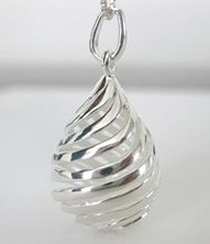
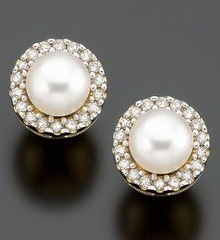
filigreedrop swirlingtear pearldiamondstuds
doubleinfinity fairynecklace crownring

Clothing

offtheshouldertop longjeans blackpencilskirt
boatneckdress ladylovesongdress blueskirt
capelet bellsleevedress pedalpushers

Shoes

jeweledflipflops anklestrapballetflats
wedgeheel ankleboots
stilettos

leatherballetflats

See More!

You can find even more examples of my style (plus a ton of life hacks, organization and decor ideas, health tips, etc.) over at my Pinterest!